
Jim Gilbert

Today's News

Spring's Journey North

Report Your Sightings


Search Journey North
return to:
 A/CPB
A/CPB

Tracking Changes in Photoperiod Around the Globe

Background
The Mystery Class project lets students observe first-hand how photoperiod changes around the globe with
the advance of spring in the Northern Hemisphere. Photoperiod is the amount of daylight between sunrise and sunset
each day.
Every Monday between February 9 and April 20, students will measure their local sunrise and sunset times. Using this information they'll calculate day length in their own hometown. On the same day, students at 10 Mystery Class locations around the world will also record sunrise and sunset data. On Friday of each week, the data from the Mystery Classes will be delivered to your classroom from points around the globe, thanks to Mrs. Berger's fifth graders in Roslyn, New York.
In May, you'll have a chance to guess where the 10 Mystery Classes are hiding! The only clue: As spring sweeps
across the Northern Hemisphere, day length changes everywhere on earth.
How to Participate
Materials Needed
- Mystery Class Datasheet
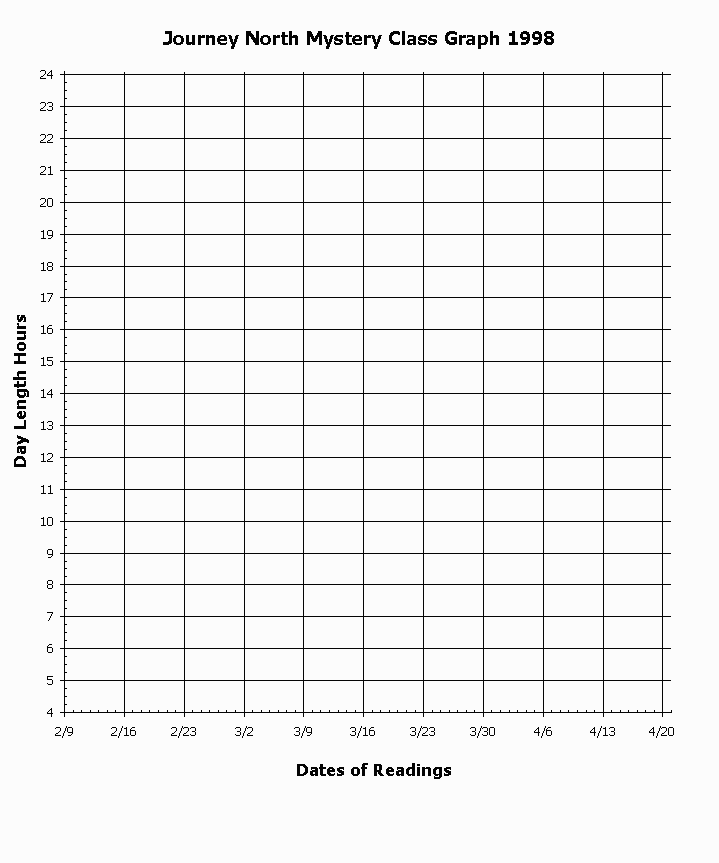
- Mystery Class Graph
- Local sunrise and sunset times
Here's What You'll Do
1. Every Monday, between February 9 and April 20, record the time the sun rises and sets in your hometown.
Your local newspaper should provide this information, or you may find it in a calendar from your area. Alternatively,
look up sunrise/sunset times or on the WWW:
2. Calculate photoperiod by counting the number of hours and minutes the sun is up. For example, if the sun rises at 6:50 a.m. and sets at 17:30 p.m., the photoperiod for that day is 10 hours and 40 minutes.
3. Record the sunrise and sunset times and the photoperiod for each Monday at your hometown on a Mystery Class Datasheet. Then plot the photoperiod of your hometown on a Mystery Class Graph.
Do not send your local sunrise & sunset data to Journey North!
4. Every Friday, Mrs. Berger's students will send you the sunrise and sunset data they've collected from our 10 Mystery classes. Notice: The data you receive on Fridays will have been collected on the same Mondays your readings were collected. Many teachers divide their class into 10 groups, and give each group responsibility for a Mystery Site. To provide practice for your student groups, use your local photoperiod as an example.
5. Make 10 copies of the Mystery Class Datasheet. Record the data from each Mystery Class site on a separate Datasheet and calculate the photoperiod. Then plot the photoperiod from each Mystery Class on your graph. Use a different colored pencil for each Mystery Class. (You may want to make a large, poster-sized graph for your class, where student groups could plot their respective sites.)
6. Beginning in March, clues about the geography and culture of each site will be included with the weekly data reports. On May 1st, students will race to guess the location of each Mystery Class.
7. May will be "Meet the Mystery Class Month". Each Mystery Class will introduce themselves on-line and you'll have a chance to correspond with them.... Who ever and where ever they are!