|
 |
 |
 |
 |
 |
 |
Unpave the Way for Winter Robins
This report includes:
Robins in Winter?
 Every autumn robins migrate south. We
humans have an intuitive sense that the robins are trying to escape
cold weather, but every winter at least some robins stay in the
northern states and southern Canada. Robins have survived
blinding blizzards, ice storms, and nights as cold as 30 below zero
without human help.
Regardless of how cold it is on the outside of their feathers, their
body
temperature
under the feathers
is about 104 degrees. How do they stay warm enough to survive? Their
thick down feathers hold body heat in. They produce
body heat by shivering. And they get the energy to shiver
from their food.
Every autumn robins migrate south. We
humans have an intuitive sense that the robins are trying to escape
cold weather, but every winter at least some robins stay in the
northern states and southern Canada. Robins have survived
blinding blizzards, ice storms, and nights as cold as 30 below zero
without human help.
Regardless of how cold it is on the outside of their feathers, their
body
temperature
under the feathers
is about 104 degrees. How do they stay warm enough to survive? Their
thick down feathers hold body heat in. They produce
body heat by shivering. And they get the energy to shiver
from their food.
Sometimes robins gather in huge flocks in winter. Doug Von Gausig found a "robin convention" of about 1000 robins near Sedona, Arizona, and recorded their chatter.
Natural Foods for Robins
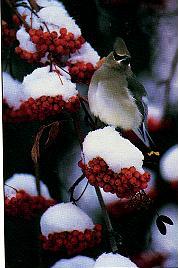
What are they eating when the ground is frozen and they can't get worms? Robins in winter are mainly fruit eaters. Some fruits are so sweet and juicy in summer that birds and other wildlife eat them right away. The best winter berries are those that start out tasting too bitter to eat, and after freezing and thawing several times become tastier. Growing a winter fruit garden is a wonderful way to make life easier for wintering robins. Some of the best varieties to plant include:
|
|
|
Robins often join Cedar Waxwing flocks in winter. (Photo by Tom Mangelson in Landscaping for Wildlife) |
- bittersweet
- bayberry
- snowberry
- sumac
- mountain ash
- crabapple
- hackberry
- hawthorn
- red cedar
- highbush cranberry
- chokecherry
Water
 Robins seem to need more
drinking water than many other songbirds. They readily use bird baths
all summer, so many robins recognize a bird bath when they see one.
When they spot a bird bath in winter, they usually check
it out. Heated bird baths are both attractive to them and
very helpful.
Keep the water shallow, or use just a small container so the robin doesn't bathe.
If temps are cold enough for water to freeze on the feathers, the
bird can have trouble flying, and it may not be able to fly at
all.
Robins seem to need more
drinking water than many other songbirds. They readily use bird baths
all summer, so many robins recognize a bird bath when they see one.
When they spot a bird bath in winter, they usually check
it out. Heated bird baths are both attractive to them and
very helpful.
Keep the water shallow, or use just a small container so the robin doesn't bathe.
If temps are cold enough for water to freeze on the feathers, the
bird can have trouble flying, and it may not be able to fly at
all.Feeders for Robins
Some people have figured out ways to entice robins to feeders! Robins virtually never eat bird seed--their stomach and intestines are not designed to digest them. But they have come to feeders for:
-
fruits: cut up apples, pears, oranges; blueberries, cranberries, and other berries; raisins and currants Report Robin feeders as Robin (OTHER observations)
- softened dog food kibble
- meal worms, earthworms, and red worms
The first problem with robin feeders is that most robins have never heard of such a thing! It never occurs to
them to explore their winter areas for human handouts. One of the easiest ways to help robins discover a winter
feeder is to put it near a bird bath.
|
|
|
Mike Houle's heated robin feeder |

If you have found a way to feed robins this winter, send us a field report! (Click the owl button on any page.)
Copyright 1999-2005 Journey North. All Rights Reserved. Please send all questions, comments, and suggestions to our feedback form
|
|
|
|
|
|
|
|