Mexican overwintering sites open, mid-season update from California, and monarchs across the South



Monarchs have arrived at overwintering sites in Mexico, and it's been a few weeks since the sanctuaries opened to the public, including Sierra Chincua and El Rosario, from which Estela Romero sends her updates.
Estela passed along a couple of videos from overwintering sites in late November, which you can see on the right side of your screen on desktop or below the article on your mobile devices.
Estela notes that this is just the beginning of what will become of this year's colonies, and she'll have another update next week. Click the "subscribe" tile to sign up for these updates in your inbox, or follow us on social media to stay on top of how the colonies develop throughout the next few months.
Sightings in the U.S.
Not every monarch has made its way down to Mexico. During the final week of November and the first week of December, we received monarch sightings from several other states, including Florida, Louisiana, Texas, Georgia, Mississippi, and North Carolina.
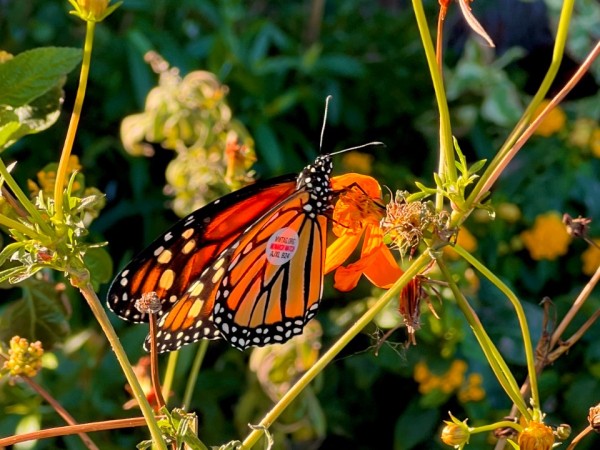
Jennifer in Astor, Florida, reported one on Nov. 29 while boating on the St. John's River on climbing aster. On Nov. 27, Karen in Metairie, Louisiana, reported a wild monarch tagged for monarch watch.
Where monarchs are finding viable milkweed at this time of year, including some non-native milkweed species like tropical milkweed that can remain in decent shape throughout the year, breeding also continues, with reports from Louisiana, South Carolina, Texas, and Florida in recent weeks.
While reports on non-native milkweed species are common this time of year, it's not always the case.
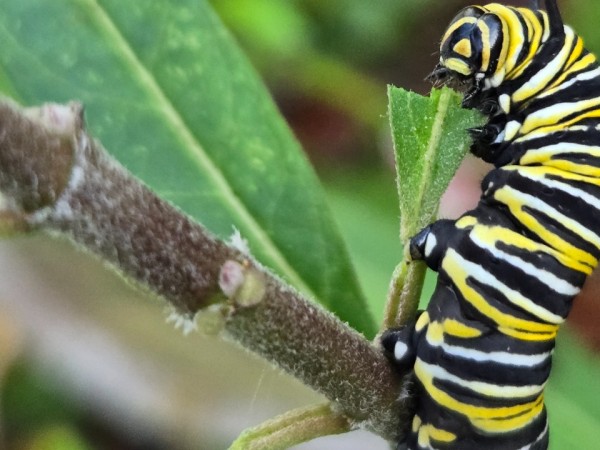
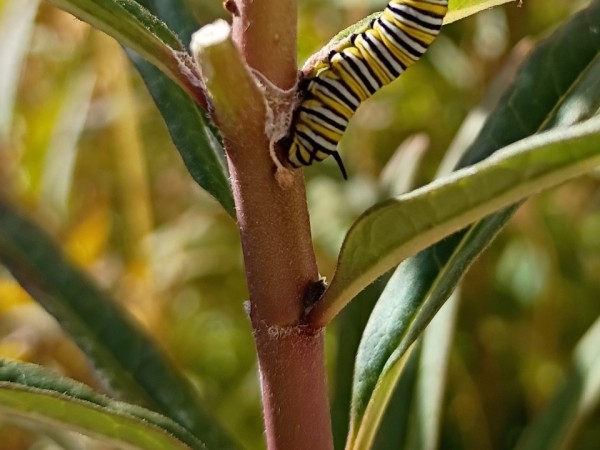
In La Porte, Texas, Brian reported two caterpillars on Nov. 21, "one on tropical milkweed, and a second on native milkweed."
Carrie in Austin, Texas, reported finding three monarch larvae on Texas Milkweed (Asclepias texana) on Dec. 2.
"Adults were migrating belatedly until quite recently in this area (which has been affected by recent Arctic cold, but which has remained above freezing). These caterpillars are currently in the urban heat island, but we are apparently expecting another cold front," Carrie wrote.
If you see a monarch adult, egg, or caterpillar this winter, we want to hear from you! Please consider reporting monarch sightings to Journey North throughout the year by clicking here.
What's happening out West?
In an update on Dec. 3, Isis Howard of the Xerces Society wrote that 2025 "is shaping up to be another low population year" at overwintering sites in California.
The mid-season Western Monarch Count, organized by the Xerces Society, wraps up Sunday, with about 8,000 monarchs reported so far. Seeing this number, it appears we're destined for one of the lowest years on record once again. Last year, 9,119 monarchs were reported during this mid-season count, the second-lowest count since counting began in 1997.
A final tally will be announced next month.
Natural Bridges State Beach and Lighthouse Field State Beach, from which we get frequent reports in the winter, house two of the largest populations so far this season.
We've also received reports of monarch adults and breeding in other areas of the West.
Kristin in Sahuarita, Arizona, reported two larvae on Dec. 4. In Carlsbad, California, Nancee reported 12 caterpillars on Dec. 1, writing, "This plant alone had six maturing caterpillars eating. There were many more, from hatchling to fifth instar."
Other recent western reports have come from Las Cruces, New Mexico, San Diego, California, Sea Ranch, California, and Hurricane, Utah.
Thank you to everyone who has submitted a report so far this winter!
Estela Romero is an environmental educator with Monarchs Across Georgia. Reporting from Angangueo, Michoacán, Estela Romero's work is made possible by funding from Monarchs Across Georgia and the Monarch Butterfly Fund. Estela Romero es educadora ambiental de Monarchs Across Georgia. Informando desde Angangueo, Michoacán, el trabajo de Estela Romero es posible gracias a la financiación de Monarchs Across Georgia y el Monarch Butterfly Fund.