An update from the West; Monarch sanctuaries in Mexico opening


The season's higher-than-normal temperatures fell abruptly as an unusually early winter storm hit portions of California and the Southwest this week. Temperatures plummeted, and snow even fell in the Sierra’s higher elevations. Earlier, monarchs had continued to arrive at the safety of the coastal overwintering sites, settling in for the season.
Reports of monarchs hurrying on their way still trickled in during the early days of November. Deborah reported a late-season monarch appearing in Hurricane, Utah, on Nov. 13, writing, “On large zinnia blossom, then flew to butterfly bush, returned to another zinnia. Unseasonably warm, sunny, 74 degree day.”
Dona in Fernley, Nevada, saw one monarch on Nov. 10: “Saw a lone adult monarch flying among the flowers in our back yard.”
Ellen in Cottonwood, Arizona, shared her surprise seeing a monarch on Nov. 6, writing, “I have Arizona milkweed naturalized nearby. On self-seeding sunflowers, amazingly still in bloom in November.”
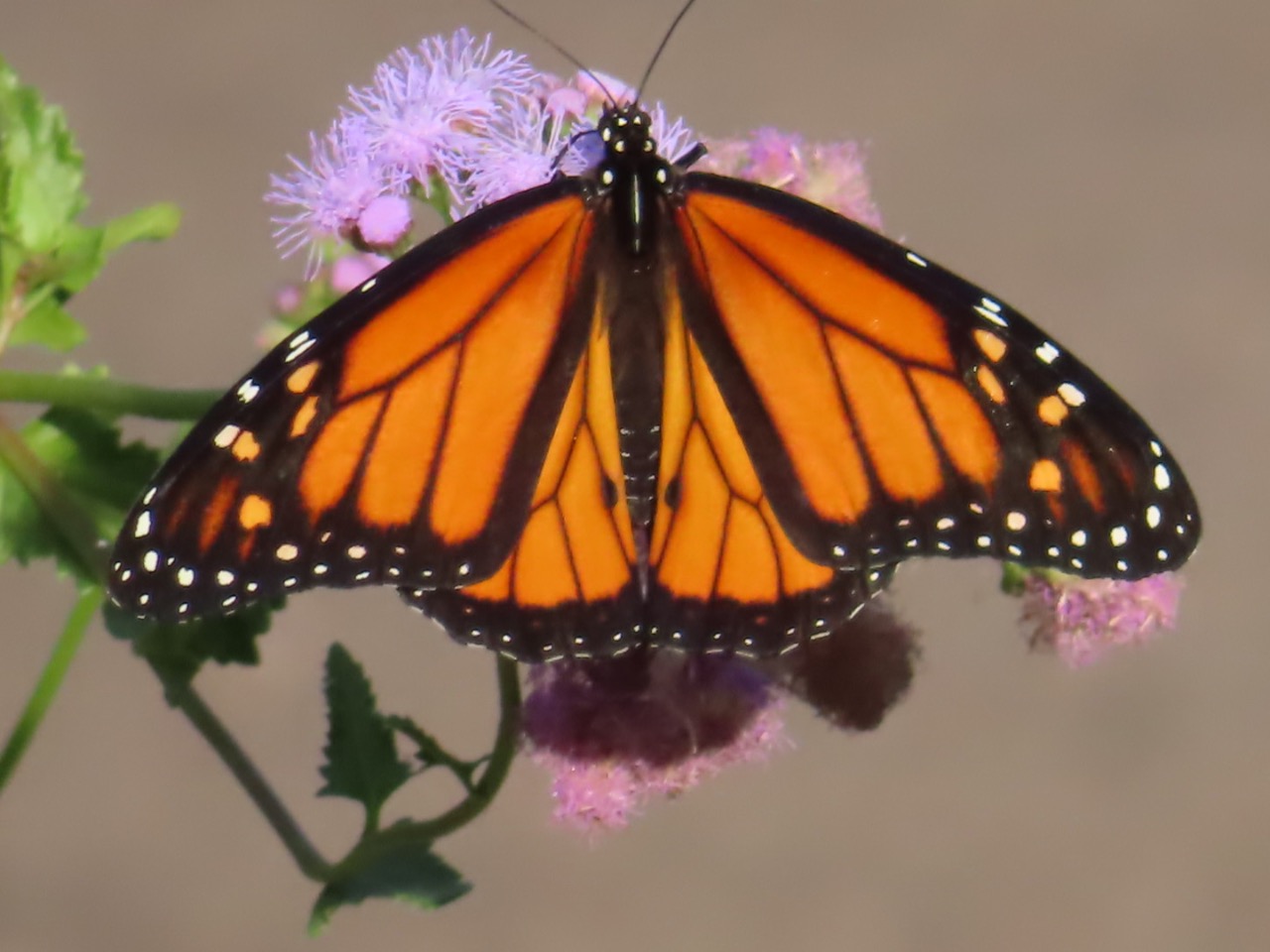
Della reported one male in Phoenix on Nov. 11, writing, "appeared at 2:30 pm. In good condition, landing on the Gregg’s Blue Mist flower and fighting with the 10 queens already on this shrub. 83F, sunny, no breeze."
Reports from the Field
Diana Magor, Santa Cruz, California
A quick note with summaries of numbers counted and estimated in the Santa Cruz/Pacific Grove area (Nov. 14 counts by John Dayton and Beth Bell):
Lighthouse Field, Nov. 14: 767
Natural Bridges, Nov. 14: 2,113
Moran Lake, Nov. 14: 443
Subtotal major sites 3,305
Estimate smaller sites: 145
Total Santa Cruz estimate: 3,450
For context, as of Oct. 29, there were 1,100 monarchs at Natural Bridges near Santa Cruz, as well as 979 at Lighthouse Field on Nov. 1.
Stephanie Turcotte Edenholm, Pacific Grove, California
The weekly Pacific Grove Count on Nov. 13 shows monarchs continuing to arrive.
We had a solid day of rain in Pacific Grove, California, on Nov. 13, which began the night before and lasted through early evening. Fortunately, our area had no significant winds, 8 mph with gusts up to 14 mph. I wasn’t present for the count on Nov. 7; however, the team reported 87 monarchs with only a small group clustered on the young eucalyptus in the south. The remaining monarchs were spread throughout the grove.
I was excited this morning to see where the monarchs were positioned following the weather event. It was 52°F and wet, but no rain. We found the largest contingent of monarchs roosting on the burn-scarred tree in the southwest area of the grove with 73 monarchs. What a joy that is to see! The remainder were spread between 10 other trees with no more than three in any tree. The number in the young eucalyptus was significantly reduced from the previous weeks’ counts, with only 8 on it now. There were no grounders to be found. The total for today’s count is 99 monarchs. No matter how hard we tried, we couldn’t find the last one to round out our number. I am confident we will break 100 next week.
Gail Morris, Arizona
The monarch migration was weak in the southern deserts in October with warmer than normal temperatures, but a new wave of monarchs appeared in early November across the higher elevations of the Verde Valley and eventually the lower Sonoran Desert regions. Many of these monarchs appear to be breeding, with reports across the Valley of caterpillars on native evergreen milkweed.
We are reaching the end of the window for the fall migration across the region, so we will need to see how these monarch immatures fare over time. We are hoping everyone will continue to post monarch sightings so we can learn more about these late monarchs. In the higher elevations, monarch movement may be stopped with colder, freezing temperatures, but temperatures in the lower deserts usually are survivable unless there is a hard freeze (which has not occurred for many years).
As you may have read in last week’s early monarch report at the California overwintering sites from the Xerces Society, monarchs are continuing to gather along the coast. Like last year, preliminary numbers are highest at the Santa Cruz sites and lowest in the central to southern regions.
Through citizen science tagging by the Southwest Monarch Study, we’ve learned that most monarchs from Arizona and the southern regions of the Southwest overwinter at the central-southern coastal locations. These locations have the lowest numbers in California this year. Unfortunately, our low density of monarchs this fall may mean that overwintering monarchs along the coast in the southern regions will be fewer than usual.
Sites normally teeming with monarchs in Arizona were thin or nonexistent. For example, when we visited three locations along the Colorado River on the Arizona-California border this fall, we found ZERO monarchs! Usually, we find combined totals of 20-50 or higher at these locations. Even now, only two or three monarchs are reported at these sites, so it wasn’t just a late migration this year. We’re hoping for the best and watching closely as monarchs continue to appear.
Thank you to Diana Magor and Stephanie Turcotte Edenholm for your reports!
Monarch sightings needed
Seeing monarchs? Your sightings help us present a balanced and accurate report of where monarchs are appearing each week. Report adult monarchs, eggs, and larvae to Journey North. Your detailed description of what you see can include, but is not limited to, the monarch’s gender and activity. If known, include the type of flowers if they are nectaring or milkweed type if laying eggs. Photos are encouraged and welcomed with all your reports.
Gail Morris is the coordinator of the Southwest Monarch Study (www.swmonarchs.org). She is also a Monarch Watch conservation specialist, the vice president of the Central Arizona Butterfly Association, and participates in several western monarch working groups. The “Western Monarch News” is based on your comments provided to Gail Morris. We hope to increase the number of sightings, photos, and comments entered into Journey North. We rely on the volunteers who communicate regularly with Gail and participate in our effort to increase awareness of the population of western monarchs. You can reach her at gail@swmonarchs.org
Monarch sanctuaries in Mexico open Nov. 21
The monarch sanctuaries of El Rosario and Sierra Chincua in the Monarch Butterfly Biosphere Reserve, where Estela Romero sends her reports from throughout the overwintering season, open to the public on Nov. 21. While it's been a few weeks since the first monarchs reached overwintering areas, we haven't yet gotten a look at the overwintering colonies, but that should change soon.
Click here to subscribe to our newsletters or follow us on social media for updates on monarchs in Mexico this winter. More will be coming soon!
For now, you can view Estela's most video from last week on the right side of the page on desktop or below on mobile.