Mexico's monarch colonies appear in good shape going into new year


Estela Romero writes with an air of positivity about this year's overwintering monarchs in Mexico. Since our last news update, Estela has written us twice, including numerous photos and videos to give us a glimpse at the phenomenal colonies at El Rosario and Sierra Chincua sanctuaries within the Monarch Butterfly Biosphere Reserve.
Dec. 29
Moderate warm sunny days, but with frequent drastic drops in temperature, with an icy sensation, announce a very cold January.
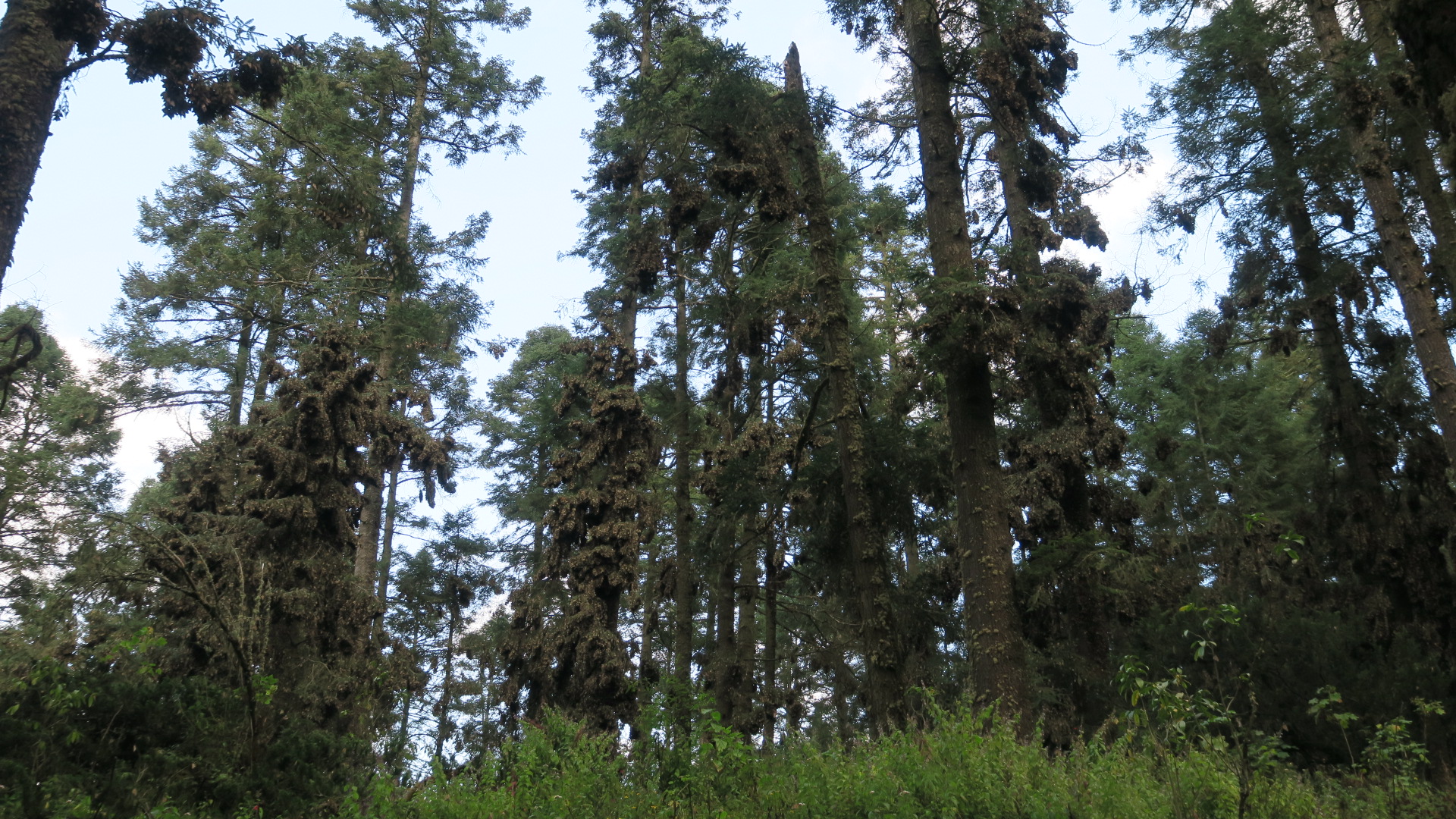
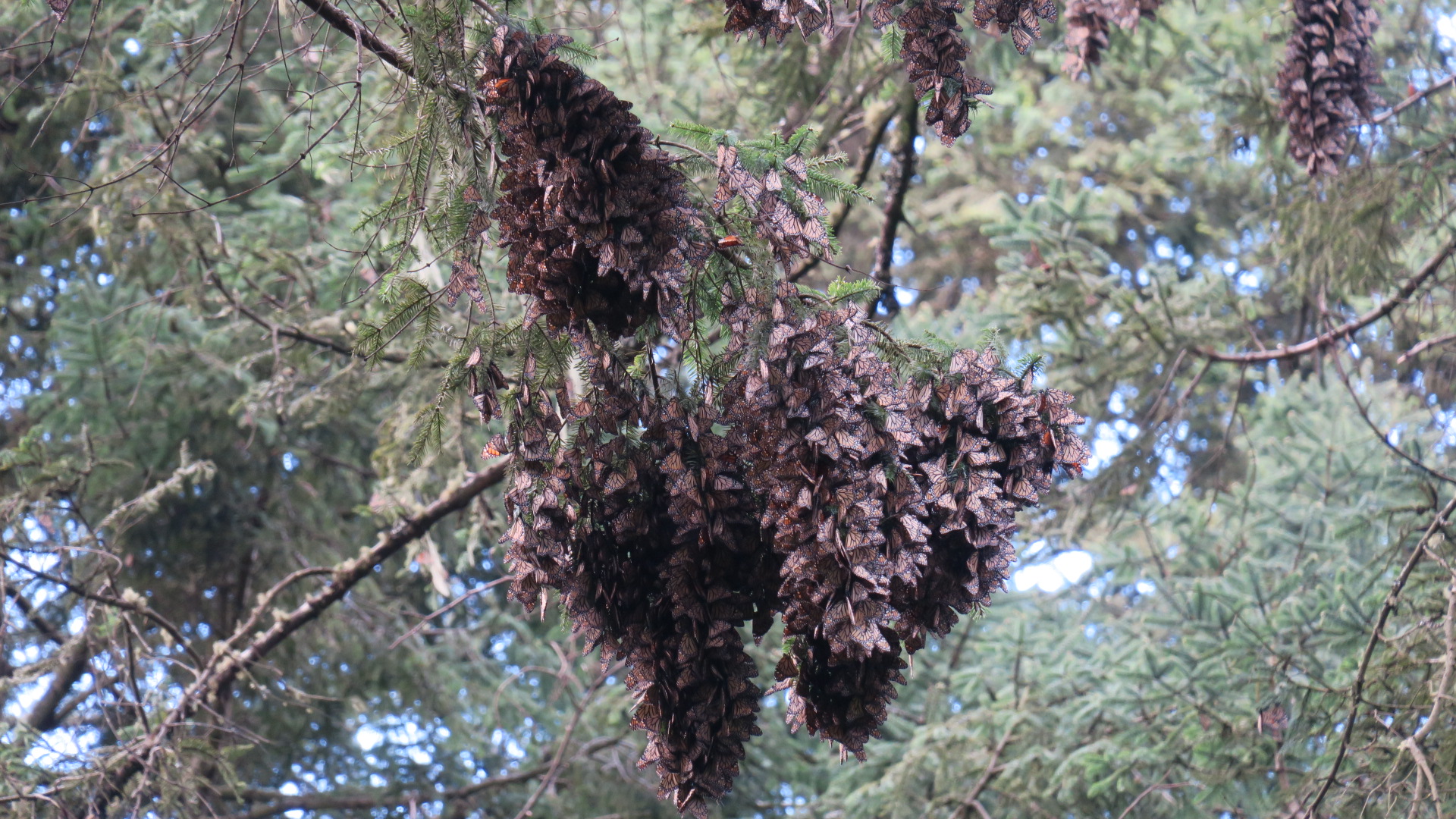
Both colonies of our amazing monarchs continue at their same location, with Sierra Chincua Sanctuary increasing its population, looking great now, while El Rosario Sanctuary needs no further description.
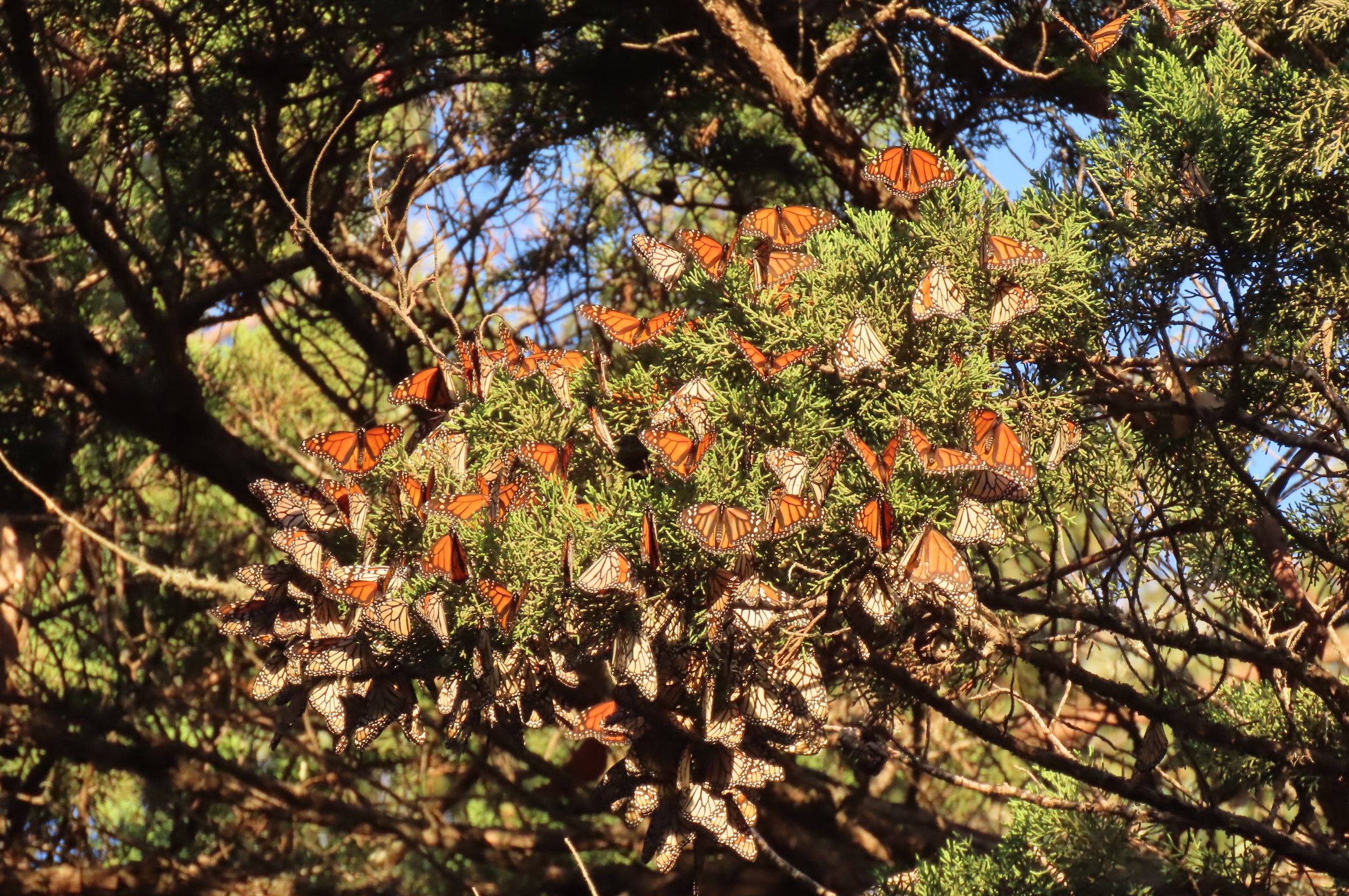
Our fantastic monarchs close 2025 at ideal cool conditions, displaying themselves in magnificently still clusters, which points to the 2025-26 season being a very good year in population.
Hotels and restaurants in the region, many fully booked while others still with some room left, welcome visitors who confirm that the effort and distance traveled to witness the incredible phenomenon of the great migration makes it thoroughly worthwhile.
Dec. 19
Winter time in the mountains of Central México seems to be meeting the forecasted warnings of a very cold winter -- the genuine winter and perfect balance in this local ecosystem our fantastic monarch butterflies recognize and manage to thrive in -- during their overwintering stage at temperatures down to 0°C (32°F) and lower, with chilly, bright sunny intervals and threatening rain with probabilities of snow any time now.
An affordable fee of 100 pesos per car and 150 pesos per person, with a 50% discount for students and teachers, allows for an exceptional experience at visitors’ arrival to the unique phenomenon of monarchs’ great migration at Sierra Chincua, El Rosario, Cerro Pelón, and La Mesa sanctuaries, in Central México.
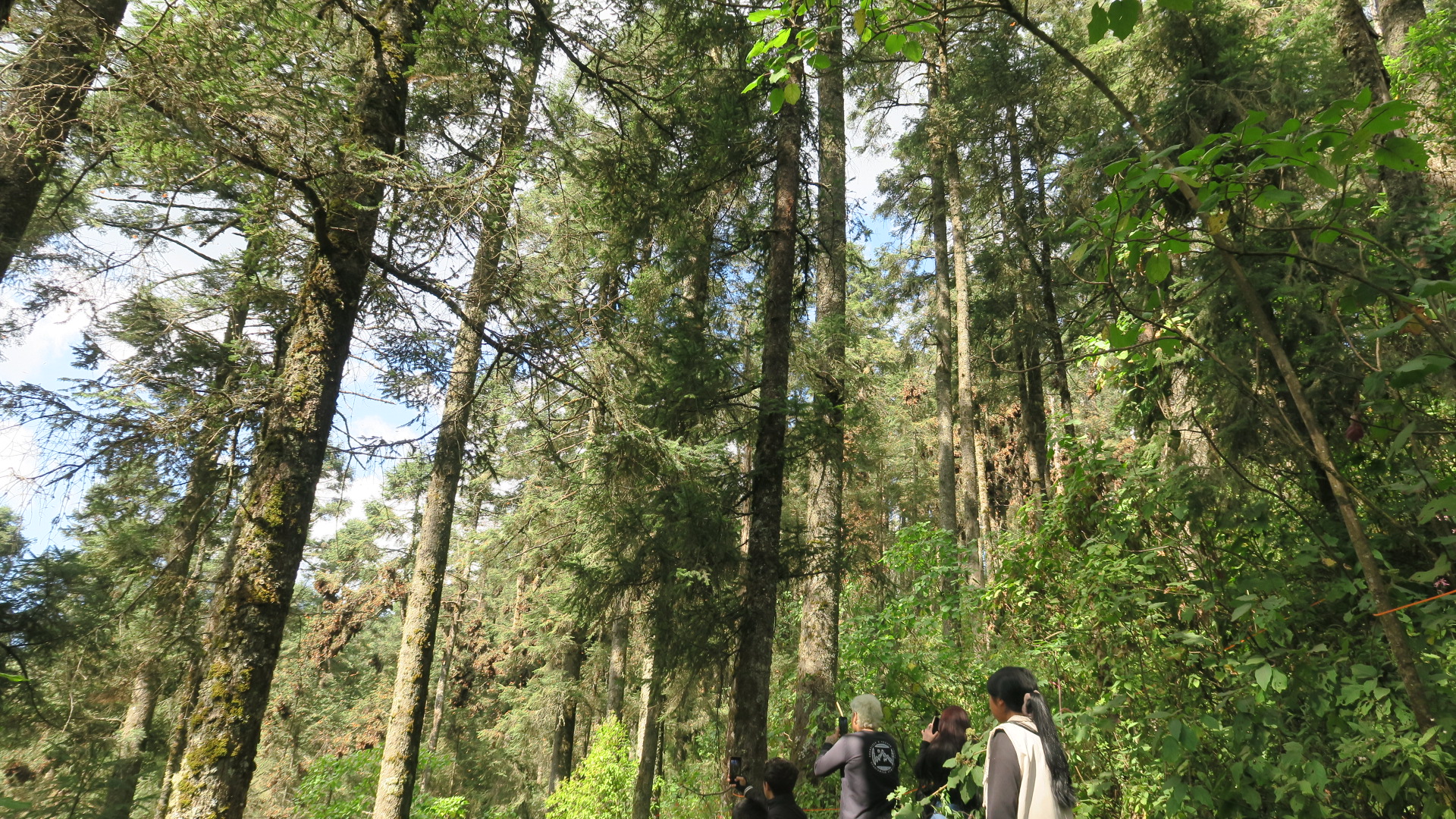
A quiet, exceptionally pristine view of forests and creeks, as if of a postcard, is at the start of the hike, accompanied by local Ejidatario guides, the most knowledgeable on their forest’s characteristics, local legends on monarchs before their scientific phenomenon’s discovery 50 years ago, combining professional scientific data at the time, led to the Sierra Chincua colony. With a moderate increase in population now, it reaches a substantial concentration, which marvels with its beauty to locals and foreigners.
Coordinates: 19.6724. 100.2944, “Moneralta” site
The monarch colony in El Rosario Sanctuary amounts now to a wonderful population concentration, higher than Sierra Chincua's colony, and contrasting tremendously to what we would observe with confusion at this time, one year ago.
Crowds of visitors, locals on weekends and foreigners during weekdays, during which large foreign travel agencies have practically booked most local hotels for next January and February now, take the season to the start of its very peak now.
Silence and contemplation come the moment the spot is reached.
Coordinates location: 19.6029 -100.2621, “Los Letreros” site
Estela Romero
Angangueo, Michoacán, México
Estela Romero is an environmental educator with Monarchs Across Georgia. Reporting from Angangueo, Michoacán, Estela Romero's work is made possible by funding from Monarchs Across Georgia and the Monarch Butterfly Fund.
Western monarch update
By Gail Morris, Southwest Monarch Study Coordinator
Dec. 29
Strong winds and torrential rains slammed California on Dec. 24 and 25, and the monarch population rapidly dropped at the most densely populated sites, especially near Santa Cruz. Both Diana Magor and Stephanie Turcotte report steep declines in monarch numbers this week, but also remind us that numbers may climb again as the weather becomes more favorable.
Sensing approaching storms bearing changing winds, monarchs often move to a more secure location for protection. Monarchs tossed to the ground in high winds or heavy rain eventually frequently climb sticks and small grounded tree branches out of the grasp of predators. When the rains stop, monarchs frequently begin to shiver to warm up and fly to nearby trees before reforming clusters once again in safe locations. So, we share the observations of our colleagues in the field with a breath of hope that things will improve in the coming days. In the meantime, we wait for more news. But first, let’s hear what this past week brought for monarchs overwintering along the northern California coast.
Stephanie Turcotte Edenholm, Pacific Grove, California
We had a two-day severe weather event in Pacific Grove on Dec. 24 and 25, with strong winds and heavy downpours at times, strong enough to break limbs and cut out the power for many of us. We were supposed to have a break in the weather, and so we did our scheduled monarch count on Dec. 26 at 7:45 am and 48 degrees.
There were three of us. We found three monarchs. There was one along the path in a Monterey Cypress, one in the far northern end in a cypress, and a male grounder in the interior. Even though it began to rain and the wind picked up (15 mph NW with gusts up to 28 mph), we searched for the 107 monarchs that were there previously. I wasn’t too surprised that they weren’t there. They wouldn’t have survived where they were the week before. I had hopes we’d find them deep in the north; however, even there, the wind gaps surrounding that usually protected area were noticeable. I am sure there might have been a few others tucked away up high where we couldn’t see them, but they weren’t in clusters there. We were able to cover the entire habitat before we stopped due to the rain and winds picking up.
Later that morning, a docent reported to the Pacific Grove Museum of Natural History that monarchs had been flying the previous day, most likely during a break in the weather, which we did have on the afternoon of Dec. 25. There were hopefuls who were convinced that the monarchs were in the grove, just ‘hiding’. So I went back just after 1 p.m. when the temperatures were up to 58°F, and the sun was out.
I found 2 fliers in the northeast corner up high and followed their flight, but they didn’t return to the trees nor into a cluster. There were two fliers in the southern end in the neighbor’s yard, but they didn’t return to any cluster either-just continued together away from the grove. There were four monarchs in the northwest area who flew in from the west to gather nectar and sun. They didn’t come from, nor return to, any clusters. The monarchs may still be in Pacific Grove, maybe even somewhere close, in the cemetery or the adjacent old railroad track trail: plenty of maybes and wonderings. I feel confident in my ability to see and find them in the Pacific Grove habitat when they are there-especially clusters. I am hoping that when the weather breaks, the collective will come back in. All we can do is report what we observe.
Diana Magor, Santa Cruz, California
The monarchs apparently left their overwintering sites in droves during the two big recent Christmas storm events.
Lighthouse Field
On Dec. 24, Fransisca Fuller and I visited Lighthouse Field and found four grounded monarchs after the strong winds and gusts of the previous night. One tattered male and three females, including radio-tagged Project Monarch female LH45. The females had crawled up small dried grasses. All survived. There was substantial tree litter all over the grove and outside on the streets.
On Dec. 25, after another strong-wind night, I found no grounded or dead monarchs, but the numbers in the clusters on Monterey Cypress Tree 12 (644) were greatly diminished from the high numbers counted the week before (1,008). After that wind, the top third of an occasionally-used Cypress 6 inside the grove was broken off completely. No monarchs had been observed there the previous day.
Beth Bell and John Dayton estimated 750 on Dec. 27 in the early afternoon, including approximately 100 sunning on the southern cypress trees 14 & 15 and Eucalyptus Tree 10B, and flyers in the afternoon sun. Later that afternoon, I counted 374 sunning or roosting on the same south-facing cypress trees (14,15) and about 15 flyers, in addition to the north-facing clusters on Cypress Tree 12. Far fewer monarchs were observed this year sunning and roosting on these south-facing trees than in the past few winters. There was a wind gust of 91 mph recorded at the Santa Cruz Yacht Harbor during the storm.
Natural Bridges
Beth Bell and John Dayton surveyed Natural Bridges on Dec. 27 and reported that several more eucalyptus trees had fallen adjacent to the large one that fell a few weeks ago in the ravine. One large tree fell uphill and took down two or three more, all of which fell across the nature trail on the upper level of the east side of the grove and obstructing passage across that path. Beth and John, our most experienced surveyors, had a difficult time locating the monarchs (the huge clusters totaling thousands previously observed from the lower level had dispersed). They finally found 80 on a Monterey Pine on the upper trail, 500 on a Monterey Cypress also on the upper level, with a total of 640 roosting and about 110 basking and flying late morning for a total of 750 (compared to 1,700 a couple of weeks prior).
Moran Lake
Beth and John surveyed the Moran Lake site on Dec. 26 and found only 300 there, compared to 830 before the storms. There has been heavy construction at that site recently. We do not know where the monarchs not found at these important sites go during the storms.
Unfortunately, the e-tags, being solar powered for weight considerations, do not function without sunlight, so we were able to detect only a few of the approximately 50 tagged monarchs at the three sites just before, during, and right after the storms. Monarchs have dispersed during storms in prior years, and then their numbers have increased after the storms. We will search less well-known sites for missing monarchs, and continue to monitor the major sites to see if the numbers increase at these sites for the next two days. However, more significant rain is in the forecast beginning Wednesday, Dec. 31, for a week, with southerly winds on Friday, Jan. 2, but no severe winds are currently predicted.
Thank you to Diana Magor and Stephanie Turcotte Edenholm for your reports! A shout-out to everyone: If you are seeing monarchs in the West, please report your sightings to Journey North. You can help us all learn where monarchs are this winter season and their movements.
Dec. 16
Monarch counts along the California coast this winter are reporting the highest density of monarchs in the Santa Cruz County sites, much like last winter. Meanwhile, the counts in sites south of Santa Cruz are low. So, where are monarchs in the West? The numbers from western states may surprise you for mid-December.
There are sightings of late monarchs appearing in several Western locations outside of California.
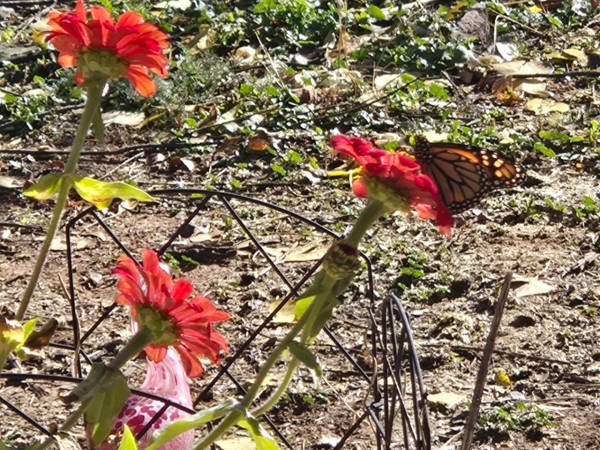
Elizabeth in Moab, Utah, was surprised to see one monarch on Nov. 23, “Feeding on our zinnias and perched on our cottonwood tree for a while. Latest date I have seen a monarch in Moab!”
C. J. in Las Cruces, New Mexico, sent in a photo of one monarch on Nov. 25, a very late appearance for this location. On Dec. 5, Tom observed two males sunning in the trees on a chilly morning at the Arizona-Sonora Desert Museum in Tucson, Arizona.
Val in Las Vegas, Nevada, reported three monarchs on Dec. 12, writing, “One had a missing part of its wing, the other two were doing the dance.”
Reports from the Field
Hopes for a higher monarch population in California this winter are diminishing as initial population numbers are revealing a repeat of last year.
Diana Magor, Santa Cruz, California
Diana Magor and colleagues conducted weekly counts over the last three weeks of monarchs gathering at the Santa Cruz sites.
On Nov. 30, Diana reports the midseason count total for Santa Cruz County reached 3,800 monarchs. “There are a few other small sites we will count in the next few days, so the final tally will likely be close to 4,000 monarchs in Santa Cruz County at this time. Tara Johnson included in her count at Lighthouse Field that she saw a Townsend’s Warbler harassing one of the monarchs from Tree 20. It was the first time she’s ever seen a warbler relentlessly chase a monarch.”
At Lighthouse Field, the monarch count was 1,080 on Nov. 28, the highest yet for this site this year. This is comparable to the 1,069 counted last year on the same date. In comparison, the highest count from two years ago on Dec. 9 was 9,154.
On Friday, Dec. 12, Diana and a team led another count: “Early yesterday, Dec. 12, at 44°F, three of us counted monarchs at Lighthouse Field, and Tara Johnson sent back her count today of 943. The monarchs had abandoned the dangling branch of Tree 9 (Monterey Cypress near the back of the grove) and apparently joined the clusters on Cypress Tree 7 deep inside the grove (69) and 12 on the wind-protected west-facing branches of Cypress Tree 12, where she counted 584 tightly packed monarchs in five clusters. There were also clusters, aggregations, and loners on three young eucalyptus (Trees 11 C, D, and E) in the center of the grove (286) for a total of 943. There were none found on the east edge of the grove, no flyers and no grounded, mating, sunning, or dead at that hour.
“The weather is expected to change in about four days to rain for at least a week. It seems the monarchs at Lighthouse Field, at least, are either hunkering down to survive the cold nights or preparing for wet weather, or most likely, both.”
Stephanie Turcotte Edenholm, Pacific Grove, California
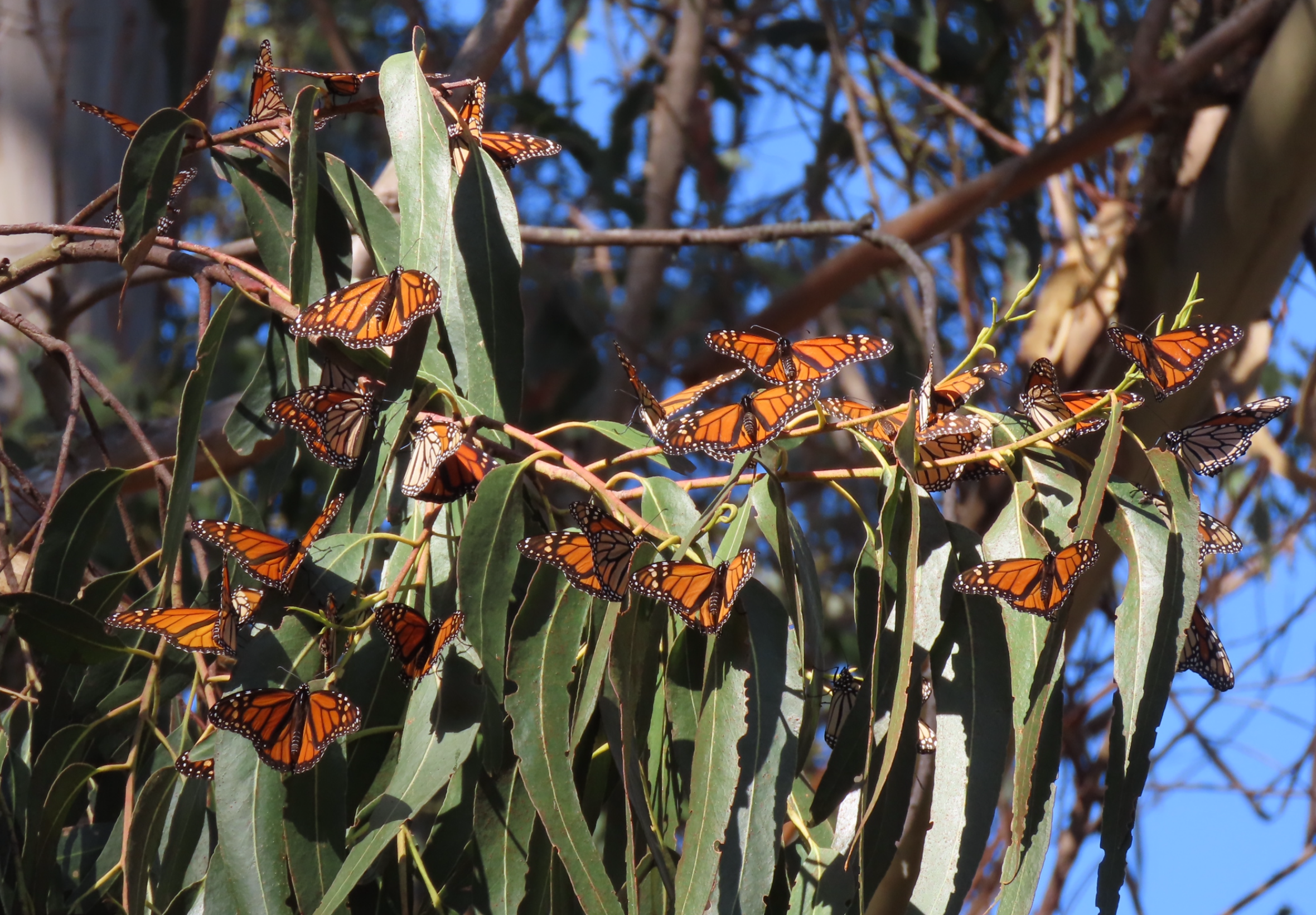
On Nov. 28, we were out there in a bit of a chill this morning in Pacific Grove, at 46°F. At least, it felt cold. The monarchs at our site condensed into a much smaller area. Last week, they were spread between 13 trees, and this week we found them in only three, two of which were eucalyptus, with approximately 147 monarchs on one. The other Eucalyptus hosted approximately 20 (11 of which flew off), and the lone Monterey Cypress along the path with five monarchs. The monarchs are predominantly now all along the southern end of the grove on the Eucalyptus overhanging the fence into the neighbor’s yard. We did have a Stellar’s Jay disturb one of the branches, which caused a surprising burst, as noted previously. We estimated that about 11 monarchs flew off and included those in our official count. Having said all that and in a brief summary, the official count for 11/28/25 is 172 monarchs.
It is important to report out what is happening in Pacific Grove in our monarch habitat each week; however, I must admit, it is not very uplifting. We found the monarchs in essentially the same trees, two large eucalyptus in the southern end, with a few loners here and there on three other trees, including a young Monterey Pine in the neighbor’s yard. Ironically, we had the same number of 147 monarchs in one of the eucalyptus trees as last week! We have to appreciate small moments like that. Our total count for Dec. 5 is 164 monarchs, 44°F. And yet, over 150 is still better than zero monarchs.
FINALLY! We counted 226 monarchs this morning, Dec. 12. The favored, mature eucalyptus tree “L," in the southern end of the grove, continues to host the majority of monarchs, although the configuration of monarchs on the tree has changed over the last three counts. 200 monarchs were in five different clusters on “L." There were two smaller groups of monarchs on two nearby eucalyptus trees and two monarchs side-by-side on a pine in the neighbor’s yard.
It will be interesting to see if and where the small contingent may move if we get any kind of noteworthy weather event in the coming weeks.
Gail Morris, Arizona
It’s mid-December, but much of the Southwest is basking in near-record high temperatures. Late-season monarchs are often still appearing in backyards and parks. The number of sightings has been striking this season, with more reports than usual. Many are shared anecdotally, and we need your winter reports to gather a more accurate sense of this season. In the last week alone, we’ve seen evidence of late sightings in Monticello and Silver City, New Mexico, and throughout Arizona, but unless they are reported officially to Journey North, this data will not be available to researchers reviewing this possible change in monarch presence during warm winters. So, please, urge your friends and colleagues to send their reports.
It’s not too late to report sightings from this fall, so please take a few minutes to complete your monarch sighting reports to help paint the larger picture of monarchs in the West. We are also looking for more documentation of monarchs in southern California to feature for a future update. Please report any part of the monarch life-cycle from egg to adult.
We hope to hear from you and read your reports. Thank you to everyone who has shared their observations in Journey North reports!
Thank you to Diana Magor and Stephanie Turcotte Edenholm for your reports!
Monarch sightings needed
Seeing monarchs? Your sightings help us present a balanced and accurate report of where monarchs are appearing each week. Report adult monarchs, eggs, and larvae to Journey North. Your detailed description of what you see can include, but is not limited to, the monarch’s gender and activity. If known, include the type of flowers if they are nectaring, or milkweed type if laying eggs. Photos are encouraged and welcomed with all your reports.
Gail Morris is the Coordinator of the Southwest Monarch Study (www.swmonarchs.org). She is also a Monarch Watch conservation specialist, the vice president of the Central Arizona Butterfly Association, and participates in several western monarch working groups. The “Western Monarch News” is based on your comments provided to Gail Morris. We hope to increase the number of sightings, photos, and comments entered into Journey North. We rely on the volunteers who communicate regularly with Gail and participate in our effort to increase awareness of the population of western monarchs. You can reach her at gail@swmonarchs.org