
Just over a month from the first monarchs’ anticipated arrival at overwintering sites in Mexico, the leading edge of monarch migration has reached northern Oklahoma and Texas.
At the beginning of the week, the southernmost monarch reports had come from southwestern Kansas, near Johnson City, within 100 miles of the Texas border. On Sept. 22, we received our first reports from Texas and Oklahoma.
An observer in Lipscomb, Texas, reported a "roost of several hundred monarchs in hackberry trees, native elm trees in a line along Wolf Creek" on Sept. 22.
In Freedom, Oklahoma, Vonceil saw 24 monarchs in trees along the roadway on the same night, with "more individuals flying above the canopy."
Texas is a big state, and there's a lot of mileage to cover once monarchs reach Mexico as well, so monarchs still have quite a distance to go before they reach their overwintering sites. Lipscomb, Texas, as the crow (or monarch) flies, is over 1,000 miles from the Monarch Butterfly Biosphere Reserve.
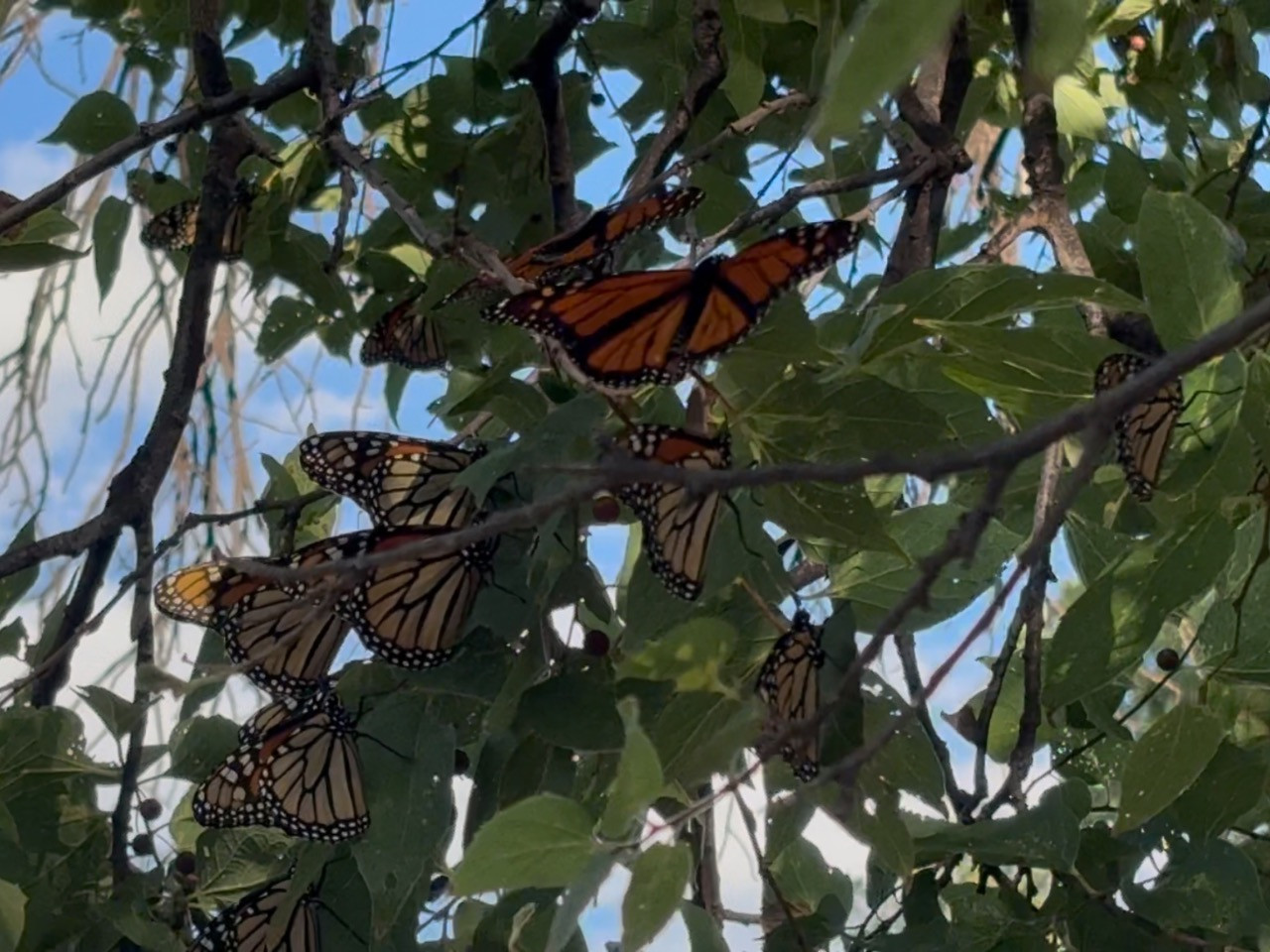
Recently, we also received a roost report from Colorado, which is not a common occurrence. In fact, we didn’t receive a report of monarch roosting in the state between 2020 and 2025. Mary in Holly, Colorado, just west of the Kansas border, reported one on Sept. 15.
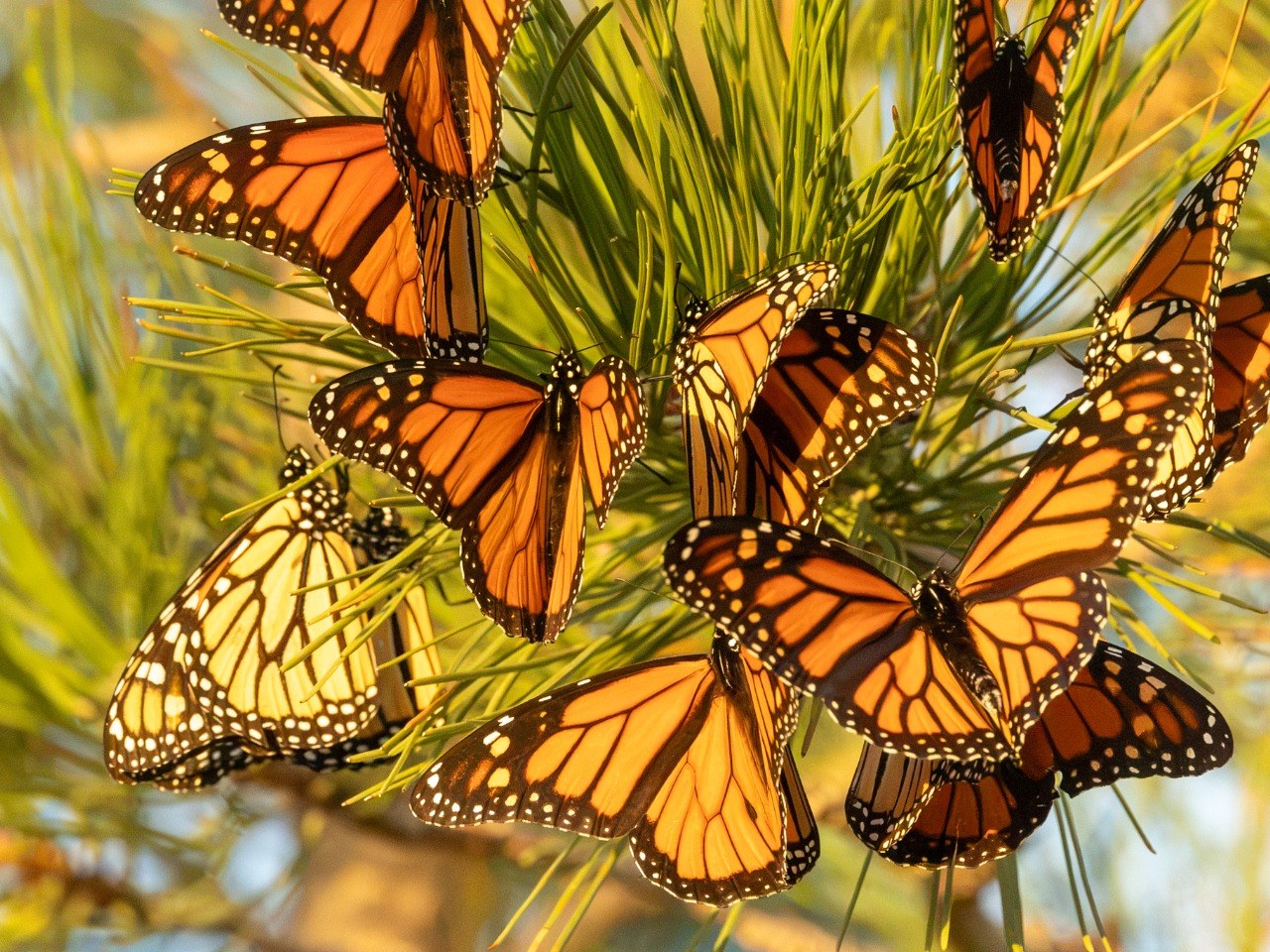
Between Sept. 14 and 20, we received about 100 reports of monarch roosting, and about 40 percent of them were in Iowa. Another 10 were from Nebraska.
Monarchs have made quite a display across Iowa in recent weeks.
Becky in Audubon, Iowa, reported seeing an estimated 1,000 monarchs on Sept. 19. “Walking through the grove of trees, and the monarchs started swarming around us,” Becky wrote. “An amazing sight! We’ve had them roost here before but nothing like this morning.”
A week earlier, an observer in Rolfe, Iowa, estimated seeing 700 monarchs across three maples, an elm, and a pine tree.
“They arrived in the afternoon and continued to arrive throughout the evening,” the volunteer wrote. “This location has been a stop for monarch migration for many years. Thirty years ago they arrived by the thousands. This year’s arrival is the biggest sighting in the last 10 years.”
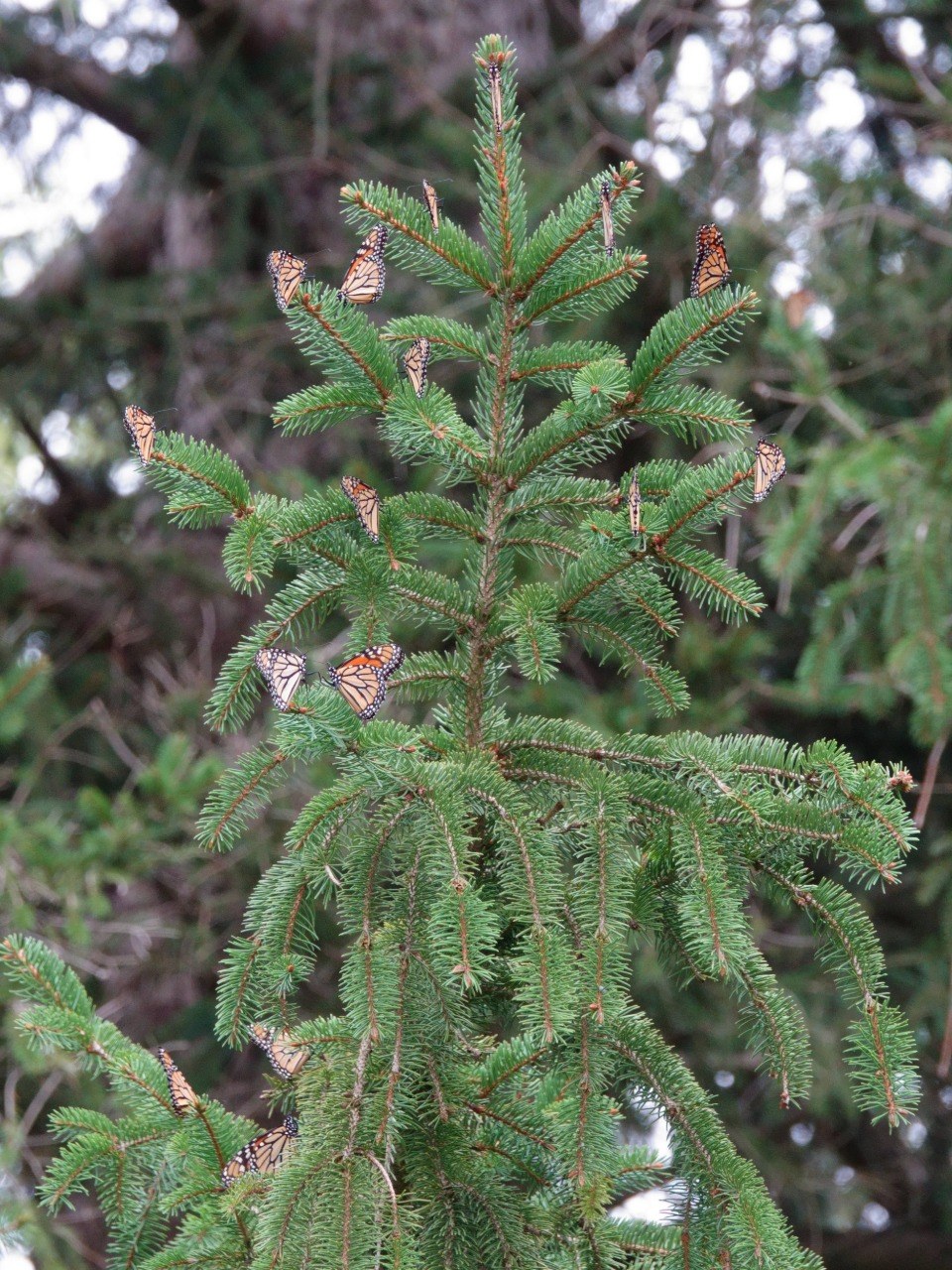
Moving south into the Cornhusker State, the show has continued.
“Noticed that our maple trees lining the driveway had ‘dead leaves’ all over and later determined that they were pockets of hundreds of monarch butterflies drying off or staying after the rain,” Sarah wrote in Colon, Nebraska, on Sept. 17. “They took off this morning after some sunshine and warming! I have tons of pictures and watched for hours.”
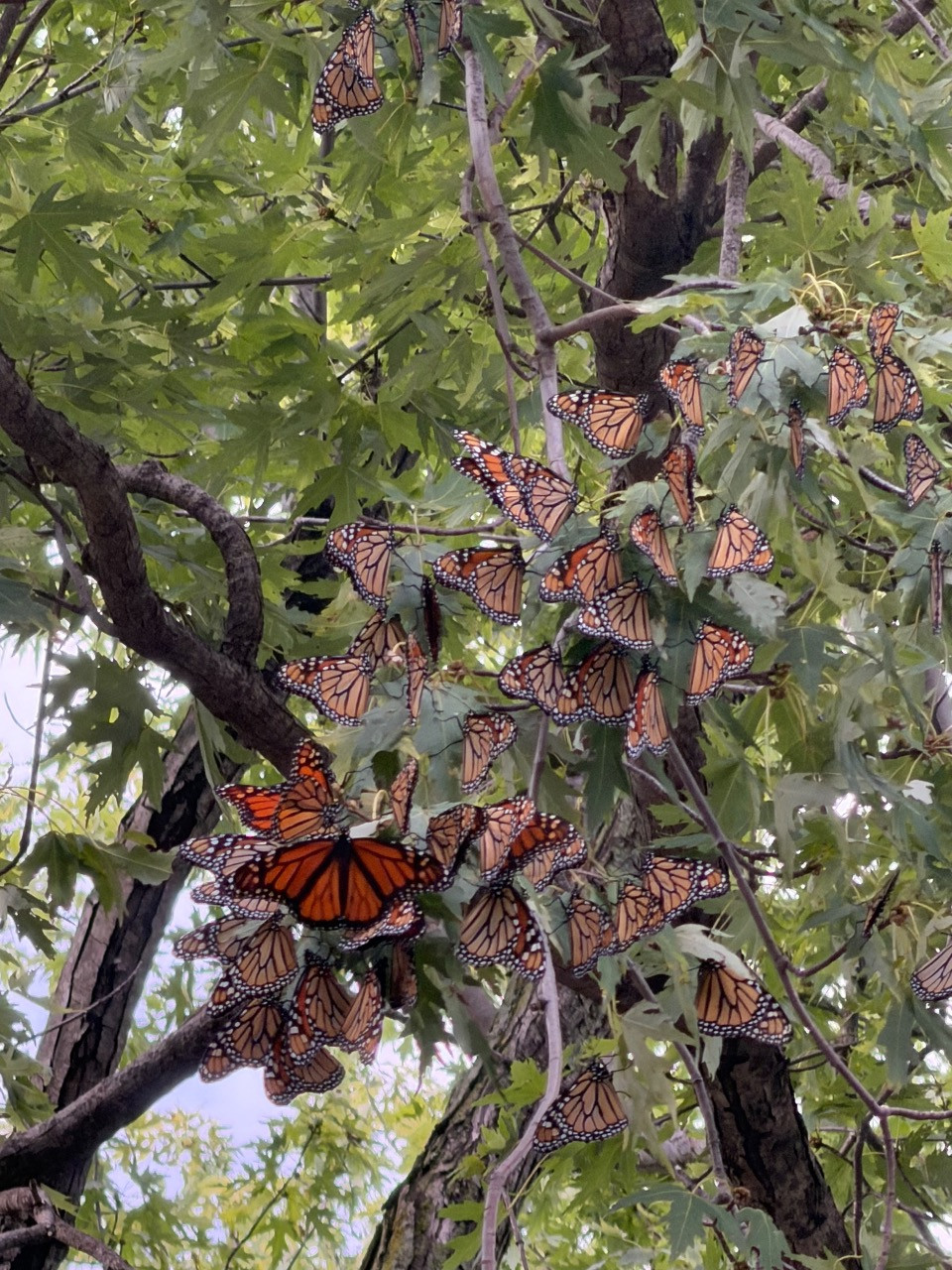
Not all roosts have to number in the thousands, or even hundreds, to be impressive. Just over a week ago, I saw a roost of just 14 monarchs in Madison, Wisconsin, and it’s an impressive sight, even at these lower numbers.
“I always have monarchs but never have any roosting,” Jana in Lincoln, Nebraska, wrote on Sept. 18. “For the first time tonight I had about 30 roosting in sunset maple. Not many, but I thought it was interesting. I have lots of milkweed and flowers for them.”
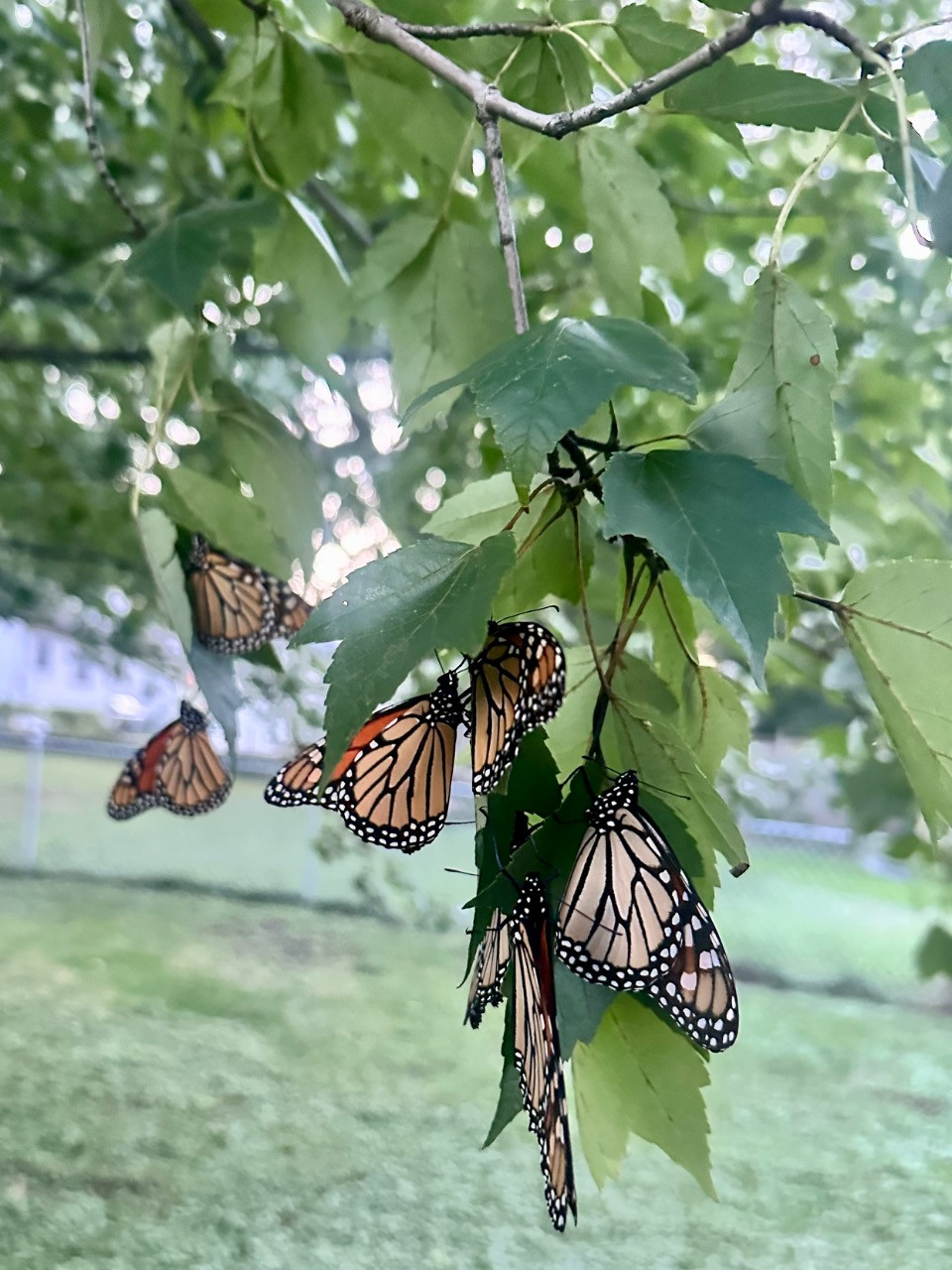
East coast movement
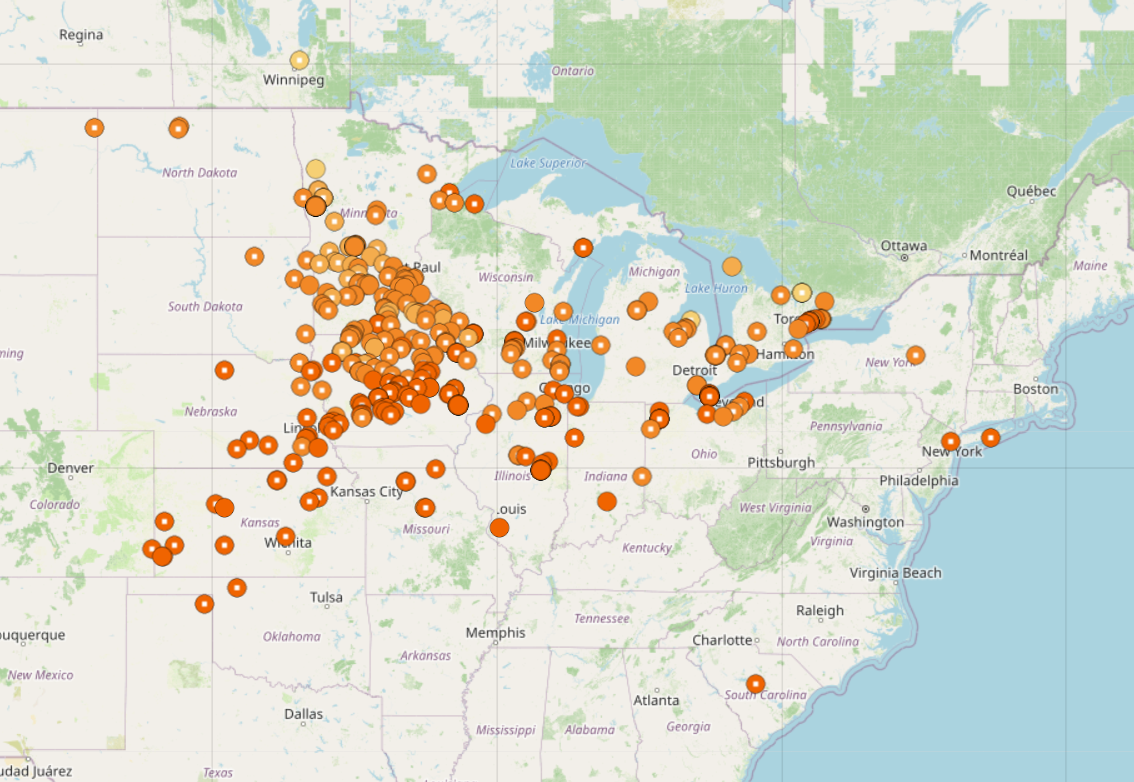
Looking at our map of roost reports, it’s no secret that the Midwest and Great Lakes region is where we see the bulk of our reports, but we have started to receive a few reports from the East Coast over the past few days.
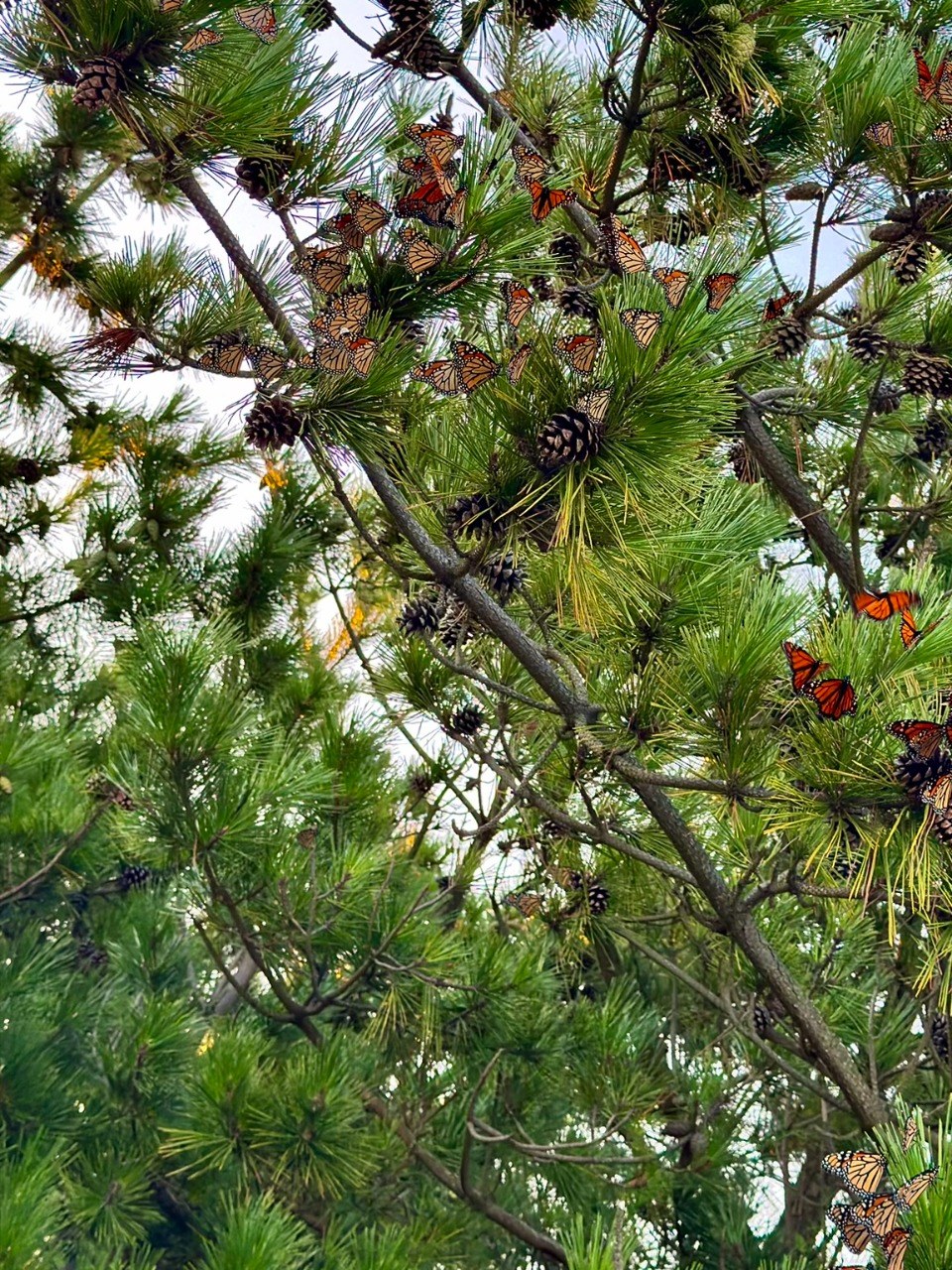
In Westhampton, New York, Britni reported 150 monarchs in a pitch pine tree on Sept. 18. In Jersey City, New Jersey, Stephanie reported 100 the night before.
“Observed 100+ monarchs, some feeding on late boneset and goldenrod, but the majority were roosting for the night as it was about two hours before dusk,” Stephanie wrote.
A new way to follow the migration
I love tracking monarch roosts at Journey North. It's a great way to get a feel for where monarchs are on their routes to Mexico. Personally, it's perhaps my favorite part of this job. The excitement that you can feel in people's writing as they report a roost is a lot of fun to be a part of, and I can't thank Journey North volunteers enough for filling up the roost map with their observations.
While the spring brings the joy of sightings to come, and is a welcome sight after the winter, the southern migration gives us one last hurrah as monarchs stream toward overwintering sites. Although most of us won't experience it in person, there's a lot of excitement that comes with the monarchs reaching Mexico as well.
If you're as excited about the fall migration as I am, there's also a new way of tracking southern movement, called Project Monarch, that you may have heard of. Project Monarch, a collaborative effort founded by Cellular Tracking Technologies (CTT) and the Cape May Point Arts & Science Center (CMPASC), has seen dozens of partner organizations deploy trackers on individual monarchs in 2025 and 2026.
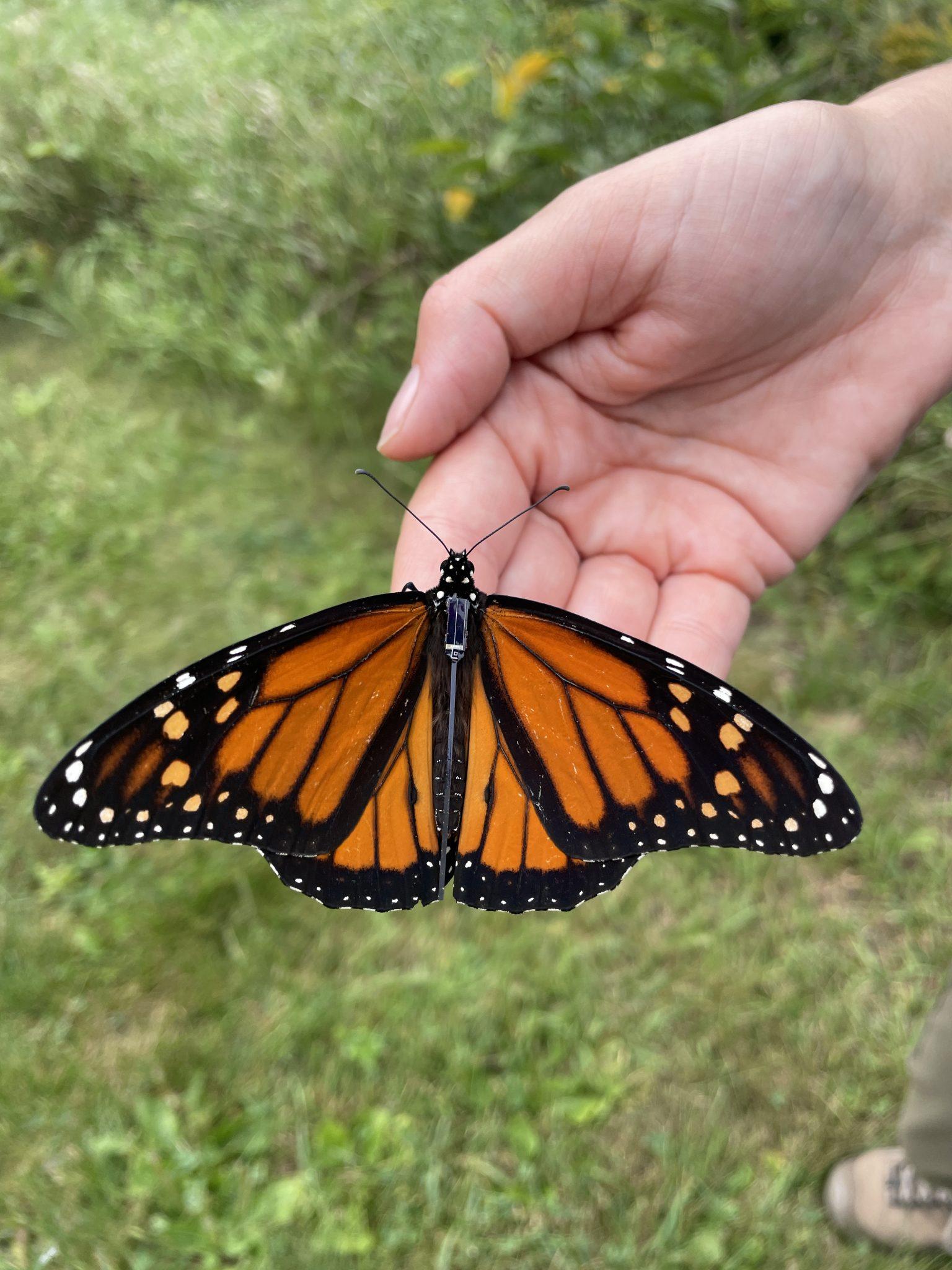
These trackers weigh just 60 milligrams and operate at Bluetooth frequency, allowing the detection of monarchs by everyday smartphones hundreds of times along their migration paths. You can read more about last year's tagging efforts here.
The Monarch Joint Venture, which runs Journey North, has worked with partners to deploy over 100 of these tags this year in Minnesota, Nebraska, and Indiana. You can view all of the tags deployed across North America this year in the Project Monarch app for your phone or web browser, but I'll touch on a few of them here.
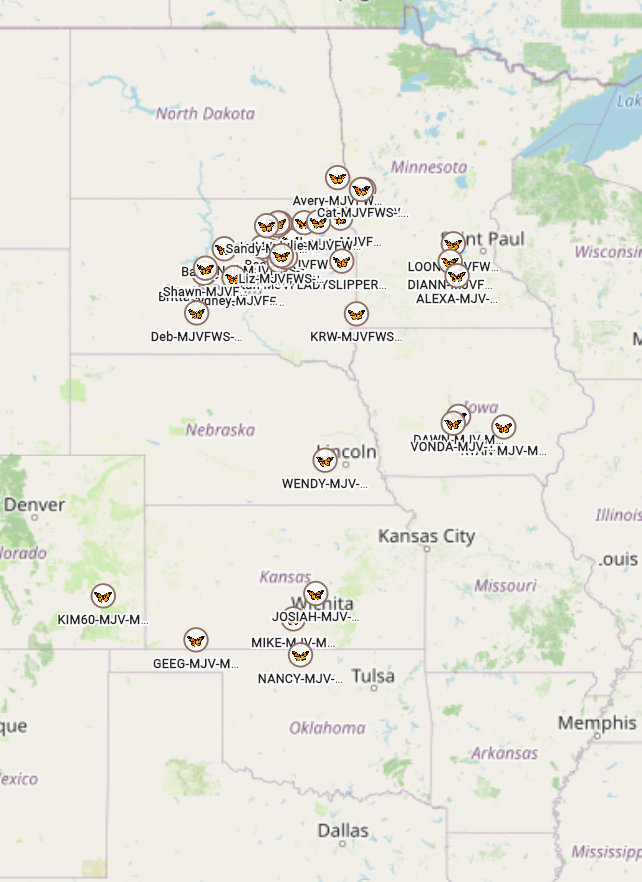
An arrival in Texas
Brooke_NEB26_037, a monarch tagged in Omaha, Nebraska, as part of a partnership between the Monarch Joint Venture, Omaha Zoo, and Nebraska Game & Parks Commission, has been detected 823 times since release 19 days ago, traveling over 1,000 kilometers from Omaha as of Sept. 24.
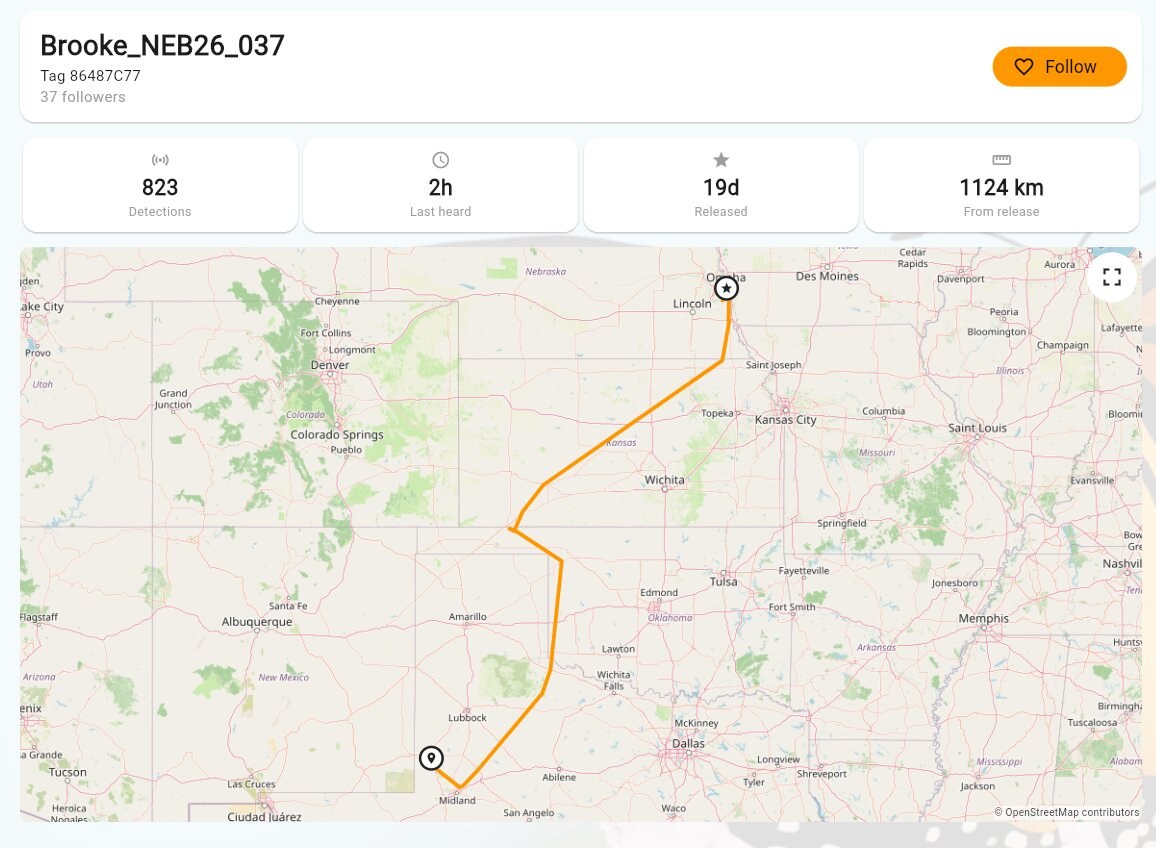
Brooke_NEB26_037 began in Omaha and headed straight south until about the Kansas border, when she took a southwest angle to the Oklahoma border. She is further south than the Texas monarch roost mentioned earlier, with a last-known location northwest of Midland, near the New Mexico border.
Just one monarch is further south in Texas than Brooke_NEB26_037 as of writing: UB26-UT-06-Chew, which was tagged in Utah 22 days ago. Hopefully, they both keep going strong, and they will be some of the first monarchs to reach overwintering sites. Fingers crossed!
A turn into Colorado
Another monarch that coincides with the topics we discussed earlier is KIM60-MJV-MN26-010, tagged northwest of the Twin Cities. These tags were funded by the U.S. Fish & Wildlife Service and deployed with Three Rivers Park District at Crow-Hassan Park Reserve.
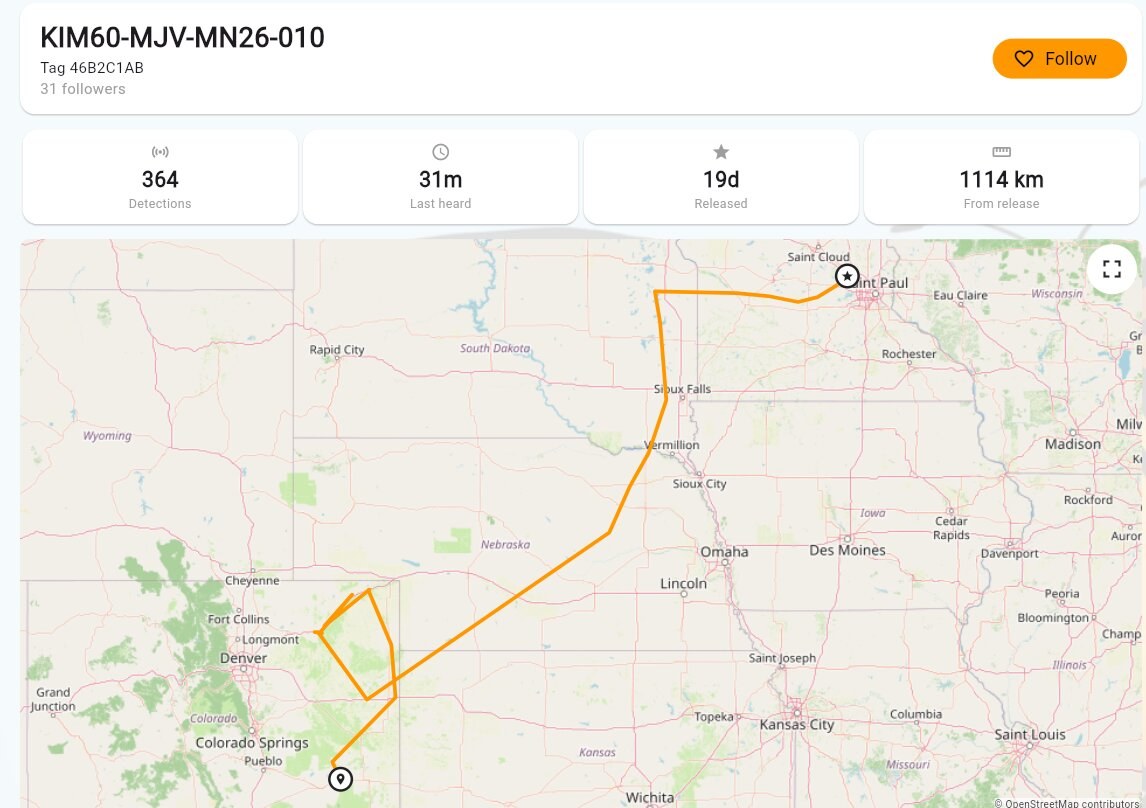
This monarch didn't take the most direct route south, heading west and angling into Colorado since its release 19 days ago. It has been detected 364 times, the most recent of them coming just west of Lamar, Colorado, after detections in South Dakota, Nebraska, and Kansas, as well as a little loop in eastern Colorado.
It was last detected on Sept. 24, so hopefully there are more detections from here. It will be interesting to see its next stop.
A more conventional route
It's interesting to contrast routes like KIM60-MJV-MN26-010's route into Colorado with what -- to us -- might feel a little quicker: just heading straight south. With a few adjustments east and west, NANCY-MJV-MN26-001 has taken a pretty direct route from the Monarch Joint Venture's campus in Belle Plaine, Minnesota, to northern Oklahoma. This monarch began the journey, along with other monarchs tagged in Belle Plaine by MJV, with funding provided by the NextEra Energy Foundation.
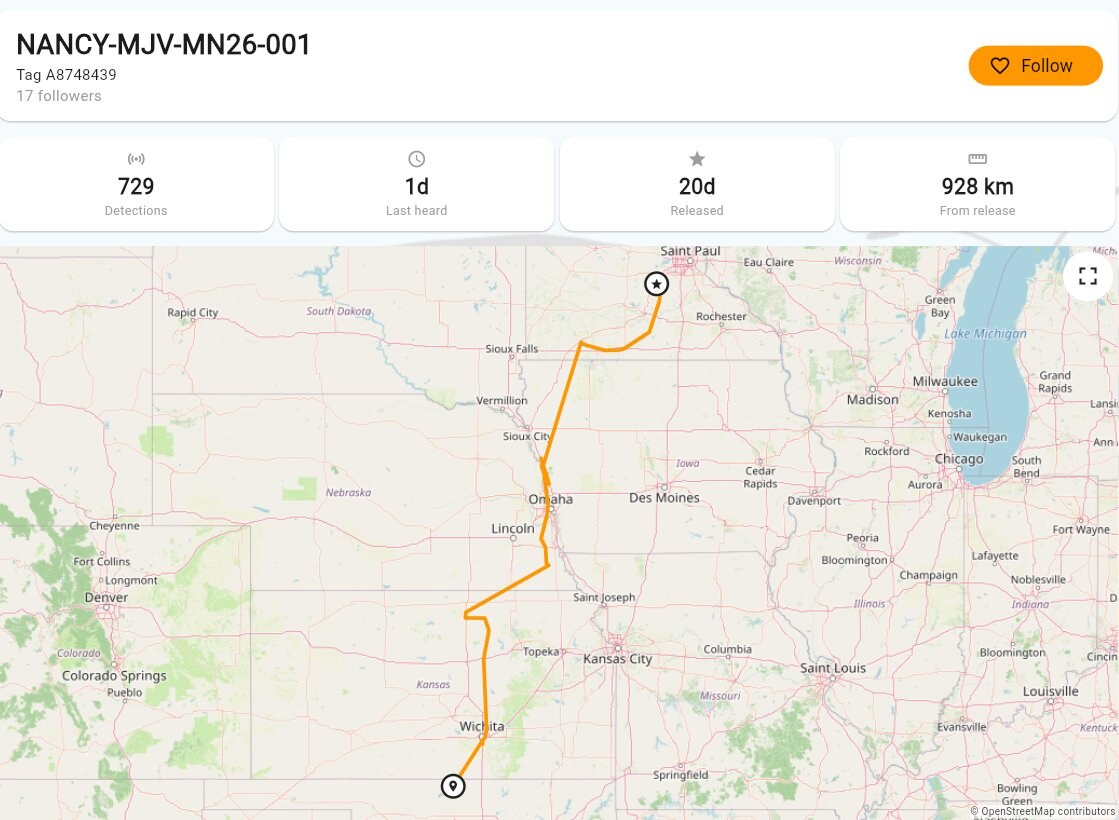
NANCY-MJV-MN26-001 headed southwest, then followed the Iowa-Nebraska border for a bit, then headed straight south through most of Kansas. This monarch has been detected 729 times, the most recent of which came in northern Oklahoma.
All of these photos came directly from the Project Monarch web app. To view all of the Monarch Joint Venture's deployed tags (as well as those from other wonderful conservation groups across North America), head over to the Project Monarch app, where you can filter by organization to find those that were deployed near you.
Breeding update
Breeding decreases as we move through fall, but we're still getting some reports of monarchs laying eggs. A quick scan of the monarch egg report data reveals egg sightings in recent days from Oklahoma, Missouri, Texas, Kansas, South Carolina, Arkansas, and Georgia, but there are sightings a little further north as well.
"We are still finding eggs, even though the migration is clearly in progress," the Friends of Watsessing Park wrote from Bloomfield, New Jersey, on Sept. 15.
Some are still finding eggs in large numbers. The further south these eggs are, the better chance they'll have as adults to finish the migration.
"We surveyed 220 milkweed plants ... and found 135 eggs, 55 caterpillars, and eight adult butterflies," Emily in Black Mountain, North Carolina, just outside Asheville, wrote on Sept. 17.
This time of year, people often question whether monarch eggs and caterpillars they're seeing will have a chance of making it to Mexico. The Monarch Joint Venture has put together a story map to help people understand how timing affects migration success.
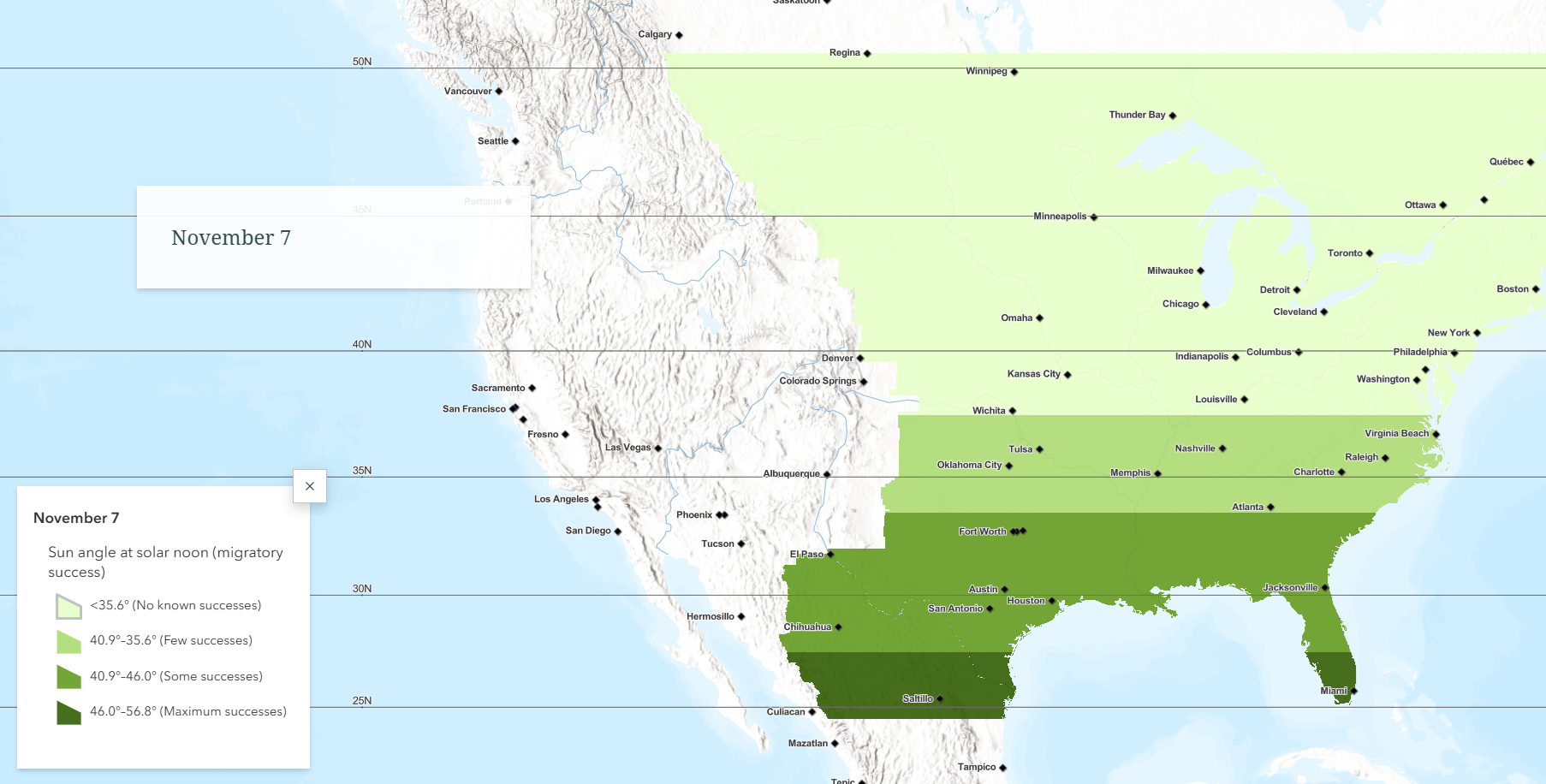
To understand the effects of migration timing on monarch survival, Taylor et al. (2019) investigated monarch tagging data collected through Monarch Watch, a long-term community science program. Monarchs that successfully reached the overwintering grounds were more likely to have started their migration during specific times of the year, based on the angle of the sun.
Migration was most successful when monarchs followed a sun angle between 56.8° and 46.0° at noon (Sun Angle at Solar Noon, SASN). The SASN depends on latitude. Because the Earth tilts toward the sun at different angles during the year, the SASN shifts with the seasons and gets lower throughout the fall.
While each year is different, with changing weather and climate conditions, based on this study, a monarch would need to reach adulthood by the end of October in order to have some chance of migration success. Monarchs in North Carolina would need to reach adulthood by early November.
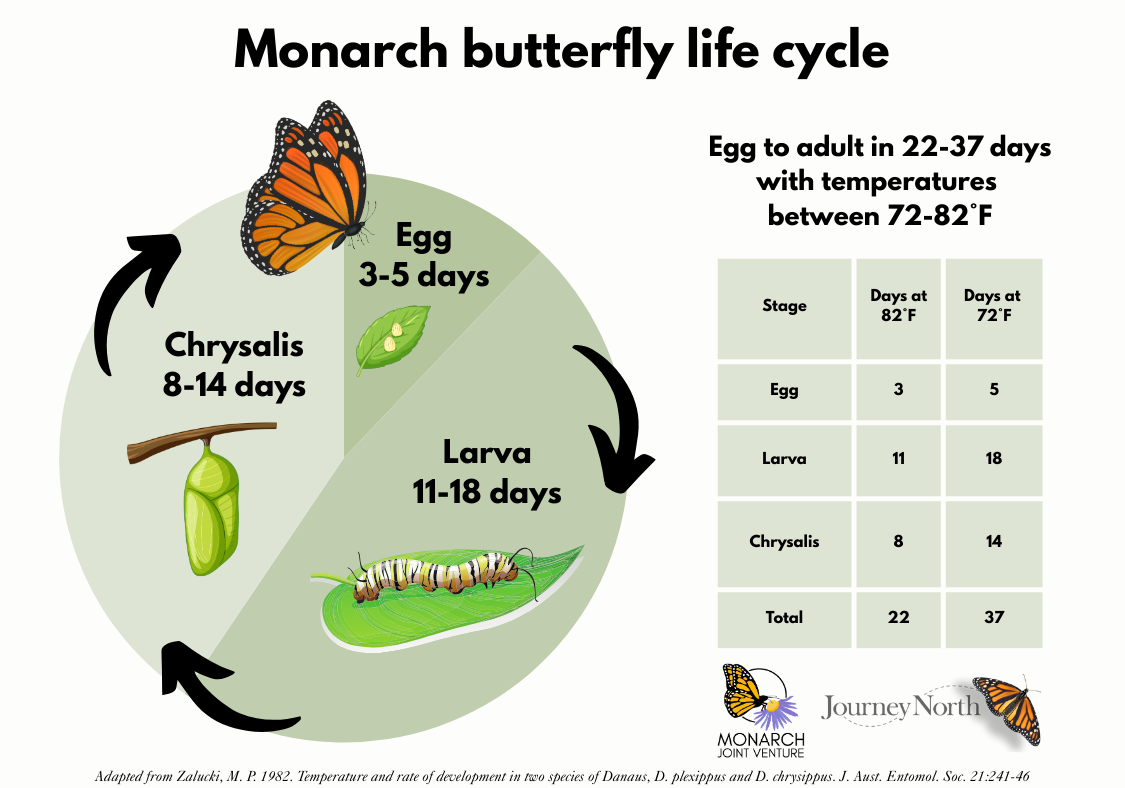
Monarchs typically take between 22 and 37 days to develop from egg to adult under conditions between 72° and 82°F, with development taking longer as temperatures drop, so how long a monarch needs to reach adulthood will depend on the conditions they experience. Colder fall temperatures would result in more time spent developing and a lower chance of migration success.
Wondering whether monarchs near you will still have time to complete the migration? Click here to view the story map.
Midwest farm survey
One last thing: Pollinator Partnership, a partner of the Monarch Joint Venture, is conducting a Midwest Farm Conservation Survey to help improve the value of conservation programs for Midwestern farmers.
If you are familiar with or have participated in the Conservation Reserve Program (CRP) or other Farm Bill Programs, Pollinator Partnership wants to hear from you!
To qualify for this survey, you must currently own and/or manage farmland in one of the following states: Wisconsin, Iowa, Missouri, Illinois, Indiana, Michigan, or Ohio. Please complete the survey in one sitting and take the survey only once. It takes about 15 minutes to complete.
Your participation is voluntary and will make a huge difference for the Midwest’s leadership in agriculture. Your responses will not identify you individually, as results will be aggregated and anonymized.
Pollinator Partnership (a 501c3 nonprofit) is conducting this survey under contract for the USDA. If you have questions about this survey, please contact Jordan Phelps (jordan@pollinator.org) or Vicki Wojcik (vw@pollinator.org) at Pollinator Partnership. Your input really matters. Thank you!