

It’s officially that time of year. In western Minnesota, we’ve received our first roost reports of the season as monarchs cluster en route to their overwintering sites in Mexico.
What are monarch roosts?
Monarch butterflies migrate alone during the day. They come down at night and gather in clusters, called roosts.
Some roosts have only a handful of butterflies, while others will have hundreds or even thousands. Some last for only a night or two, while some trees will be filled with monarchs for a week or longer, and some areas will be used year after year as monarchs make their annual southbound migration.
Having trees that provide some shelter from the wind as well as nearby nectar sources may be two important considerations as monarchs choose roost sites. One hypothesis for why monarchs roost is that it's an anti-predator strategy. Cool temperatures paralyze monarchs, making them vulnerable to predators, so a roost could provide some safety in numbers.
Where have they been seen so far?
Roost reports have begun in western Minnesota. Southeast of Fargo, Doug counted 880 monarchs in Barnesville, Minnesota, on Aug. 15. Two days later, on Aug. 17, a volunteer in Lake Park, Minnesota reported a roost, writing, “some roosting but a ton that were active and flying around.”
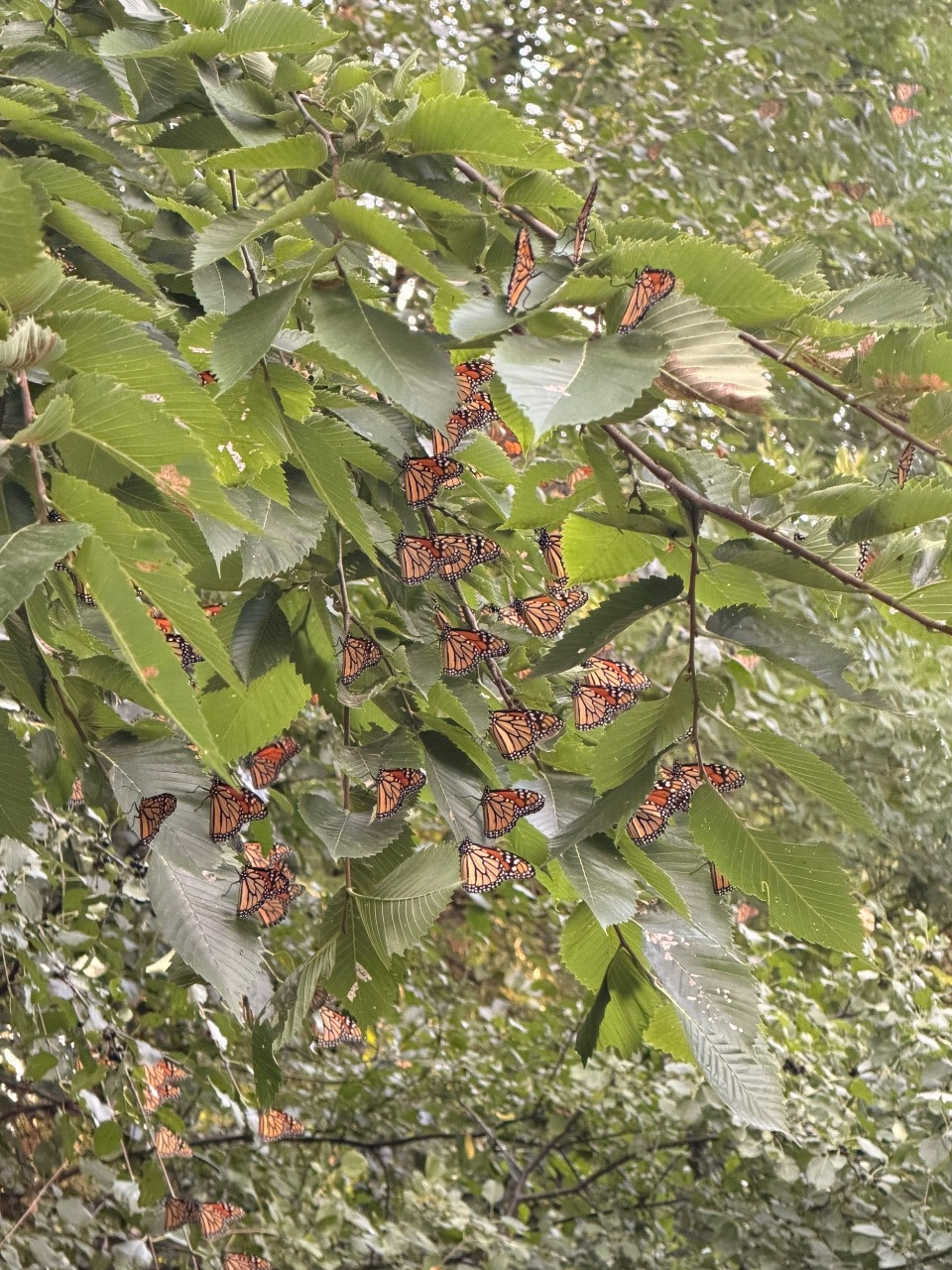
Moving south along US-59, one observer in Morris, Minnesota reported a roost of 10 monarchs on Aug. 16.
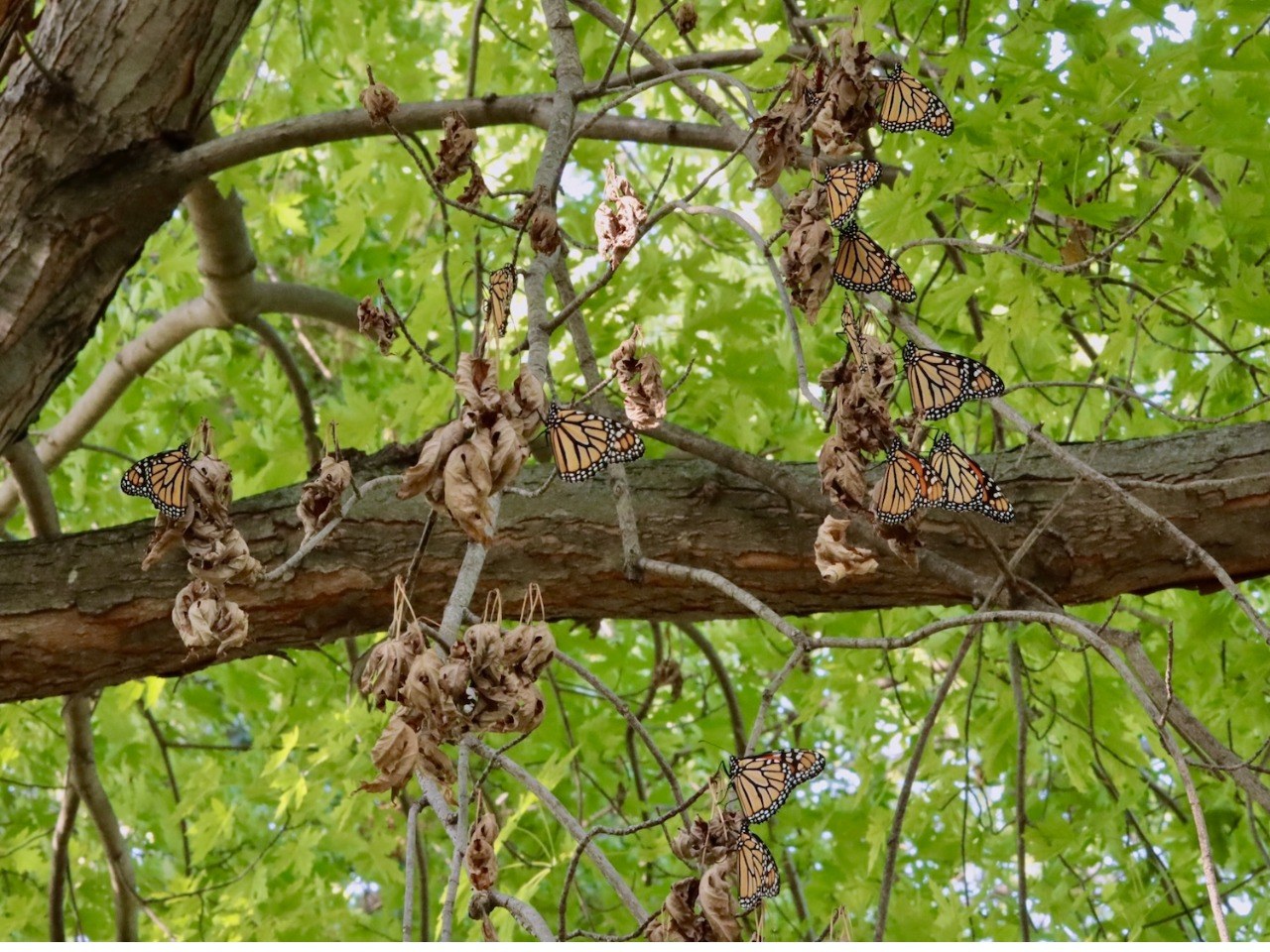
Further east, we’ve had initial reports as well. Diana in Pigeon, Michigan, near the thumb of the Lower Peninsula, wrote on Aug. 9 at 7:58 p.m. that “Several monarchs were getting ready to roost in my silver maple trees. I own 3 acres and have conifer trees for a windbreak on the entire perimeter of my property. I have monarchs everywhere this year. I just observed these by my barn.”
At Point Pelee National Park in Ontario, where monarchs are known to gather before crossing Lake Erie, monarchs have been reported flying south.
On Aug. 15, Laura wrote, "I had a reliable report from the shuttle driver at Point Pelee National Park whose shift was from 13:00 to 20:00 that 17 monarchs were observed in directional flight towards the tip of Point Pelee (southerly direction)."
Report fall roosts
You can report fall roosts by visiting the Journey North reporting form. Select “Monarchs & Milkweeds” as the project, then “Monarch Butterfly” as the species. Then, you can select “Monarch Fall Roost” as your life stage or type of observation.
It’s important to note that not all monarchs landing in trees constitute a fall roost. Monarchs may land periodically in trees to rest or sun themselves to warm up.
If you see multiple monarchs gathering in the evenings and settling in one place, you may be seeing a fall migratory roost, or you may see what’s left of a roost in the morning before monarchs take off again for the day.
Viceroys, one of the most common monarch lookalikes, also frequent trees, as their host plants include willow, poplar, cottonwoods, and aspen trees.
Breeding continues
There’s not a distinct line between when monarch breeding ends and fall migration begins. The adult monarchs alive now that were born weeks ago are not migratory monarchs that enter reproductive diapause and are still breeding.
While the monarchs that emerge now are preparing or even beginning migration, you may still see signs of monarch reproduction, including eggs and larvae. These eggs and larvae still have time to finish their development and begin the migration process in the coming weeks.
“Nine eggs throughout milkweed patch, mostly on the buds of flowers,” Amelia wrote from Saint John, New Brunswick on Aug. 10.

“Counted 15 monarch eggs on three species of milkweed: swamp, common, showy,” Diana in Mooresville, Indiana, wrote on Aug. 7. “This one looked ready to emerge and was very active inside the egg.”
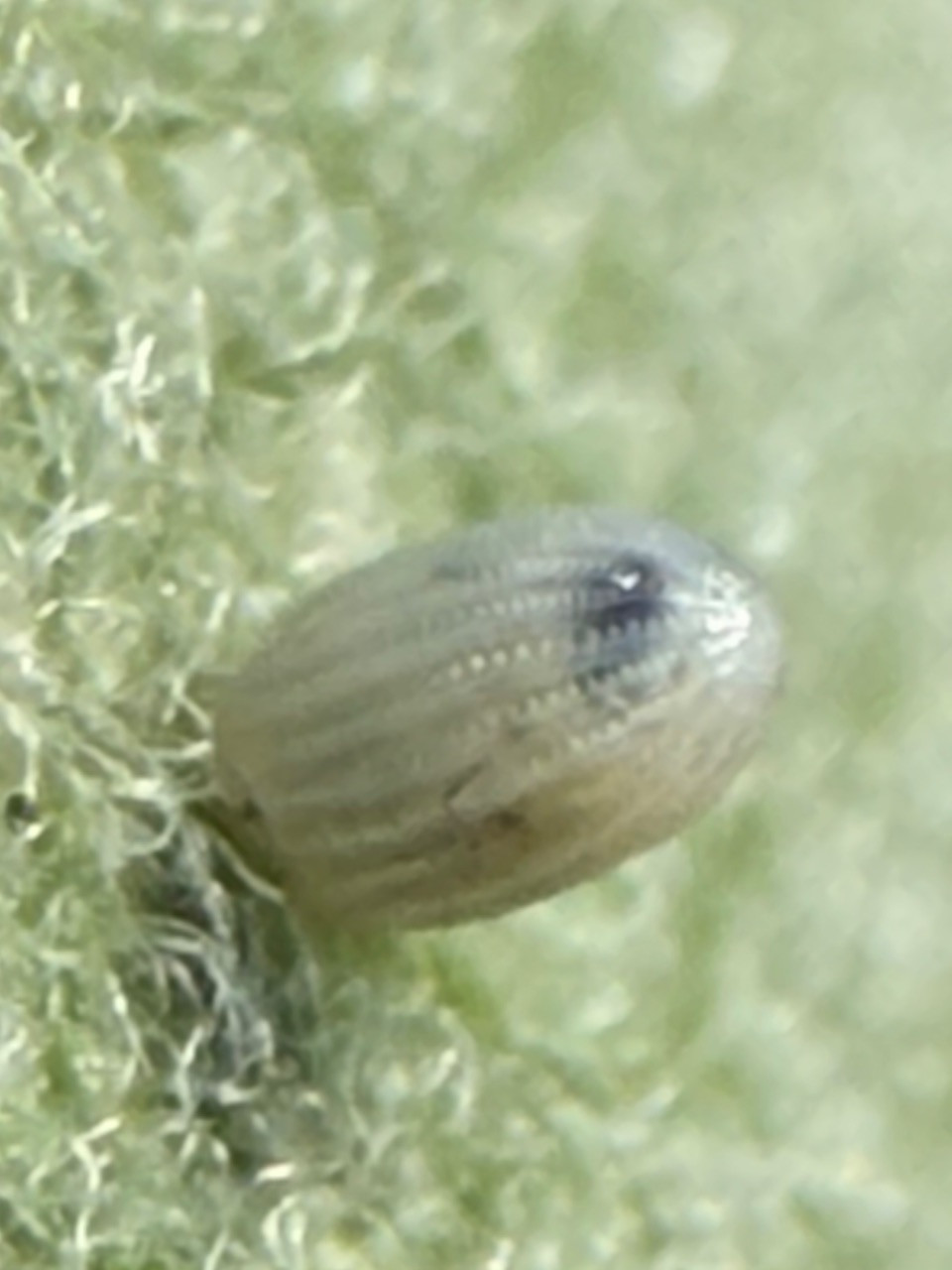
“Too many eggs to count,” Lou Ann wrote from Pataskala, Ohio, on Aug. 9.
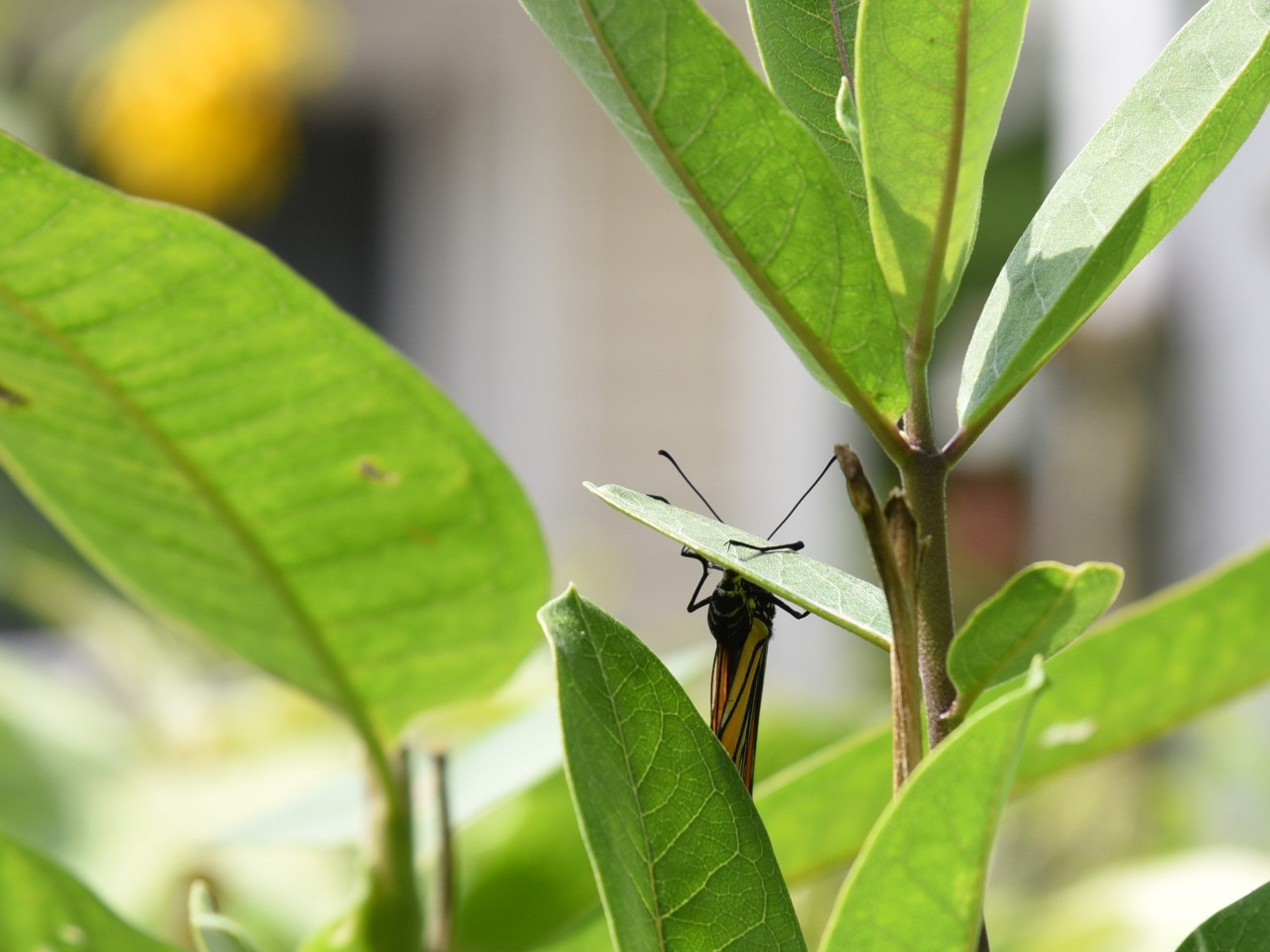
Since the start of August, egg sightings have been most concentrated above the state lines of Oklahoma, Arkansas, Tennessee, and North Carolina, but there have been some sightings in southern states.
“I saw a butterfly laying eggs a couple of days ago,” Mary Alice in Eagleville, Tennessee, wrote on Aug. 16. “Have since counted at least 19 eggs. Thinking I missed a second monarch coming through!”
We’ve received a pair of egg reports in Georgia, one in Alabama and Louisiana, several in Texas, and some in Florida.
A note about captive-reared sightings
I also just wanted to provide a quick reminder about captive-reared sightings. As of the beginning of this year, Journey North is no longer accepting reports of monarchs being raised in captivity.
Monarch larvae, chrysalises, or adults that you have in butterfly enclosures, even if being raised outside, should not be reported to Journey North.
Thank you for continuing to contribute your sightings of wild monarchs to Journey North. If you have any questions, please email us at journeynorth@monarchjointventure.org.
Thank you for participating in the Monarch Blitz
The 10th annual International Monarch Monitoring Blitz wrapped up on Aug. 9. Thank you to everyone who submitted reports of monarchs or milkweed as part of this year’s event.
We’ll have more information in the future once we have a chance to exchange data with our other Blitz partners, but on the Journey North end, we received over 4,300 reports of over 47,000 monarchs and milkweed plants.
We appreciate your continued support of Journey North and look forward to seeing your reports throughout the rest of August and into the fall migration.