
June is here, and that means the Ruby-throated Hummingbird migration is largely behind us, but late May brought a bit of final movement as these tiny little birds made it to the furthest reaches of their range in the Northeast and Northwest.
I wrote in our May 20 hummingbird news update that hummingbirds had been spotted from Alberta to Nova Scotia, so there wasn’t a ton of area left for hummingbirds to cover on their migration. Still, we received one report from Colinton, Alberta (54.62, -113.25), about 74 miles northeast of Edmonton, extending our map dots to the west of where they were as of last week.
Small sections of Alberta are also within the Rufous Hummingbird and Black-chinned Hummingbird's ranges, and we received a report of each in May. On May 17, an observer reported a juvenile male Rufous Hummingbird in Calgary, and Christopher in Burmis, Alberta, reported a Black-chinned Hummingbird on May 25.
"Always the last to arrive," Christopher wrote.
In Val Rita (49.44, -82.54), we got our northernmost Ruby-throated Hummingbird sighting from Ontario on May 26, with Ann writing, “First sighting!!! Sitting on a tree branch.”
Hummingbirds are still brightening people’s June as they record their first observations even further south. Some people have had to wait a little longer, but it’s exciting just the same when you see your first hummingbird of the year.
“Put up three feeders April 1,” John in Falls Church, Virginia, wrote. “First sighting June 2.”
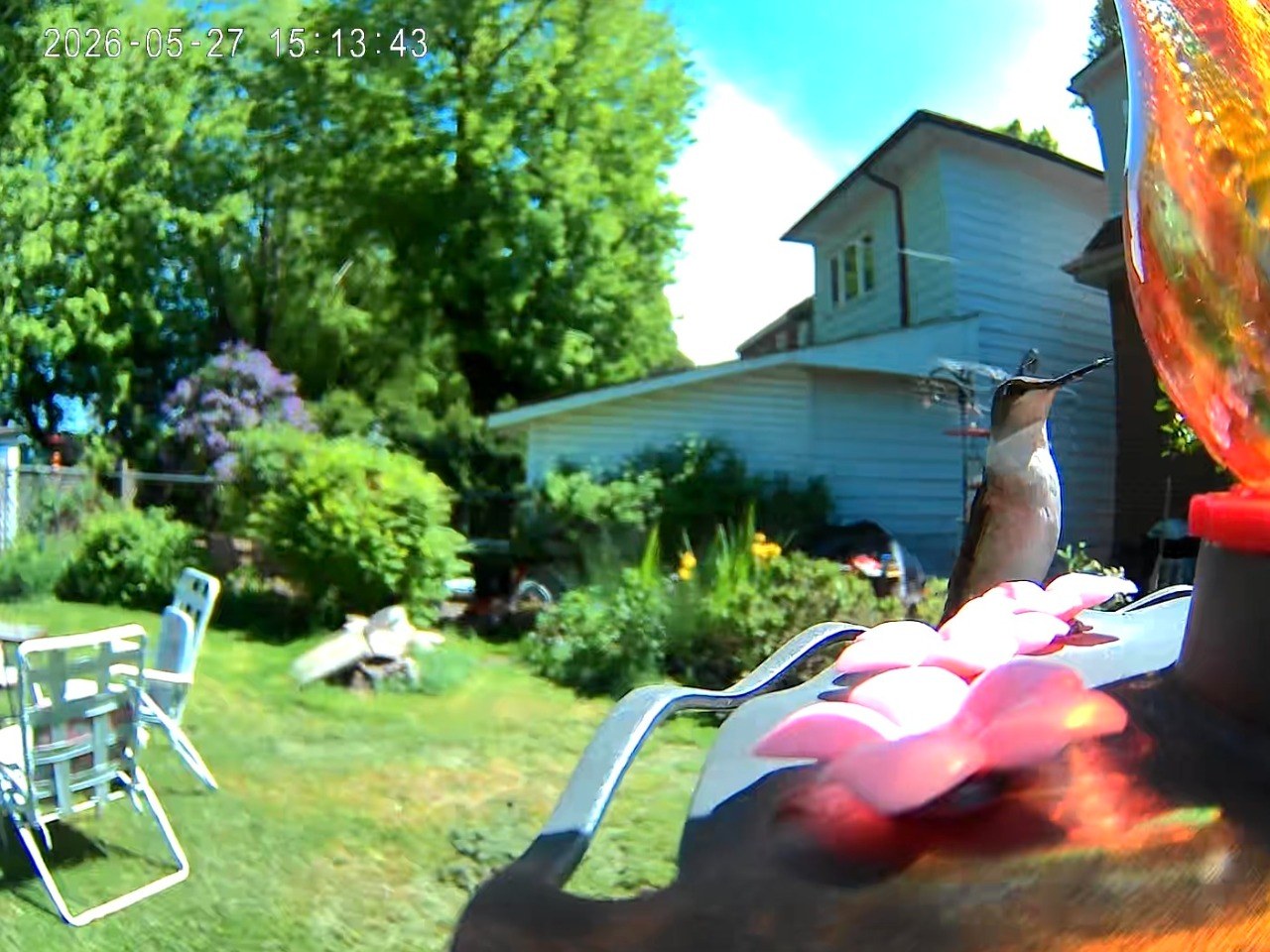
You can still report hummingbirds you see after your first observation of the season to Journey North, and many people have been sharing their visitors with us in recent weeks.
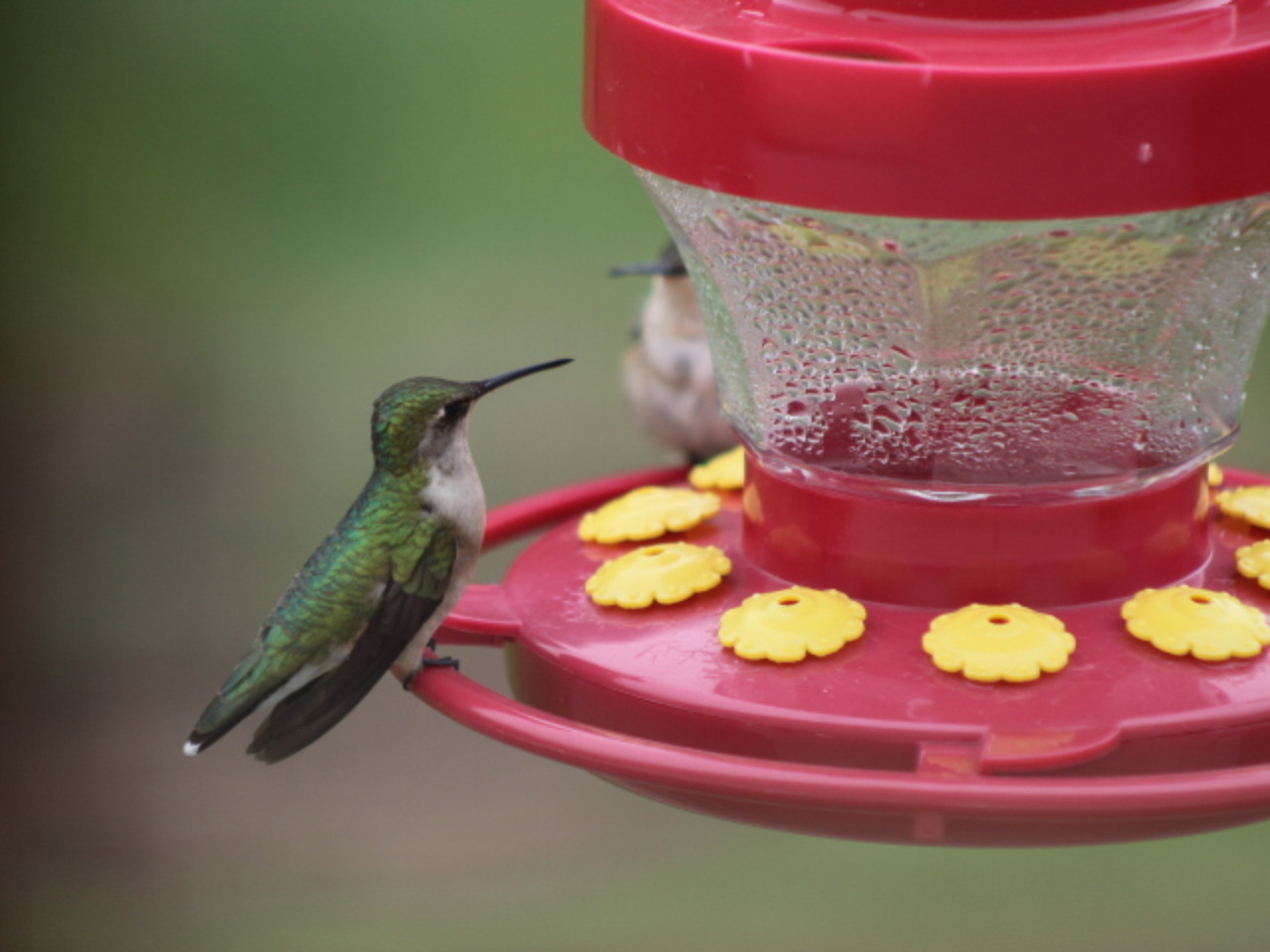
“A lovely female Ruby-throated Hummingbird visited one of my feeders today,” wrote Karen in Toronto, Ontario, on May 27.
“Sighted at least one male and two females at our feeder,” wrote Linda in Chatham, Ontario, on May 25. “Here are the two gals chatting each other up!!”
The 2026 migration in review
With sightings being reported in every U.S. state and Canadian province within the Ruby-throated Hummingbird’s range, I thought it would be a good time to take a look back at this spring’s migration.
Take a look at the map below to see when hummingbirds arrived in your state or province this year. To give the best possible sense of the migration, we removed outliers where a hummingbird was spotted 10 days or more before any other sighting in the state, but there still may be dates that stick out, like in my home state of Wisconsin, where there was a sighting before Iowa or Illinois to the south.
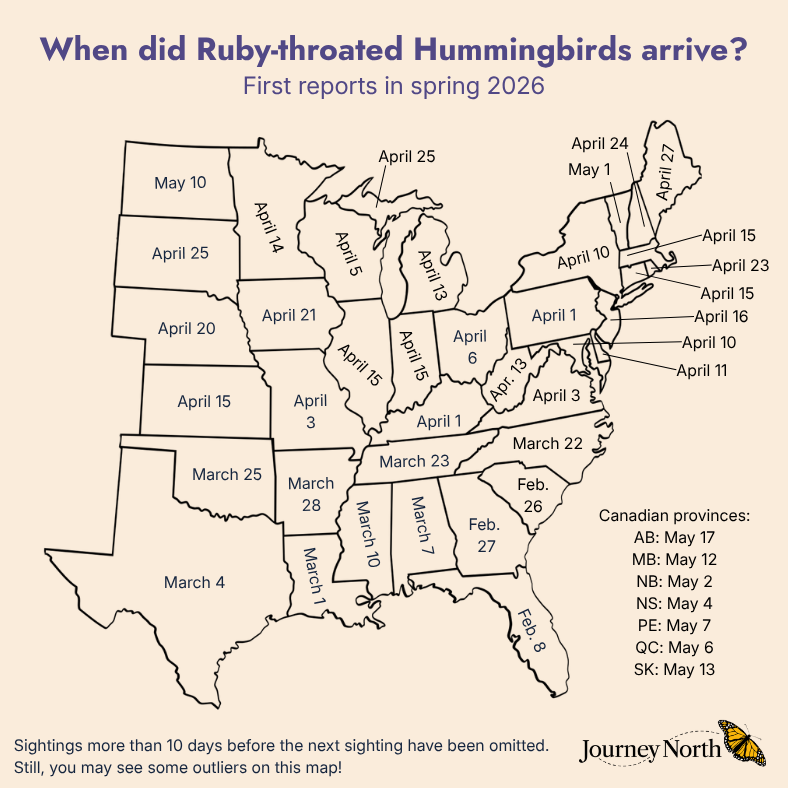
There were four sightings in Wisconsin before April 21 (April 5, 14, 16, and 18), but it was April 21 when we started to receive daily hummingbird reports from the state. When you’re looking at the map, it’s important to note this possibility, as someone out there is always going to be the first one to spot a hummingbird, and sometimes, that first sighting can come earlier than we expect!
Looking at the graphic above, you can see monarchs reaching the states of Oklahoma, Arkansas, Tennessee, and North Carolina in late March, then stretching into Missouri, Kentucky, and Virginia in the first few days of April. By mid-April, monarchs had reached the Upper Midwest, and every U.S. state besides Vermont and North Dakota had at least one sighting before May.
All the Canadian provinces had their first sightings in the first two weeks of May except for Alberta, which became the last province to record a sighting when its first report came in on May 17.
If you’d like to review your state or province’s sightings from this spring in more detail, click here, where you can filter by state, date, latitude and longitude, and more.
To visualize this year's hummingbird migration in another way, check out the video below, which shows a time-lapse of all Ruby-throated Hummingbird reports this spring.