


Update from Mexico
By Estela Romero
The decline of the season seems to prolong despite the warm temperatures reaching up to 24°C and the intense, unusually bright sunlight.
For nearly a month now, we have witnessed an extraordinary number of monarch butterflies departing.
There is low to normal evidence of mortality: dry or torn wings, dry or nonexistent abdomens… no extraordinary mortality events so far this season.
Very low signals of mating activity have remained constant over the past few years.
The Sierra Chincua colony, until its total decline days ago, was great.
With perhaps less than half the total population in El Rosario Sanctuary still remaining, today, Saturday, March 7, we have witnessed one of the most extraordinary departures we have seen within the last few years.
Today, El Rosario's colony seems to be confirming that the population levels this season could have simply reached unexpected, far higher numbers than anticipated.
Estela Romero
Journey North
Angangueo, Michoacán, México.
El declive de la temporada parece prolongarse a pear de las temperaturas elevadas que han alcanzado hast 24 C y la intensa, inusual luminosidad del sol.
Por casi un mes hemos atestiguado cantidades extraordinarias de monarcas yéndose.
Se observa una baja a normal evidencia de mortandad: alas secas y maltratadas, abdómenes secos o inexistentes… ningún evento de inusual mortandad hasta ahora en la temporada.
Muy bajas señales de apareamiento se mantienen como una constante en los últimos pocos años.
La colonia en Sierra Chincua, hasta su declive total hace días, fue grandiosa.
La colonia El Rosario, con quizás menos de la mitad de la población total aún en su sitio, nos ha ofrecido hoy, Sábado 7 de Marzo, uno de los más extraordinarios espectáculos de salida que podríamos haber atestiguado los años recientes.
Hoy, el Santuario El Rosario parece haber confirmado que el nivel de población esta temporada podría haber alcanzado niveles inesperados, mucho más altos de los que se hubieran advertido.
Estela Romero is an environmental educator with Monarchs Across Georgia. Her work is made possible by funding from Monarchs Across Georgia and the Monarch Butterfly Fund.
Monarch reports pick up in Texas
By Jacob Swanson, Journey North program coordinator
Monarch reports have reached the border of Texas and Oklahoma, with Kelley in Denison, Texas, just south of the Oklahoma border, reporting a monarch with a photo on March 10. We have received a couple of reports from Oklahoma, but without a photo yet to confirm their arrival with certainty.
"My daughter and I saw a monarch flying across the street from us. My daughter kept her eye on it while I went to get my camera, but I did not get a picture as it went in someone's backyard," Wynell in Calera, Oklahoma, wrote on March 8.
We'll keep watching over the next few days.
The bulk of our reports is not yet this far north, as monarch movement is a gradual process. The monarchs that left the Monarch Butterfly Biosphere Reserve several weeks ago, or even monarchs that may have spent the winter outside the traditional overwintering sites, may be at the leading edge of the migration, while other monarchs are just leaving overwintering sites, as Estela tells us in her latest report. This should mean a continued wave of monarchs moving across Texas in the next few weeks. We look forward to all of your reports as they move through the state!
It's a familiar sight to see map dots start popping up in areas around Ciudad Victoria and Monterrey, courtesy of reports from our friends at Correo Real during the spring and fall migrations. That has continued this spring, so thank you to Correo Real for collecting those reports as monarchs move through Mexico!
At its shortest distance, Monterrey is just under 90 miles from the border of Texas. With the right conditions, that could be just a day or two of flying for a monarch!
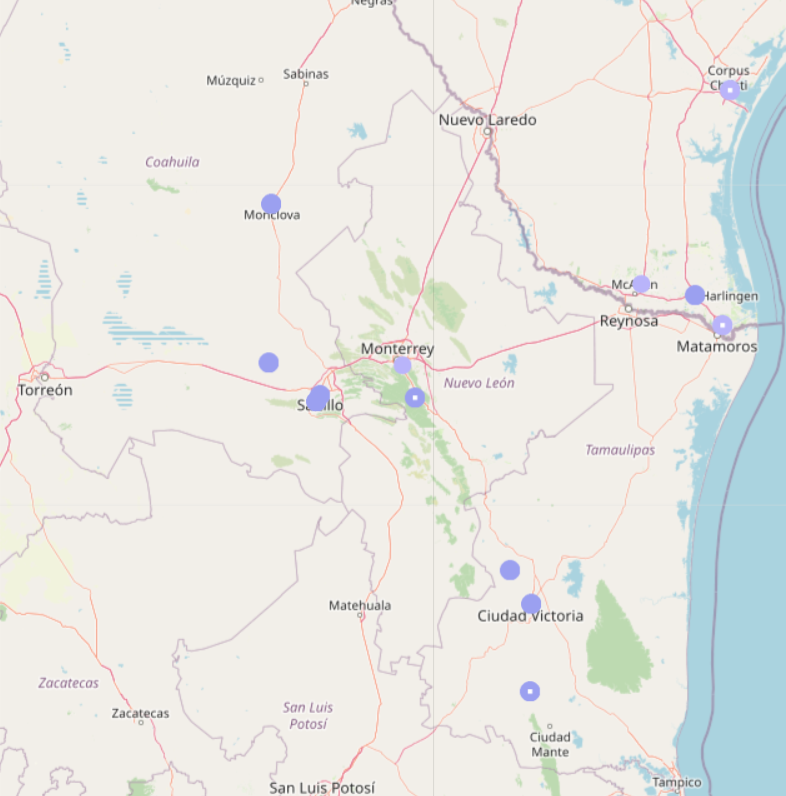
We also got one report a little further west. On March 1, Correo Real passed along a report of seven monarchs from Angel Omar Salinas in Durango, Mexico. Durango is Northwest of the Monarch Butterfly Biosphere Reserve.
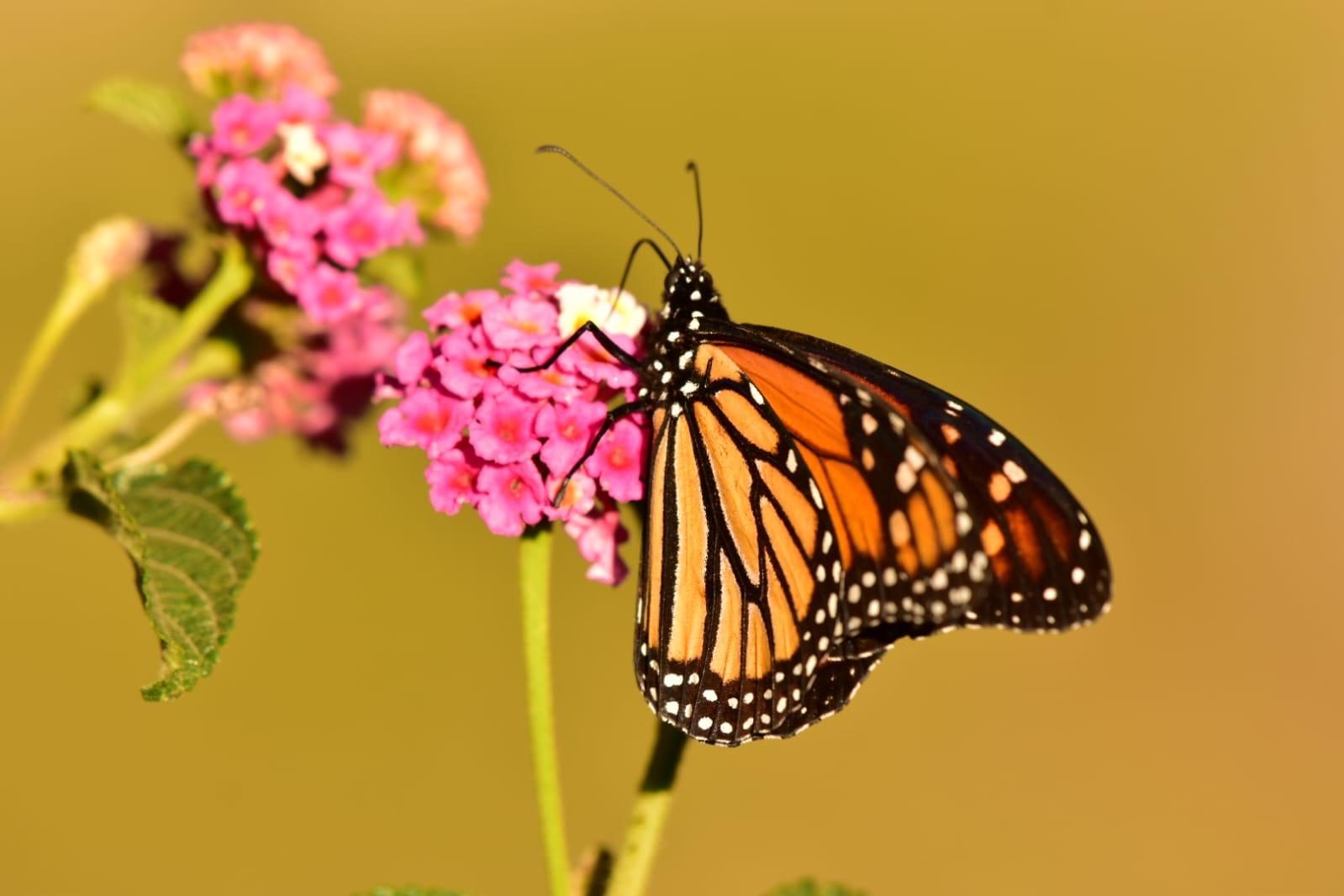
Individual monarch tracking from Project Monarch has also shown a few monarchs heading west from overwintering sites. If you're not familiar with Project Monarch, it was a program that took off last year from Cellular Tracking Technologies and the Cape May Point Arts and Science Center to attach tiny tracking devices to monarchs. They run on the same frequency as Bluetooth, allowing cell phones to pick them up within a certain range.
As you can see in this screenshot from Project Monarch, monarch CHI018 has headed west. Each blue dot represents a different instance where the monarch's tracker was picked up.
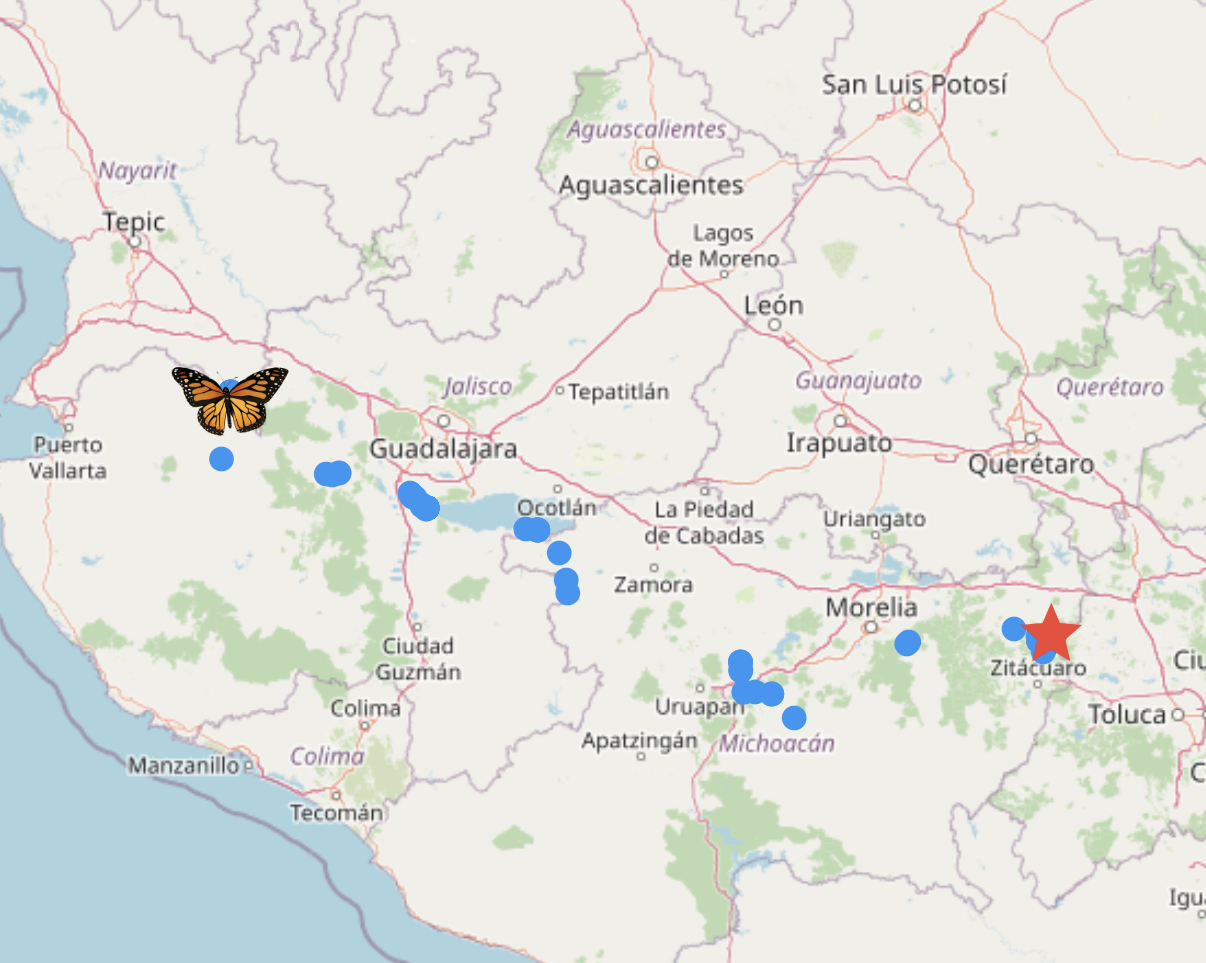
Download the Project Monarch app on Android or iPhone to follow along with monarchs as they continue their migration this spring. It will be interesting to see where this monarch in particular goes from here. Will it revert to the east, or will it start heading north from where it is now? Or something else entirely?
Other sightings from the South
In the past few days, we've also received a few reports of monarchs from up the Atlantic Coast a little bit, including one in Fernandina Beach, Florida, and another in Brunswick, Georgia.
On March 3, Brandi in New Orleans posted a photo of a monarch, writing, "first observation of a butterfly in New Orleans this spring. Large, looked in good shape, flying around and laying eggs."
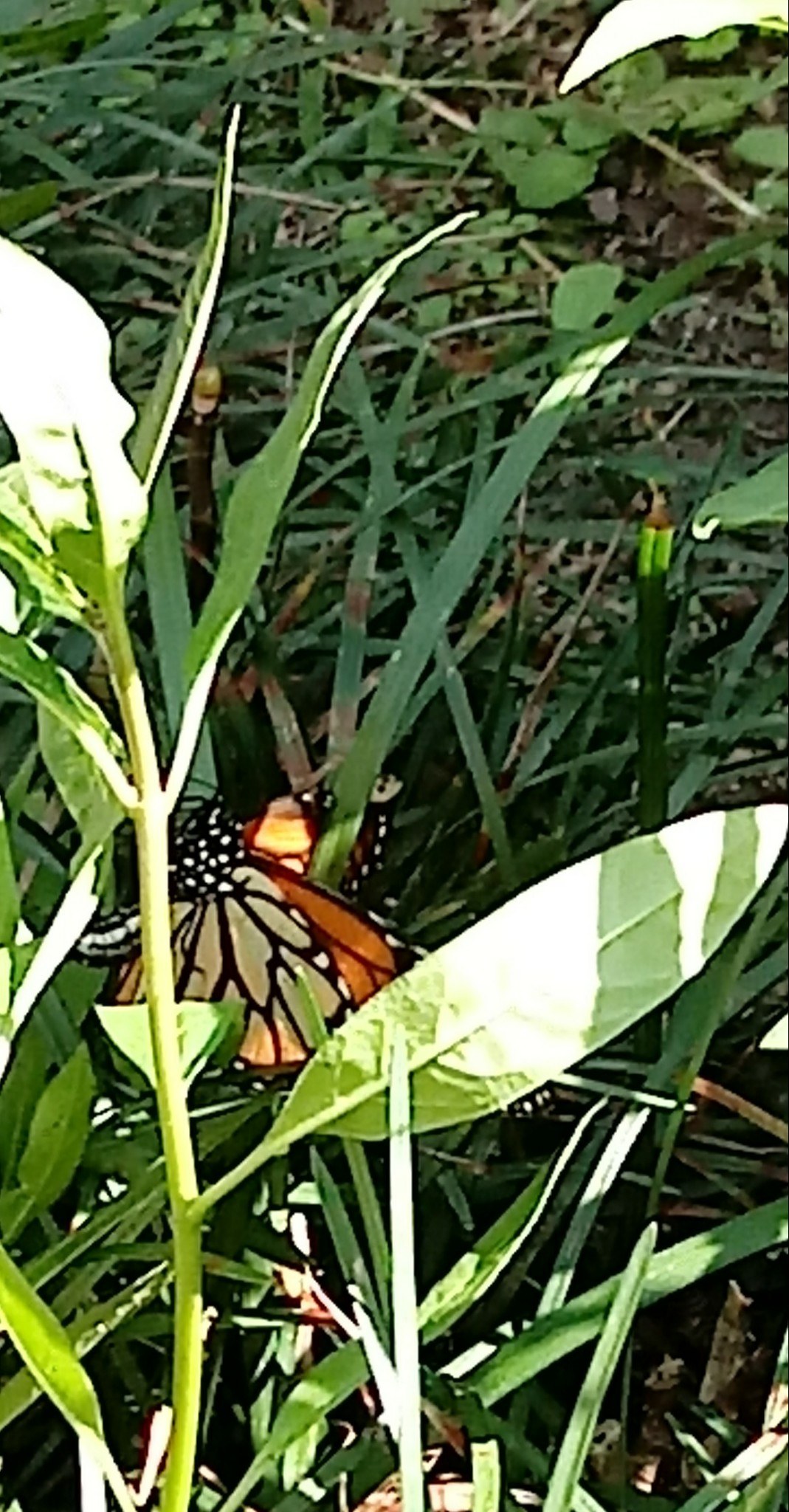
Could these be monarchs that spent the winter in other sites? There are monarchs that spend the winter in Florida, in particular, as opposed to migrating to Mexico, and this is a population that we don't know as much about.
With each monarch observation that you submit to Journey North and beyond, you help us increase our understanding of this interesting migration and all of its dynamics. When you see a monarch this year, let us know!