

As March opens, few monarchs are lingering at the California coastal overwintering sites as the spring migration urges them on their way to the summer breeding areas. The initial portion of their journey and the success of their mating and egg-laying on early emerging milkweeds will lay the foundation of next winter’s population.
Much about monarch activity in this time period is still unknown, but citizen scientists are working tirelessly to fill data gaps to clarify the overall picture. With the breeding season now in progress, we look forward to your reports to track their movements.
Journey North's first sighting and adult monarch observations paint a recent map of monarch sightings in the highest density in southern California and the deserts of Arizona. They are also moving across the central coastal California regions, shown by recent detection sightings on the Project Monarch app, both overwintering and spring radio-tagged monarchs that haven’t been reported.
Monarch Sighting Reports
This winter was warm across the southwestern region. Some locations, such as Phoenix, Arizona, had the warmest meteorological winter ever with a record-shattering number of 80+ degree days. The warm temperature periods with little precipitation in the Southwest created an ideal environment for winter monarchs in pockets to thrive. Now they are appearing and on the move. The official overwintering population in California was the third-lowest ever. The role monarchs play in southern California and in the deserts of Arizona in the future breeding population is still unknown.
In southern California, monarchs were seen the last week of February in Los Angeles, visiting Theresa’s narrowleaf milkweed, and in Long Beach, where Allene reported a male feeding on a lush redclaw plant filled with flowers.
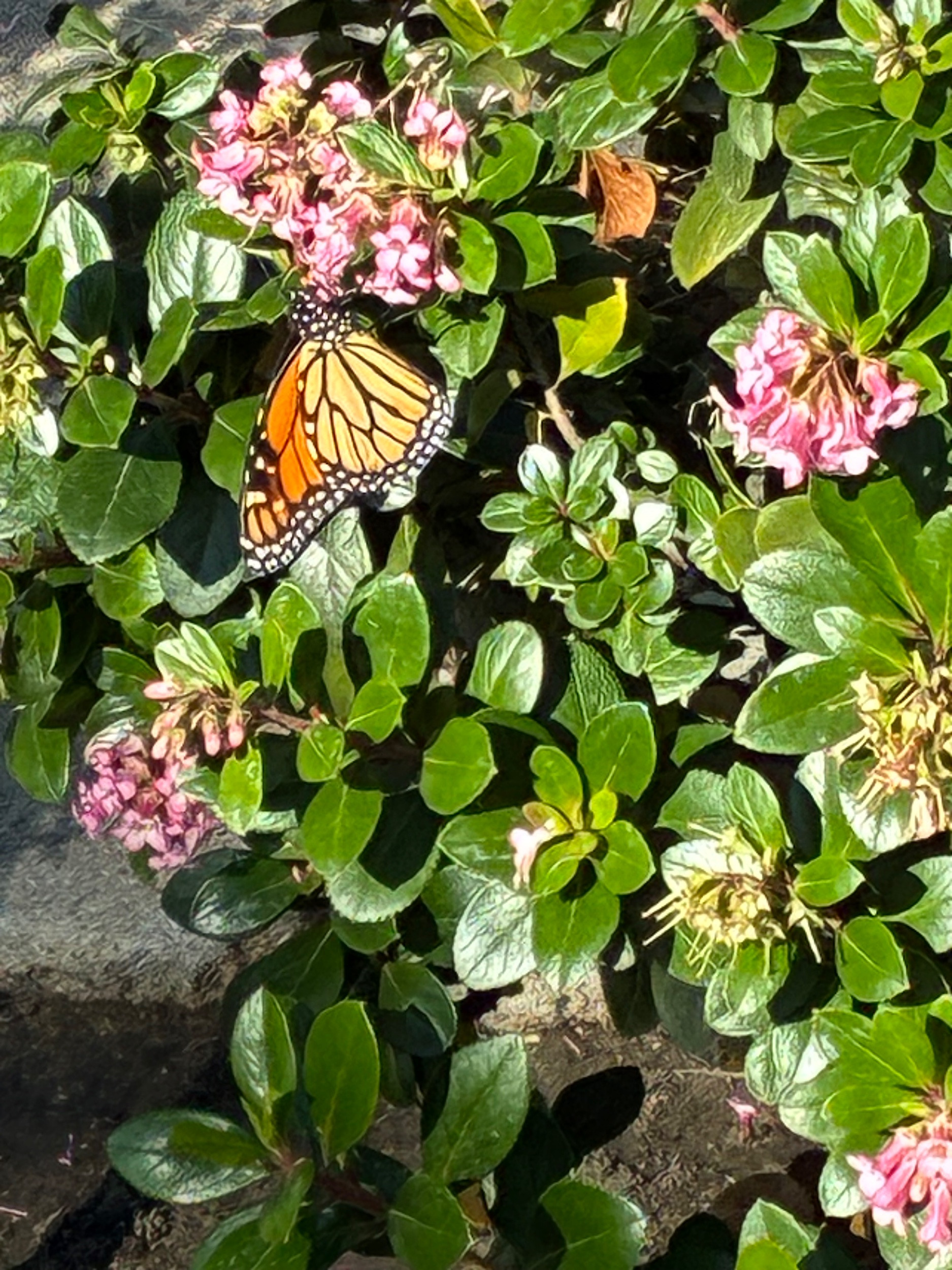
Further east, in the desert region of California, in Palm Desert, Bob spotted two monarchs flying and mating as well.
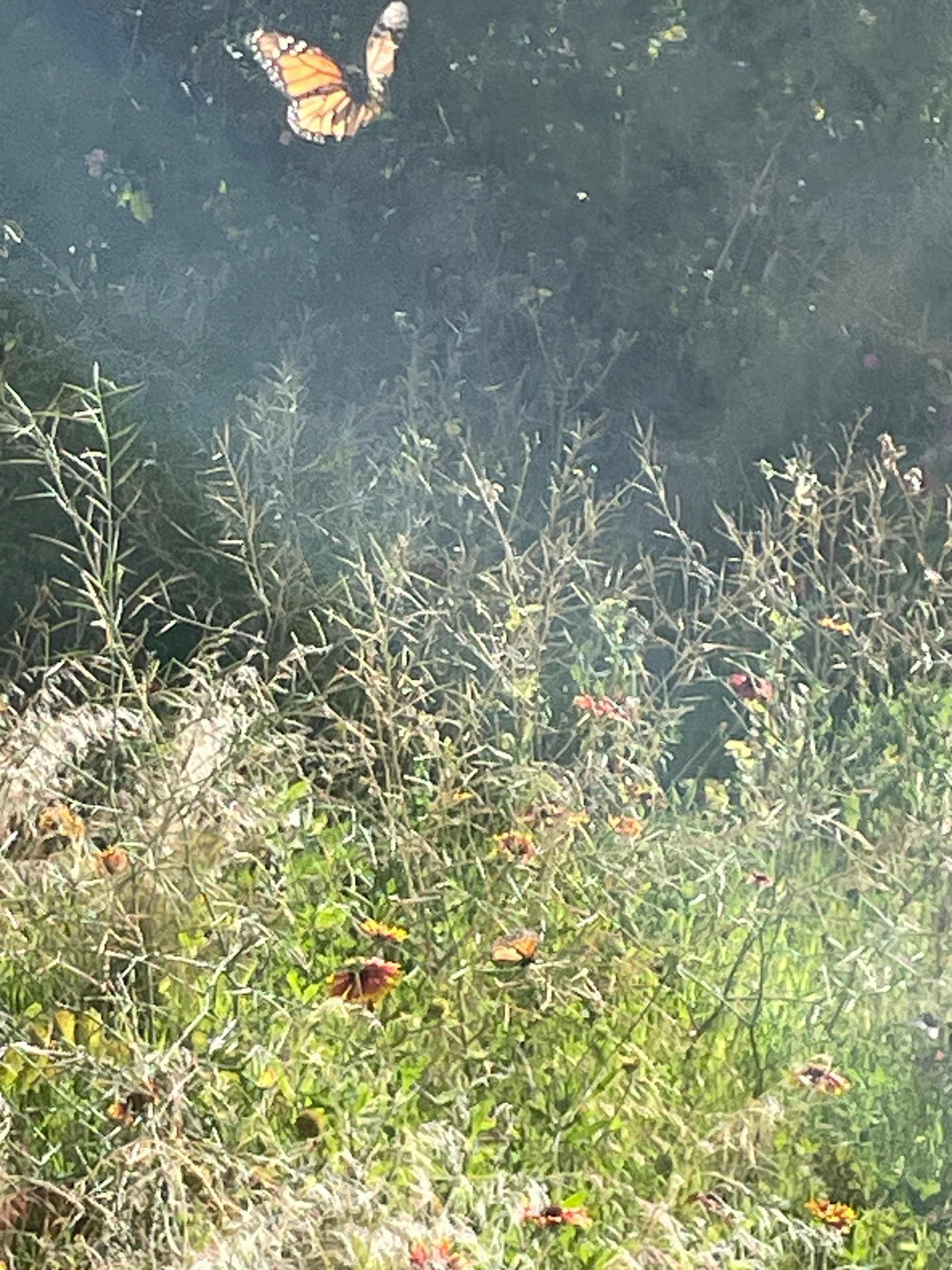
In Arizona, there has been a notable string of monarch observations recently in the desert's highest population areas. During the last ten days, monarchs were reported in Phoenix and Gold Canyon visiting Desert (Rush) Milkweed, (Asclepias subulata).
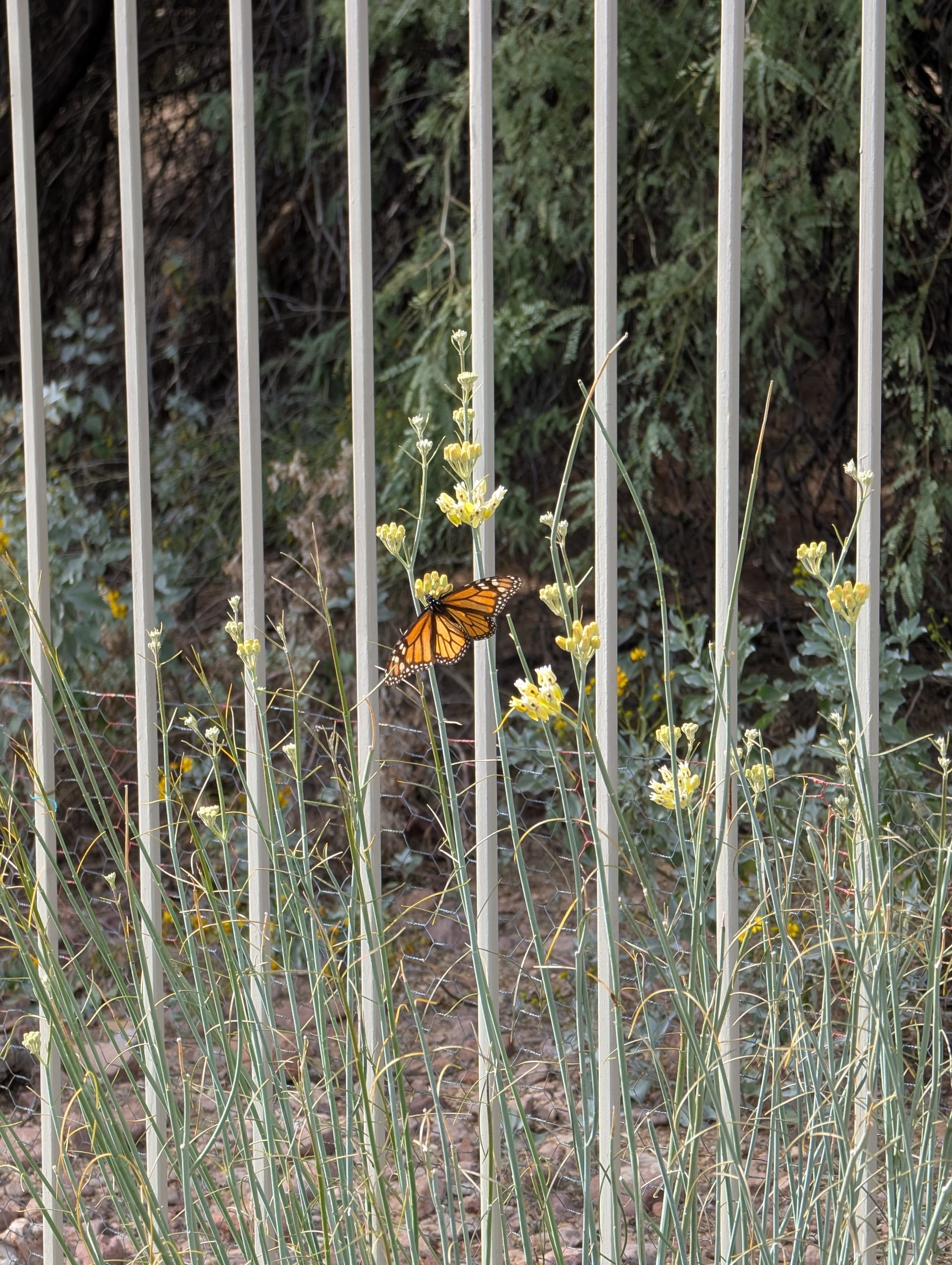
Reports have been scattered through Superior and Tucson as well. A male monarch that had eclosed several days earlier, which I later tagged, returned to our yard yesterday, sunning between nectaring on a sweet almond tree in flower. Later in the day, a female appeared laying eggs on new A. subulata stems shooting up from old growth, but not yet in flower. Remember that females lay eggs on milkweed not yet in bloom, so nearby available nectar can help fuel their way to a successful migration journey through your area.
Milkweed up?
Milkweed is key to the breeding success of monarch butterflies! Where are you seeing milkweed emerging or stands of Asclepias up and thriving? Let us know and submit your sightings.
Monarch and Milkweed sightings needed
Seeing monarchs? Seeing milkweed up? Your sightings help us present a balanced and accurate report of where monarchs are appearing each week and where milkweed is up and thriving. Report adults, eggs, and larvae to Journey North. Your detailed description of what you see can include, but is not limited to, the monarch’s gender and activity, or milkweed species found. If known, include the type of flowers if they are nectaring or milkweed species if laying eggs. Photos are encouraged and welcomed with all your reports.
Gail Morris is the coordinator of the Southwest Monarch Study (www.swmonarchs.org). She is also a Monarch Watch conservation specialist, the vice president of the Central Arizona Butterfly Association, and participates in several western monarch working groups. The “Western Monarch News” is based on your comments provided to Gail Morris. We hope to increase the number of sightings, photos, and comments entered into Journey North. We rely on the volunteers who communicate regularly with Gail and participate in our effort to increase awareness of the population of western monarchs. You can reach her at gail@swmonarchs.org
Upcoming opportunity to learn more about Journey North
If you're looking to learn more about Journey North and the Monarch Joint Venture's other community science efforts, join us at 1 p.m. on March 10 for a virtual discussion.
Whether you’re submitting your first sighting or looking to deepen your involvement, this course will show you how to contribute meaningful data and be part of the monarch conservation story.