

Monarchs have reached Mexico on their migration south!
Correo Real, a community science program that tracks monarch sightings in Mexico, passed along reports of monarchs roosting in Coahuila on Oct. 5 and 7. That Oct. 7 report read, "This afternoon, while looking for birds and Monarchs, we saw 10 of them, scattered about, feeding and perching in a pecan tree in the Bajío area of the Antonio Narro Autonomous Agrarian University."
As the crow flies, this report is about 400 miles from the northern border of the Monarch Butterfly Biosphere Reserve.
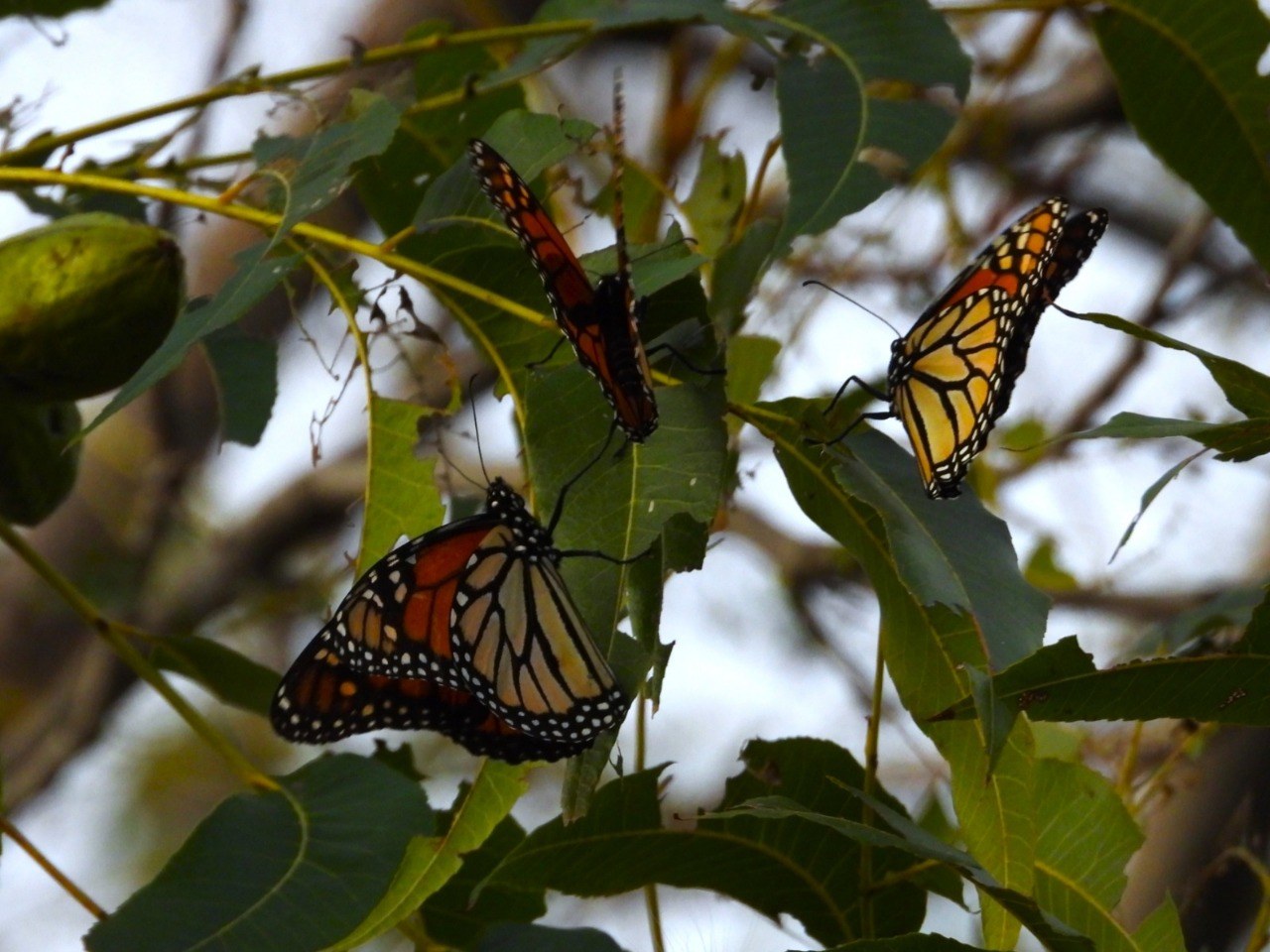
We have also received reports of non-roosting monarchs from Correo Real, prior to these roost sightings. Meanwhile, individually tagged monarchs through the Project Monarch Collaboration from Manitoba, Minnesota, and Ontario have crossed over, confirming that migrating monarchs from Canada and the northern United States have arrived in Mexico.
Three monarchs carrying BlūMorpho transmitters were detected in the state of Coahuila late on the afternoon of Monday, Oct. 5, between 1,400 and 1,640 miles from their release sites in Manitoba, Minnesota, and Ontario. All three were detected within 48 minutes of each other through Blū+, the tracking network that lets everyday phones, tablets and computers, along with Motus-compatible receiver stations, pick up a tagged monarch as it passes. You can read more about this collaboration from the Monarch Joint Venture, which runs Journey North.
Monarchs usually begin reaching the overwintering sites as October turns to November. It won't be long before we begin receiving reports of the first monarchs from the oyamel fir forests.
However, it's also worth noting that these arrivals will not be all at once. While the leading edge of migration may have reached Mexico, there is still plenty of time for monarchs further north to complete the migration, and the bulk of the roost reports have come from Kansas, Oklahoma, and Texas recently.
"Bunches of them clustered along the north side of the cedar tree row branches in the cool morning," one user in Marienthal, Kansas, wrote on Oct. 6. "Constantly flying from tree to tree as it warms up. Some are flying between the tree row and the pollinator garden on the north side of the farmhouse."
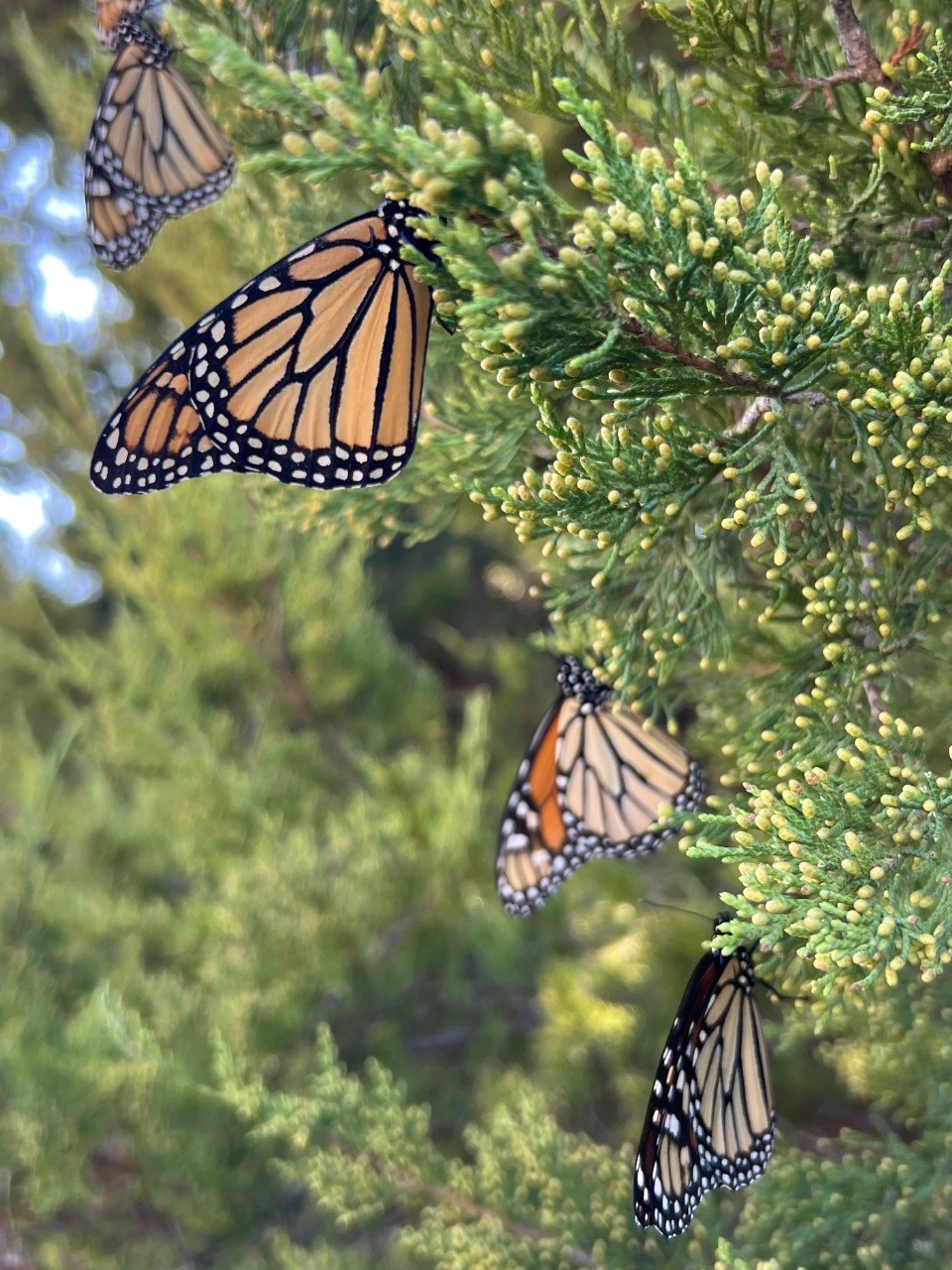
Some larger reports have come in from Texas, with a few estimates from users reaching into the thousands. Between the start of October and Oct. 10, we received 67 roost reports. Of those reports, 20 were from Texas, 13 were from Oklahoma, and 12 were from Kansas.
"The weather has been calm and warm. This is day two of them roosting in our trees. They stopped here during their migration about four years ago, also, the same trees," one Journey North user wrote from Seminole, Texas, on Oct. 9.
Eastern migration
We've also received a few more reports in the Eastern United States in recent weeks. Kim in Gloucester, Massachusetts reported a dozen monarchs on Oct. 1, writing, "Small overnight roost in Black Cherry tree overlooking marsh with fully blooming Seaside Goldenrod where they had been nectaring during the day. Several other small roosts on the other side of the tree, but not able to count. The nor'easter has departed, with winds now blowing up from the southwest. The butterflies flew from the trees at 9 a.m. this morning but did not head out over the bay towards Boston. Instead, they are staying in the marsh and drinking nectar from the goldenrod again today. In years when we do have overnight roosts, they either gather in this tree or one other Black Cherry tree overlooking the marsh with the Seaside Goldenrod, or roost in the adjacent Eastern Cedar."
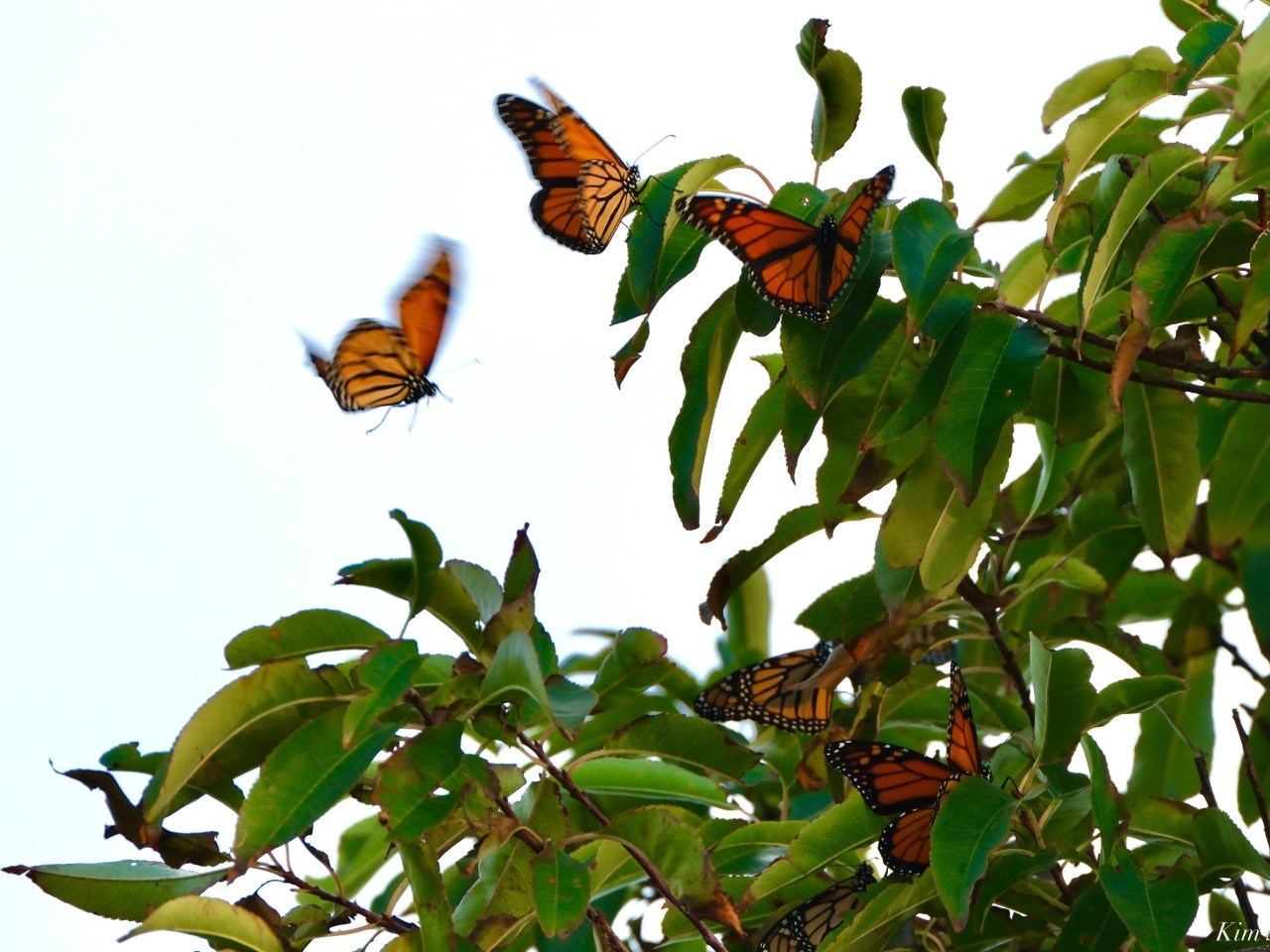
A little further south, in North Carolina, we've received a pair of reports in the greater Asheville area.
"Monarchs have been nectaring by day and roosting at night (not in clusters, but individually in surrounding trees) for seven nights (since Saturday, Sept. 26, when I observed 40). Numbers have fluctuated daily from 15 individuals to more than 100 on Saturday, Oct . 3," Emily in Black Mountain, North Carolina, wrote on Oct. 3.
Western Monarch Update
By Gail Morris, Southwest Monarch Study coordinator, Sept. 28
Monarchs are appearing along the California coast in increasing numbers as October dawns, with monarchs across the country continuing their migration flight south and west. Temperatures cool as daylight hours dim and monarchs set their flight to their winter destination.
Recent Sightings
Monarchs are numerous along the coastal region of California. A monarch was reported on September 22 in Laws, California, just east of Fresno, on Rabbitbrush. “Observed one individual nectaring on Ericameria nauseosa. As I approached, it flew off to the southwest," Erin wrote.
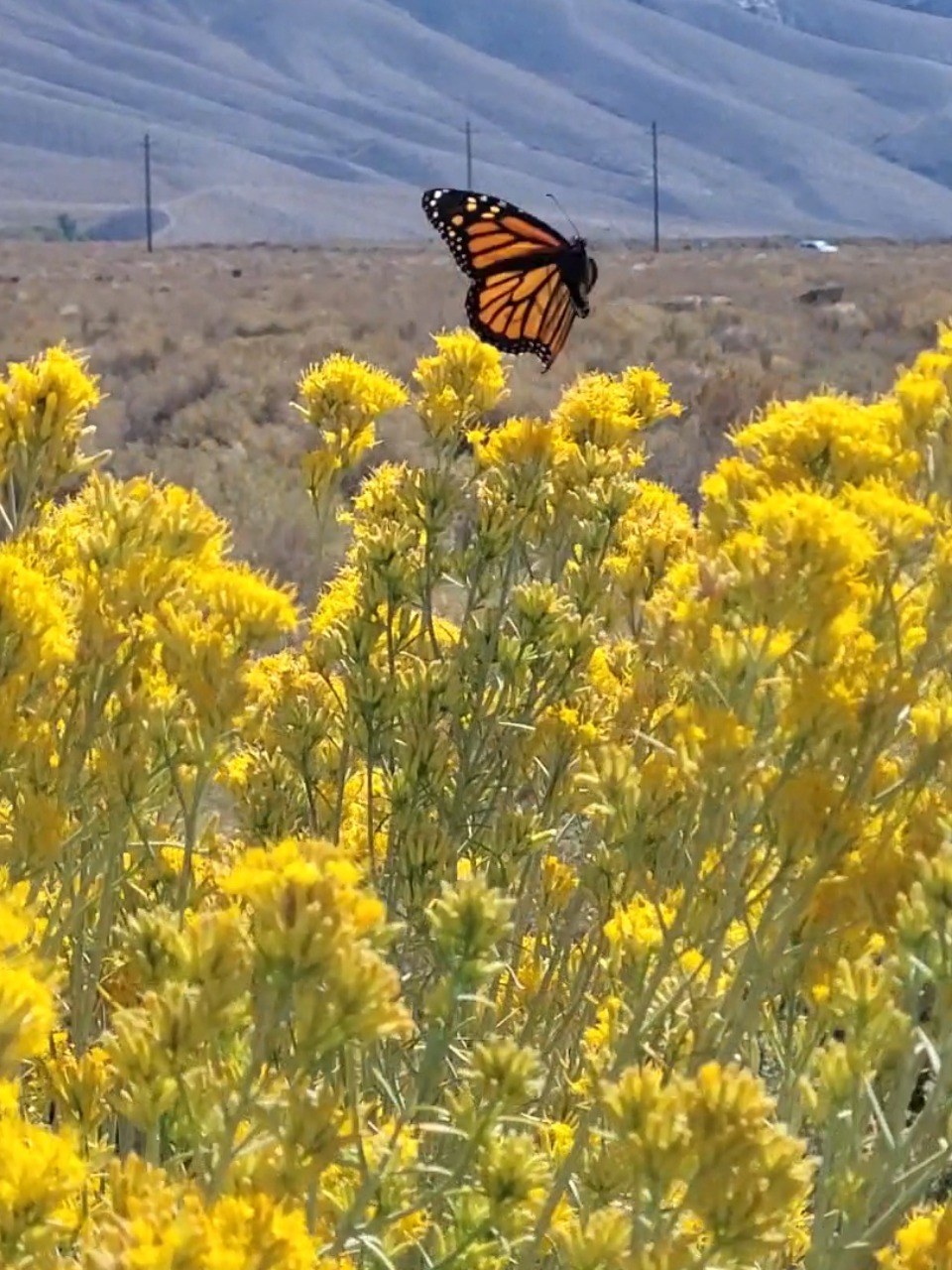
Others are already at the coast, like one seen in Ukiah flying around a garden. or in Santa Rosa mid-September feeding on zinnias. They were also seen in good numbers further south in the Los Angeles area as well. One report from the Redlands features a monarch on lantana camari, for example.
From the Field
While the eastern United States is reporting an abundant migration, what is the bigger picture of the fall migration right now in the West? As monarchs arrived in the breeding grounds in June, Dr. David James commented earlier in July, “Sadly, this year has seen the weakest migration into the PNW (Pacific Northwest) in four years. From sightings reported, just 43 monarchs have been seen in the PNW during late May and June. Less than last year’s total of 54 and way below the 133 reported in 2024. To date, only a single monarch has been confirmed in Washington.” Dr. James’ report was chilling, but we all also know that monarchs could still have a good breeding year and rebound.
By July 12, Rachel Taylor in Salt Lake City, Utah, sighed. They just reached a new record with a high temperature of 109°F, the all-time high temperature. This was the prime breeding season in Utah. Research has shown that immature monarchs have a difficult time surviving over 106°F, but there is always hope for microclimates where it is cooler in a heat wave.
But news of summer monarchs across the state stayed unusually still. “It’s not a good feeling having it so quiet on the monarch front. I hadn’t thought about the entire generation that might die in the heat.” But by the end of July, Rachel reported, “We have checked off seven counties in our monarch photo contest in the past week. Nothing much along the Wasatch Front, but in outer areas they seem to be happening.” Rachel’s report on August 2 contained good news. “Six monarchs spotted at a site we love in Utah County today!”
Monarch sightings were finally appearing but behind numbers normally seen by this time. In Vernal, in northeast Utah, Natasha Hadden also reflected on the lower monarch population while tagging monarchs. “We have had so few monarchs here this year it’s concerning. I was lucky to get out what I did.”
Migrating monarchs are just beginning to arrive in Arizona. We’ll keep you updated and let you know what we see.
Monarch sightings needed
Seeing monarchs? Your sightings help us present a balanced and accurate report of where monarchs are appearing each week. Report adults, eggs, and larvae to Journey North. Your detailed description of what you see can include, but is not limited to, the monarch’s gender and activity. If known, include the type of flowers if they are nectaring. Photos are encouraged and welcomed with all your reports.
Gail Morris is the coordinator of the Southwest Monarch Study (www.swmonarchs.org). She is also a Monarch Watch conservation specialist, the vice president of the Central Arizona Butterfly Association, and participates in several western monarch working groups. The “Western Monarch News” is based on your comments provided to Gail Morris. We hope to increase the number of sightings, photos, and comments entered into Journey North. We rely on the volunteers who communicate regularly with Gail and participate in our effort to increase awareness of the population of western monarchs. You can reach her at gail@swmonarchs.org