


What are radio tags telling us in the West?
By Gail Morris, Southwest Monarch Study coordinator
The first generation of monarchs from the California overwintering sites will be appearing across the West as the long-lived overwintering monarchs reach the end of their lives. But hundreds of eggs, larvae, and pupae are covering milkweeds and emerging to continue their journey to the summer breeding grounds.
Sightings in California, Arizona, and New Mexico continue. As monarchs reach a new state milestone, we always wait until a photo documentation appears to mark their new threshold. Early arrivals appeared in Las Vegas, Nevada, and Moab, Utah, as well as in New Mexico. This week, sightings in the southern and central regions of California and Arizona dominate the Journey North reports.
From the Field
You’ve likely caught the excitement of the new technology developed by Cellular Tracking Technologies (CTT) to track individual monarchs' movements. New lightweight, 0.06-gram solar-powered radio-tags using Bluetooth technology now offer a new tracking technology anticipated for years. Over the years, thousands of community scientists have applied paper tags on monarchs, revealing the tagging and sighting locations of a low density of migrating monarchs. Now this new technology can reveal the location of monarchs wearing the new tags along their entire route to help us all learn more about their flyways. This information can help conservation efforts to prioritize locations to focus on habitat restoration.
While the eastern monarch population dominated initial research, the first trials have also appeared at some of the California overwintering sites and in the deserts of Arizona.
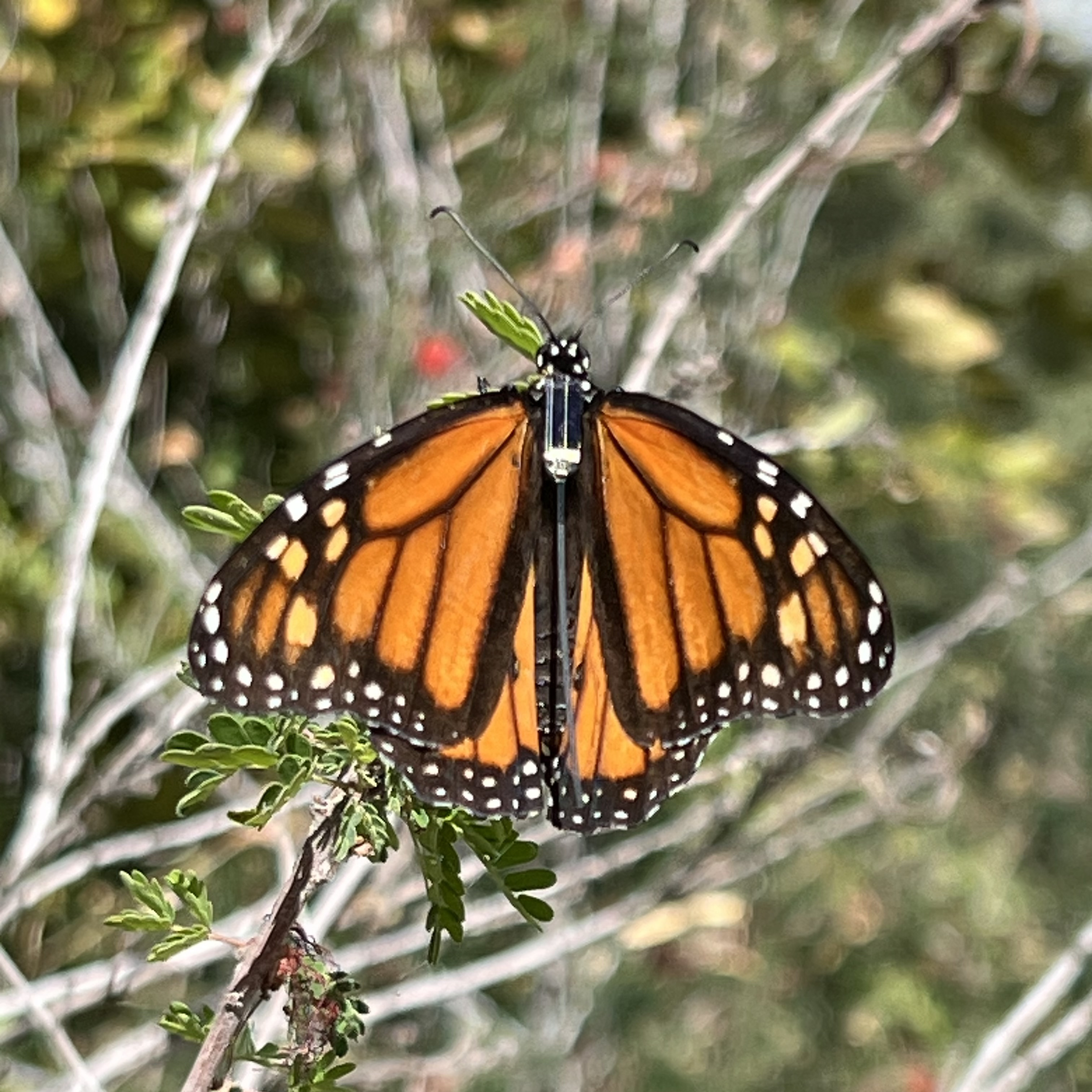
California
The Xerces Society applied these new Blu+ tags this winter and spring at several California sites. You can read more about their project here.
Working groups developed protocols to determine the best monarch candidates for tagging, including determining the monarch's weight, wing length, wing condition, and other data needs.
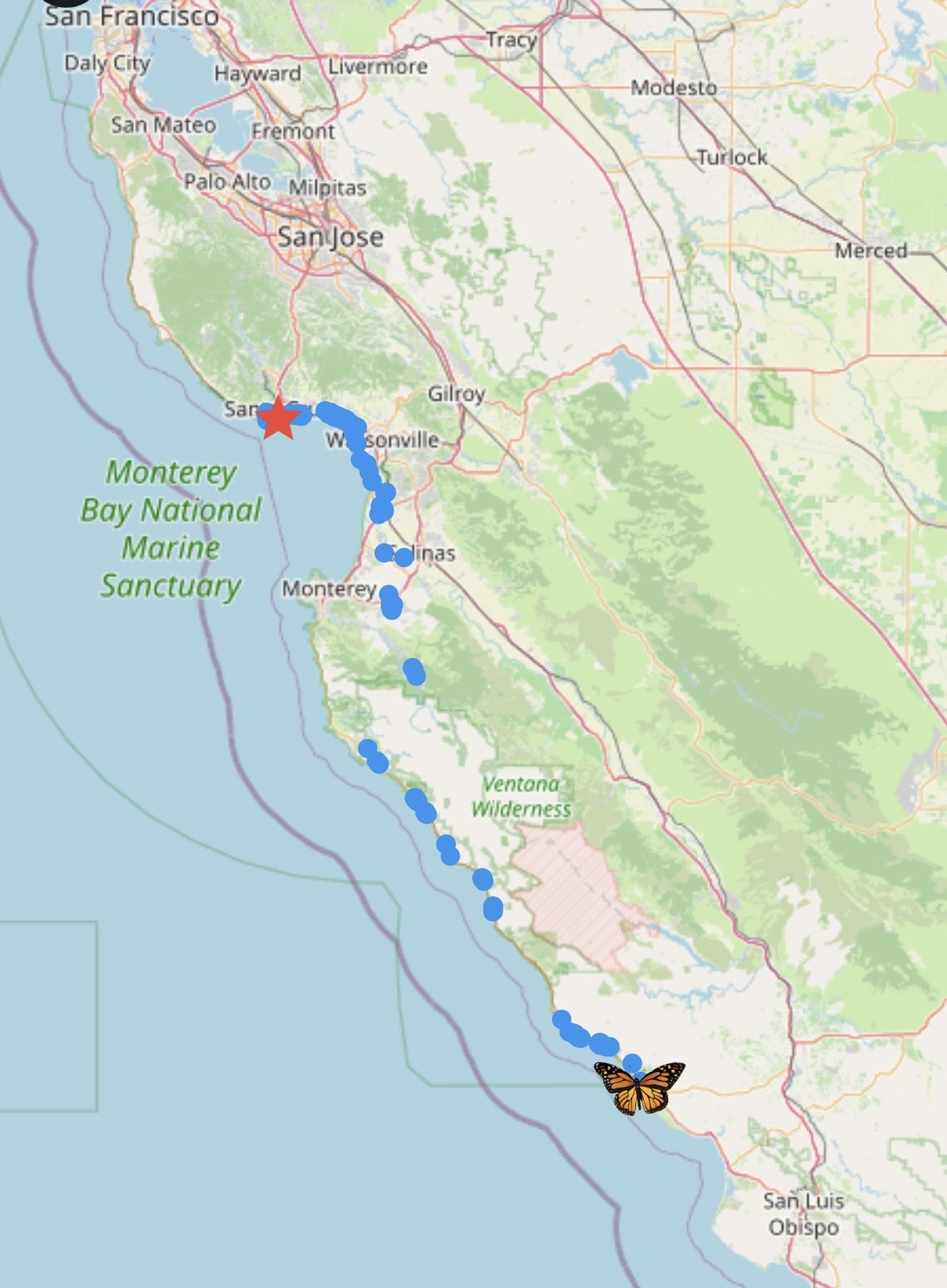
The Santa Cruz monarchs group (Diana Magor, Tara Johnson, Dave Curley, Elizabeth Bell, Liana Crabtree, John Dayton), with assistance from Xerces and California State Fish and Wildlife, applied CTT Blu+ electronic tags to seven female monarchs that were overwintering at Lighthouse Field State Beach in Santa Cruz on Jan. 23. Typically, most tagged monarchs remained in the vicinity of their tagging for a few days and were tracked on the Project Monarch app. About a month after being radio-tagged, more movement was noted. Here are the most notable flights – you can find them on the free Project Monarch App to see individual data points:
- LFD02 Cosima flew near 109.55 miles over two days to Cambria beginning on Feb. 28.
- LFD03 Drew flew 12.39 miles, took flight on March 3, and continued the next two days.
- LFD06 Lucia flew 234.38 miles, leaving on March 16 and was seen past Red Bluff on March 20.
- LFD07 Reese flew on March 21 to Cupertino and stayed for several days, and then moved again and was detected on April 13, 31.19 miles north of Santa Cruz.
Thank you to Diana Magor for providing this valuable information!
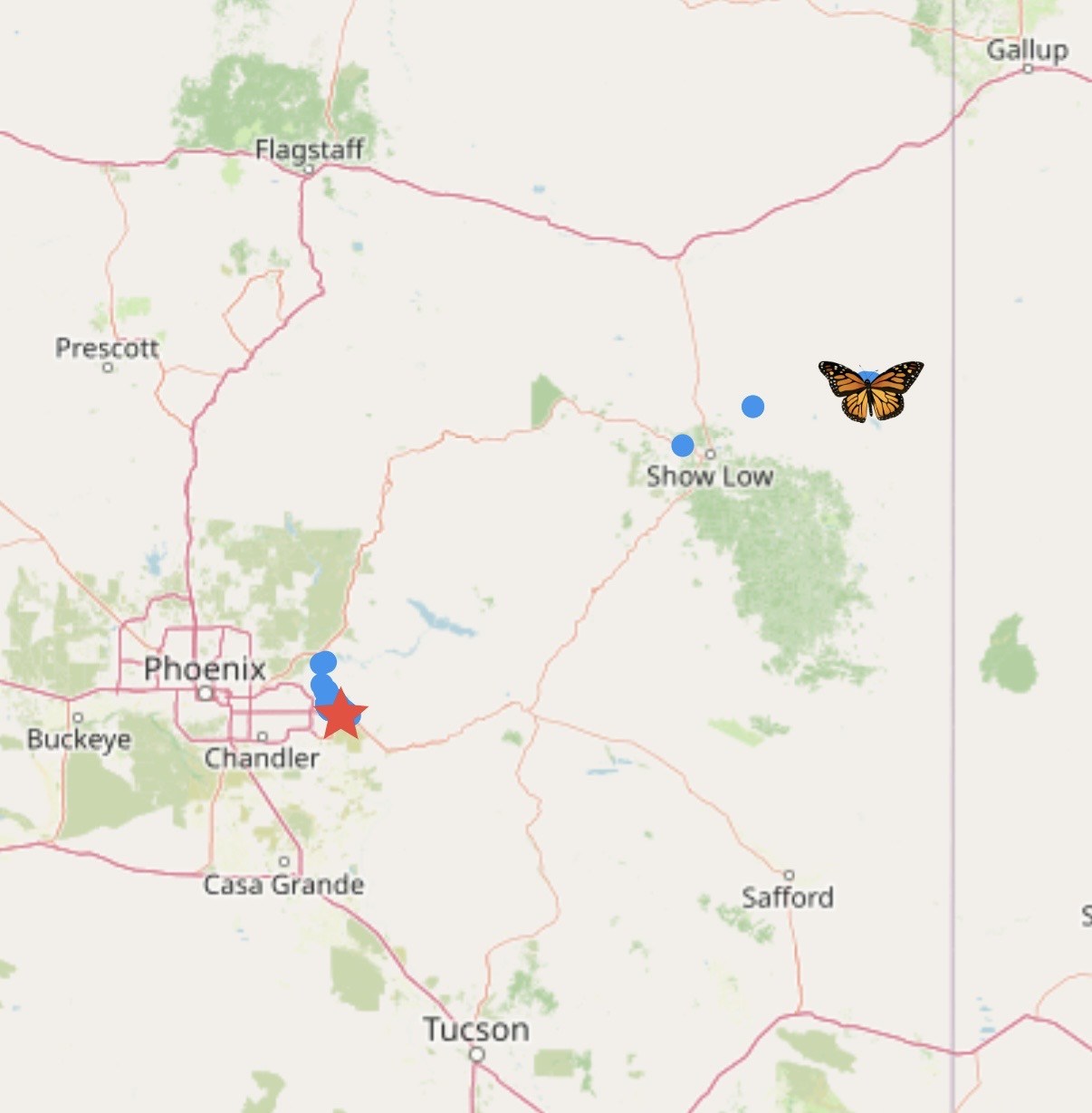
Arizona
In Arizona, after a weak fall migration amid sweltering record-breaking temperatures, the Southwest Monarch Study turned to our Plan B. In November and December, we radio-tagged and paper-tagged, followed by weekly monitoring, of 10 wild winter monarchs that appeared at Scottsdale Community College (SCC).
Since breeding monarchs live three to five weeks, we were researching the possibility that some monarchs in the area could also be non-breeding during winter. Students, faculty, and community scientists helped us by using the Project Monarch app and noting monarch presence. You can find these monarchs in the Project Monarch App beginning Artie 251 through Artie 2511. Notable findings:
- Variable numbers of radio-tagged monarchs were reported weekly, detections that fluctuated primarily with temperatures and sunlight available. Two to six monarchs were detected daily in good weather conditions up to six to 10 weeks after tagging.
- Monarchs stayed on the SCC campus and visited nectar resources in a narrow area.
There is a question whether winter monarchs in the lower deserts of Arizona are a sink for the monarch population. Southwest Monarch Study is currently researching the spring migration movement with CTT BlūMorpho tags on up to 10 monarchs in the greater Phoenix area. All are wild monarchs tagged two days after they eclosed in April and May. You can find these monarchs on the Project Monarch App beginning with "SWM." Notable findings to date:
- The first six radio-tagged monarchs stayed near their tagging location for two to three days and then expanded their flight range.
- Male monarchs stayed near tagging locations when females expanded their flight (but so far, this is a small sample.)
- SWM004 Keely surprised us with a local flight near Apache Junction, expanding to the Salt River and then disappearing. The next morning, she reappeared in Show Low, Arizona, 100 miles to the NE. She flew to St. Johns, another 45 miles NE, where we lost detection after a total of 145 miles.
- SWM003 Lukas stayed nearby in Apache Junction for 19 days before heading north for nearly 21 miles. We are awaiting further flight information on one detection further north from the Project Monarch App staff.
There is much to be learned from the new radio tags and their detections. We are all still learning its capabilities and also its limitations.
You can learn more about Project Monarch Collaboration here. You can find the free Project Monarch app on the App Store and Google Play to follow tagged monarchs.
Monarch and Milkweed sightings needed
Seeing monarchs or milkweed up? Your sightings help us present a balanced and accurate report of where monarchs are appearing each week and where milkweed is up and thriving. Report adults, eggs, and larvae to Journey North. Your detailed description of what you see can include, but is not limited to, the monarch’s gender and activity, or milkweed species found. If known, include the type of flowers if they are nectaring or milkweed species if laying eggs. Photos are encouraged and welcomed with all your reports.
Gail Morris is the coordinator of the Southwest Monarch Study (www.swmonarchs.org). She is also a Monarch Watch conservation specialist, the vice president of the Central Arizona Butterfly Association, and participates in several western monarch working groups. The Western Monarch News is based on your comments provided to Gail Morris. We hope to increase the number of sightings, photos, and comments entered into Journey North. We rely on the volunteers who communicate regularly with Gail and participate in our effort to increase awareness of the population of western monarchs. You can reach her at gail@swmonarchs.org
Recent Journey North observations from the West
By Jacob Swanson, Journey North program coordinator
Journey North sightings outside of California have been limited over the past few weeks, with most sightings west of the Rockies coming from the Golden State.
In Los Angeles, Theresa reported two adults, as well as a pair of caterpillars on narrow leaf milkweed, on April 14.
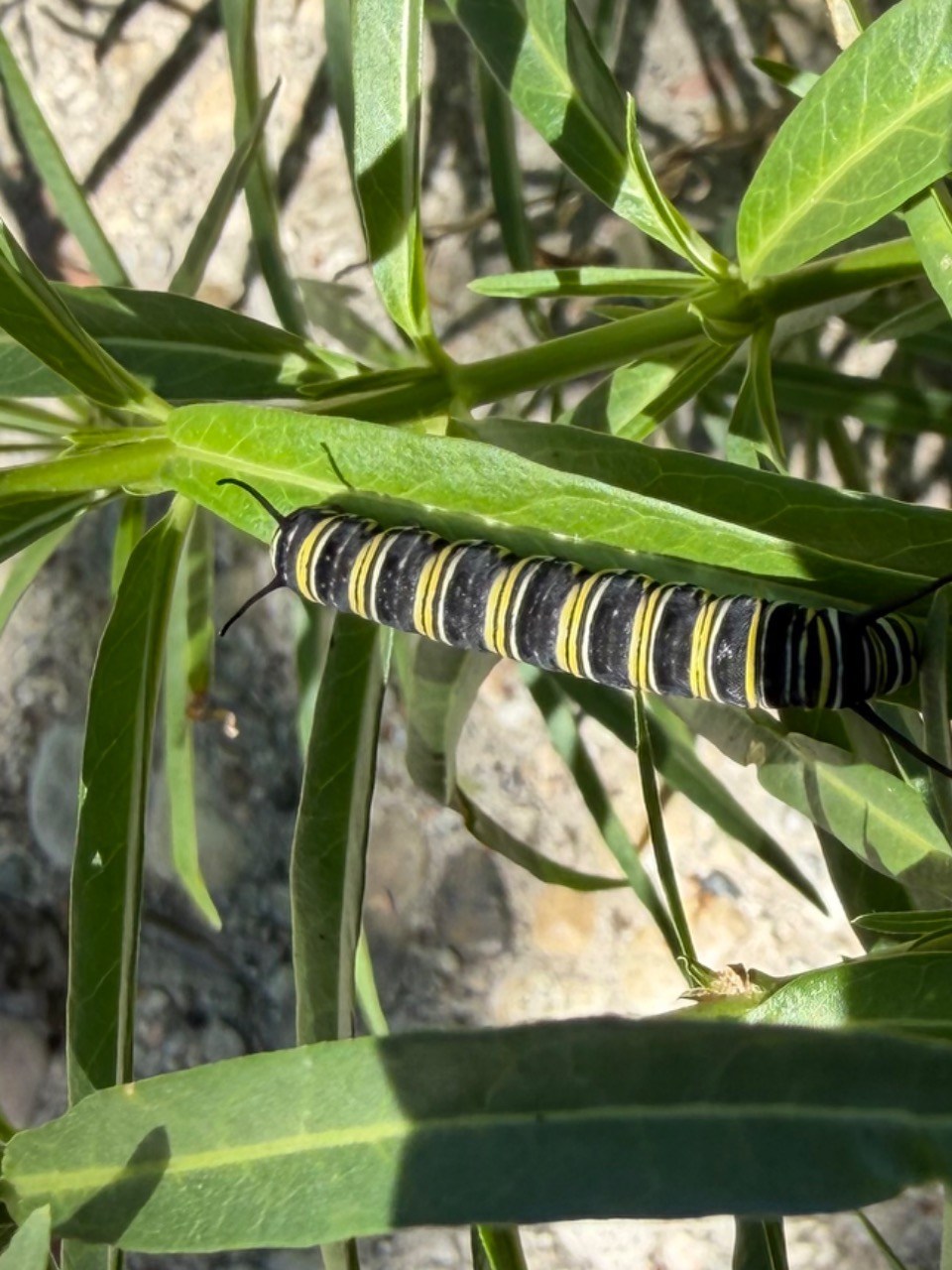
Moving a little east, east of the San Jacinto Mountains, Janet reported a caterpillar in La Quinta, California, on April 21.
North of San Francisco, in Novato, Denise reported eight caterpillars on April 26. Southwest of San Francisco, in Santa Clara, Rand reported two adults on April 27, including one laying eggs on Mexican whorled milkweed (A. fascicularis).
Outside of California
Moving across the California state line, on April 12, Della reported an adult at Glendale Public Library in Arizona. Hope in Las Cruces, New Mexico, reported four monarchs nectaring on vitex (Texas lilac) on April 28.
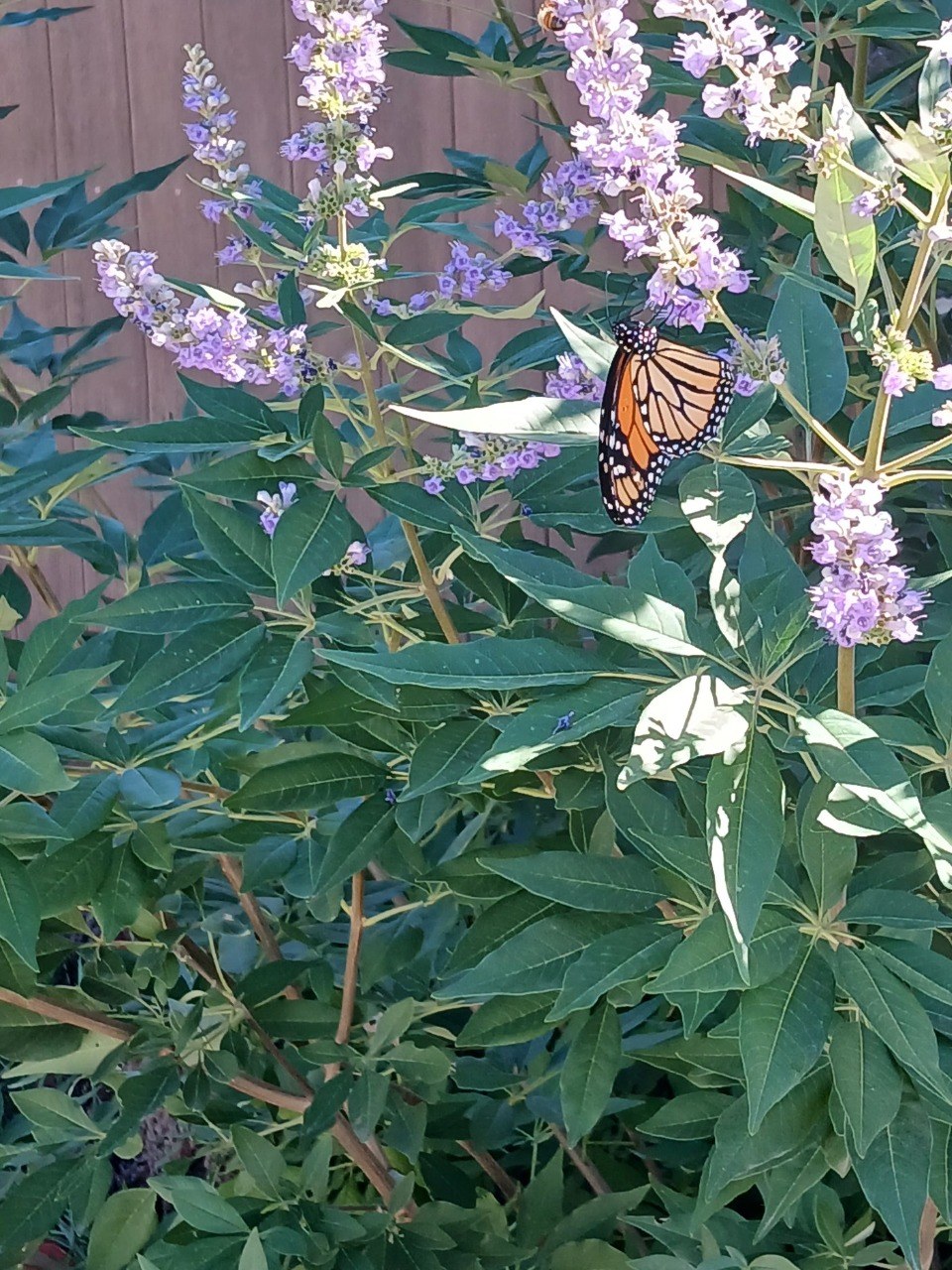
Monarch numbers are lower in the western U.S. than in the East, so sightings are often rarer west of the Rocky Mountains, but if you happen to see a monarch this spring or summer, let us know by submitting your report to Journey North!