


Update from Mexico
By Estela Romero, Monarchs Across Georgia environmental educator
An early, gradual, massive departure this season did not necessarily mean seeing early empty overwintering spots at our oyamel fir forests by late March.
Despite no single cluster in the occupied hibernation forests remaining now, hundreds of monarchs still keep flying over Llano de los Conejos, in El Rosario Sanctuary, in a clearly more north-oriented forest area at 19.5985, -100.2563.
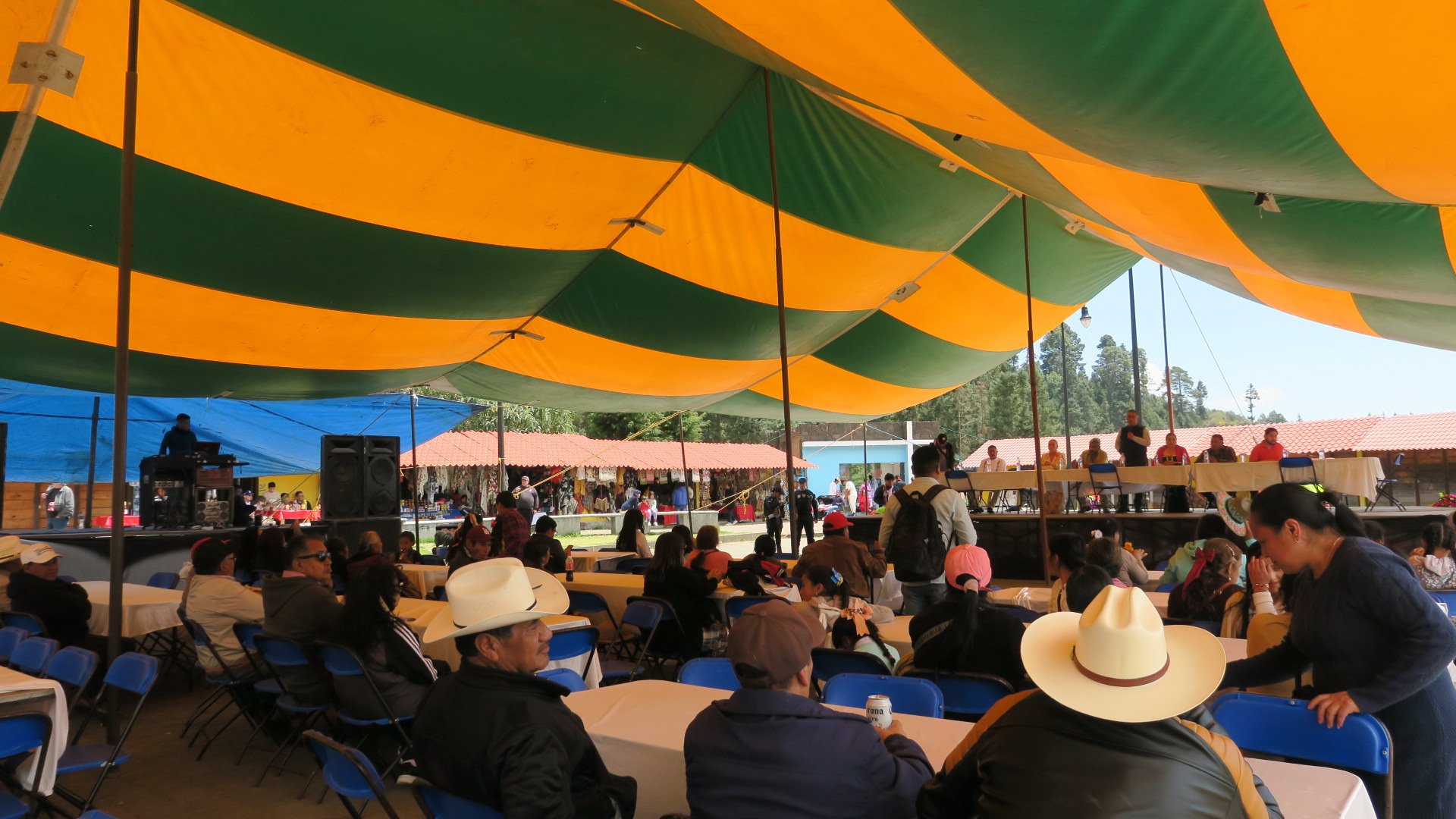
El Rosario Ejido has, on March 22, offered another gorgeous traditional farewell festival enthusiastically celebrating the closing of the 2025-26 season, where the great news has been that the monarchs' overwintering occupation this winter reached 2.93 hectares, surpassing the past winter’s numbers.
Governmental, organizational, and community efforts on conservation renew their commitment to each other on this intergenerational stewardship of this migration with pride and responsibility.
The current generations have luckily witnessed science as a vital part of the wildlife miracle, delivering unprecedented data for 50 years now and continuing to achieve innovation on the search for new revelations on the mysterious behavior patterns along the pathways of the great migration.
Despite a great season marveling us all this winter, for the first time in a long time, monarchs have had an extremely mild and short winter with no signs of snow or winter rain at all. Acceptable levels of humidity, luckily retained during the overwintering season, and great blooms all around, have been the result of our abundant rain this summer, which has compensated for the absence of rain and humidity this winter.
This seems to continue to be the constant challenge for the winter migration: a shortening of their ideal winter conditions.
México pays tribute to the ancestral, extraordinary great monarch migration heroically reaching by now mid-U.S. latitudes, for which we now finally pass on our stewardship label to the United States and Canada.
Down here, we will wait for these extraordinary creatures, with whom we honor our origin and identity and draft our future and destiny.
Estela Romero
Journey North
Angangueo, Michoacán, México
Estela Romero is an environmental educator with Monarchs Across Georgia. Her work is made possible by funding from Monarchs Across Georgia and the Monarch Butterfly Fund.
Eastern monarch movement reaches Arkansas, Oklahoma, and Tennessee
By Jacob Swanson, Journey North program coordinator
Recently, we've had some major movement on the Journey North maps, with monarchs along the Gulf of Mexico, as well as progressing northward from the Gulf Coast states.
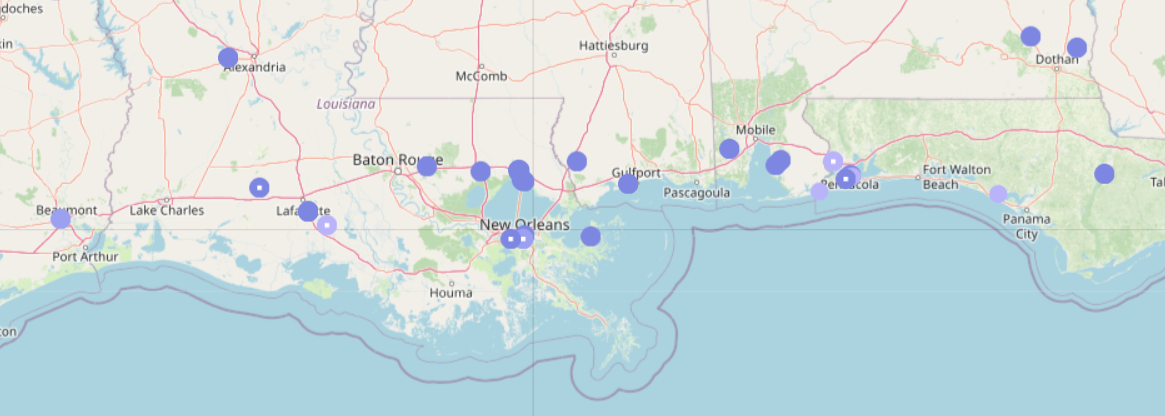
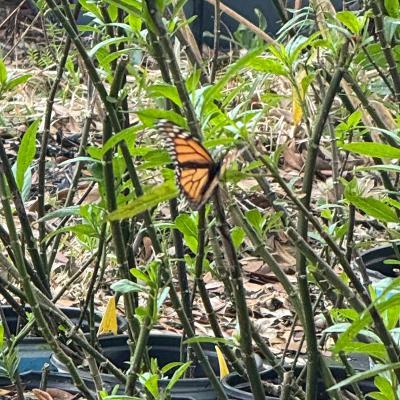
Monarchs are visiting milkweed, such as in Ron's garden in New Iberia, Louisiana. "Milkweed source is propagated from previous season stock." Ron wrote on March 20.
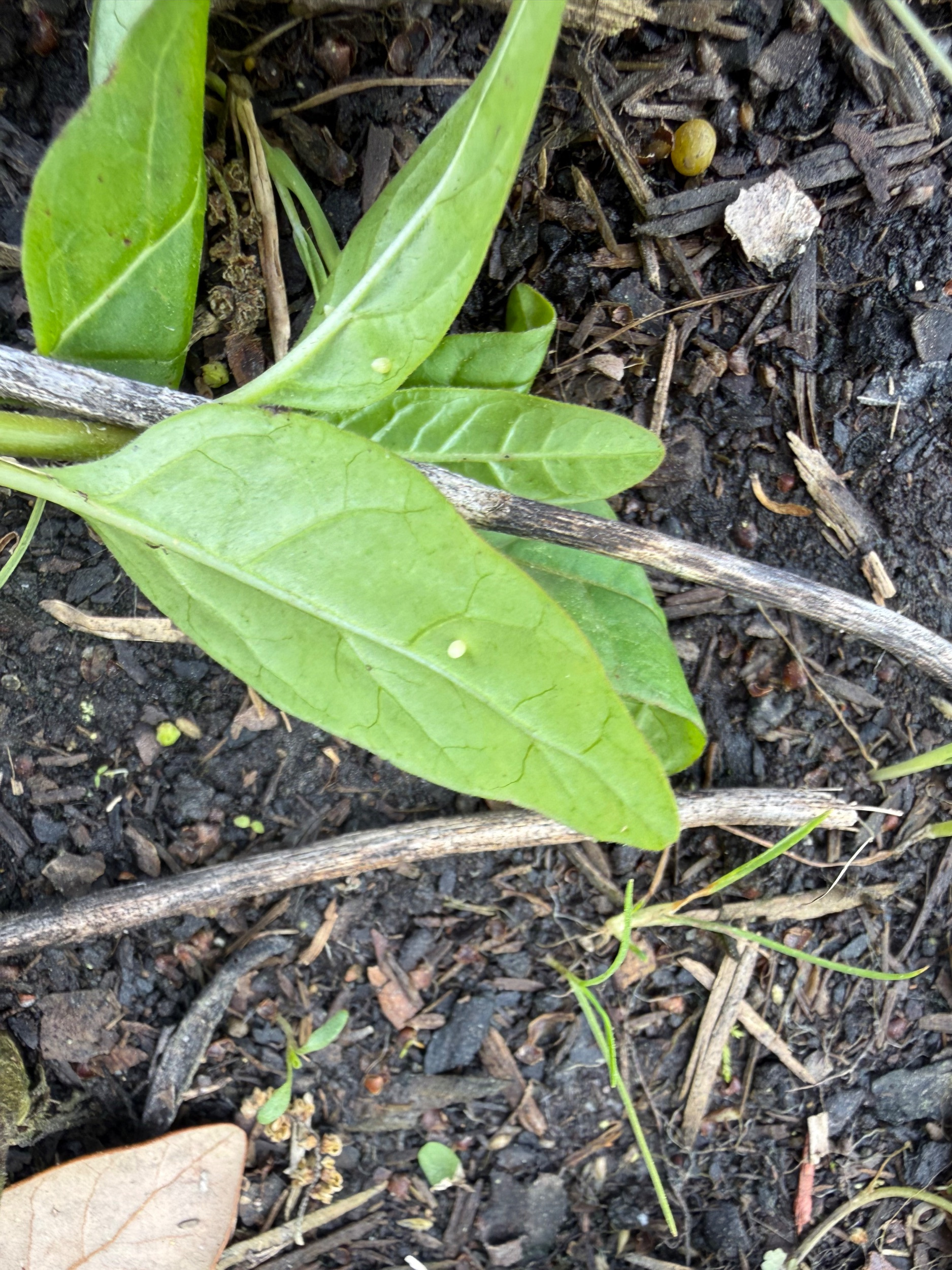
We've received reports of monarchs laying eggs from three different people in Louisiana, including one from Baton Rouge, which you can see below.
Sightings are also moving north through these states, with sightings in the northern halves of Mississippi, Alabama, and Georgia, even stretching into Tennessee for the first time this season.
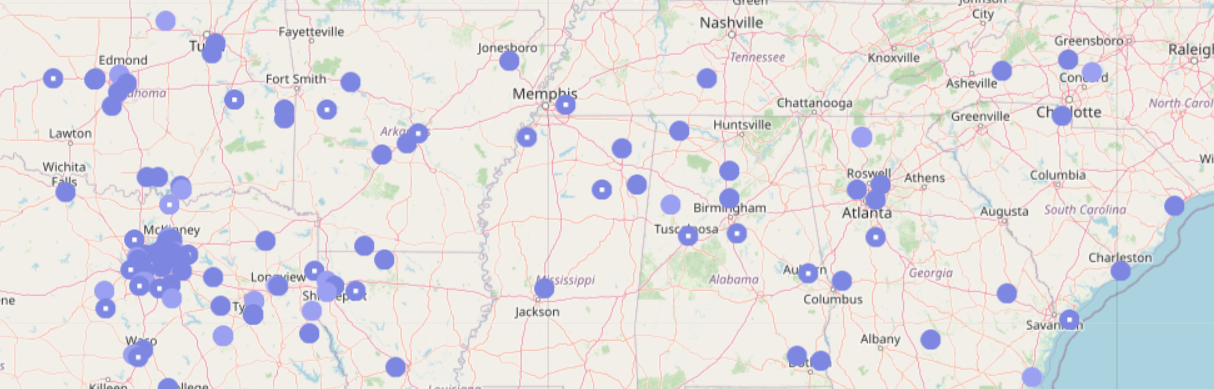
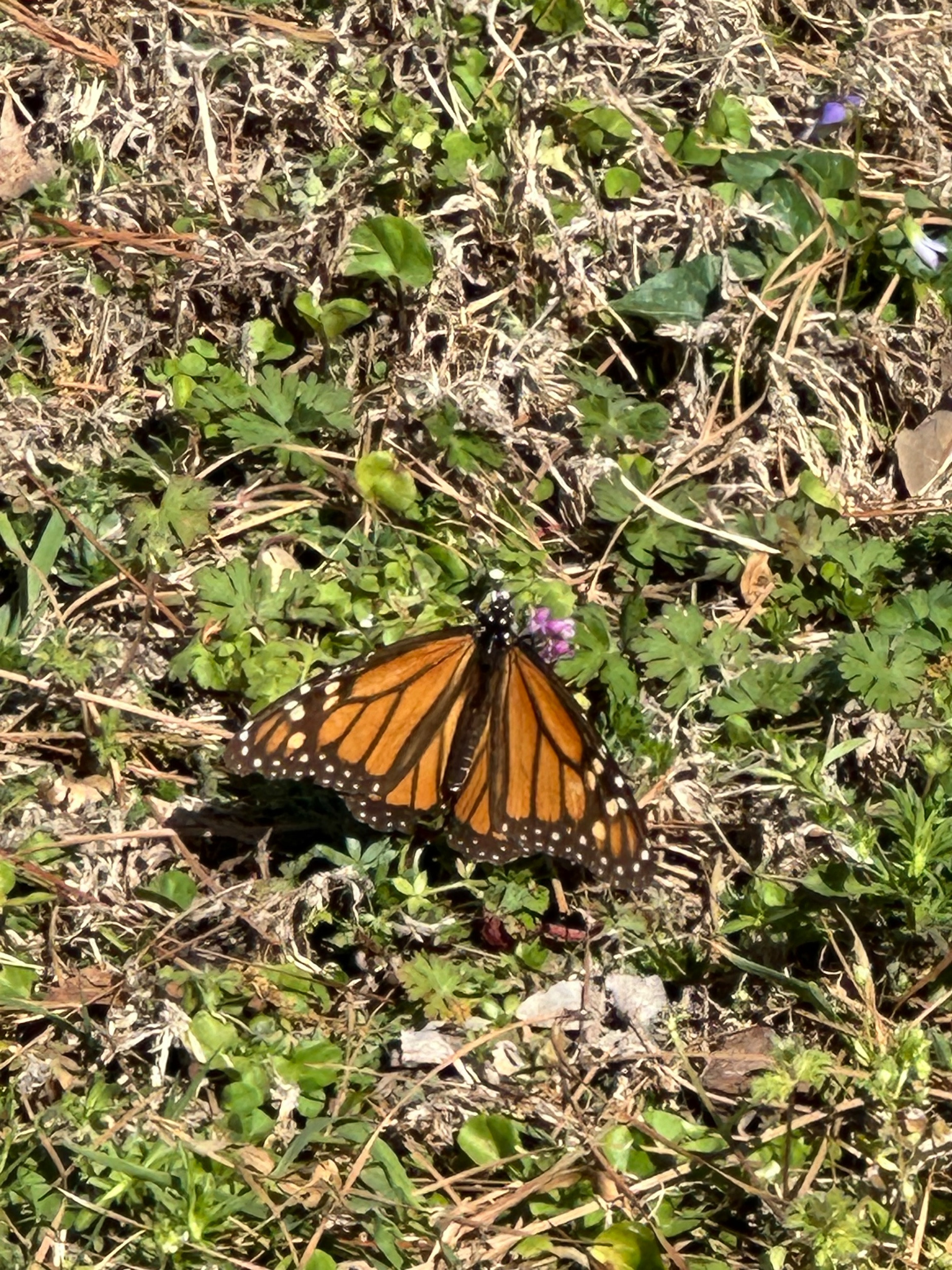
Oklahoma and Arkansas have also seen an uptick in recent sightings.
"Flew over my yard and I was so excited," wrote Dayna in Clarksville, Arkansas, on March 23. "Forgot to note what direction it was going, I was so thrilled."
Tracy in Little Rock reported a monarch nectaring on March 22, writing, "I have some whorled milkweed just sprouting but have not observed it on it yet. I'll be monitoring."

Along the East Coast, sightings have come in from South Carolina and North Carolina, although we're waiting for photos to start trickling in.
"Milkweed is only up about two inches," wrote Linda in Hampstead, North Carolina on March 23, reporting a female laying eggs.
By our next Journey North monarch update, I'm sure sightings will have moved even further north, with more map dots filling in along the way as monarchs continue their migration.
When you see a monarch adult, egg, or caterpillar, please report it to Journey North!
Western Monarch Update
By Gail Morris, Southwest Monarch Study coordinator
March 17
Monarchs returning from Mexico have reached Texas this past week, but the monarch movement from the California overwintering sites is less well known. Sightings currently are limited to the California coastal regions, and most notably, multiple sightings in southern California. Arizona is also is reporting adult monarchs and breeding except in the highest elevations.
An unseasonable heat wave will blanket the West this week, reaching historic proportions in many areas. Both record high and low temperatures will be shattered if predictions materialize. Intensifying the effect, the high-pressure ridge causing the abnormal temperatures will last several days with highs of 20 to even 30 degrees above normal before eventually easing. The expected temperatures in some regions will affect the spring migration as well as the survival of immatures on milkweeds in the landscape. We’ll be watching your reports to see how the migration fares, especially during this period. Many micro-climates offer shelter and can help monarchs during unseasonable weather events, and we remain hopeful.
Monarch Sighting Reports
Carl in San Leandro, California, submitted the furthest north monarch sighting on March 15, and a great harbinger of the spring breeding season, writing, “This female was flying around the yard laying eggs yesterday. It was beautiful outside, a warm 75 degrees and sunny.”
Also, monarch watchers in southern California sent in photo documentation of monarchs in East Los Angeles and Riverside of fresh and new monarchs active in their area. In Irvine, Denelle sent in a monarch report from her school.
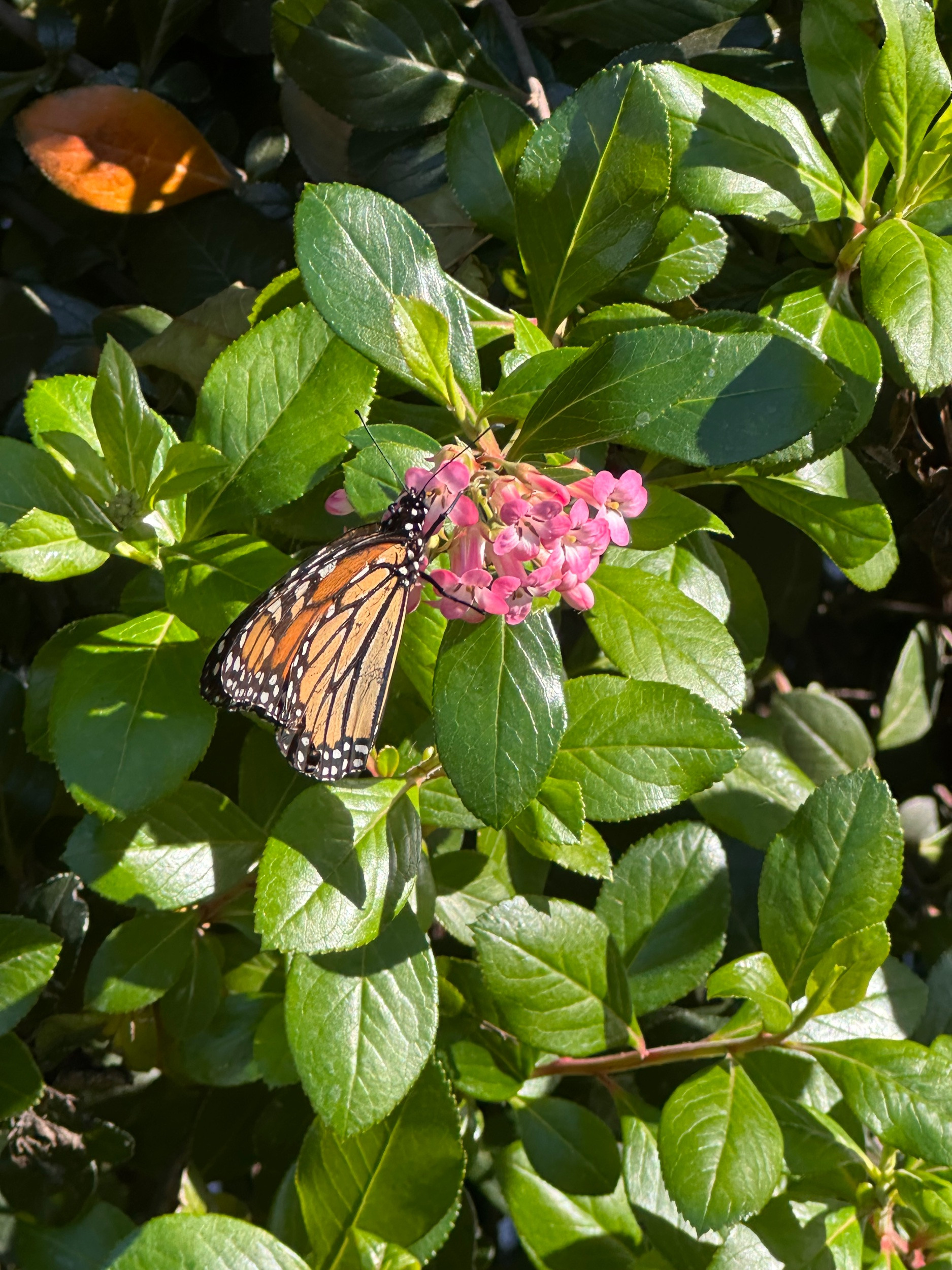
In Arizona, Christina in Mesa reported a tagged monarch in her yard nectaring. “Female, observed flying around and resting on a Desert Rush Milkweed plant in my garden. Slight damage to left forewing tip.” This monarch was tagged a few days earlier in nearby Apache Junction.
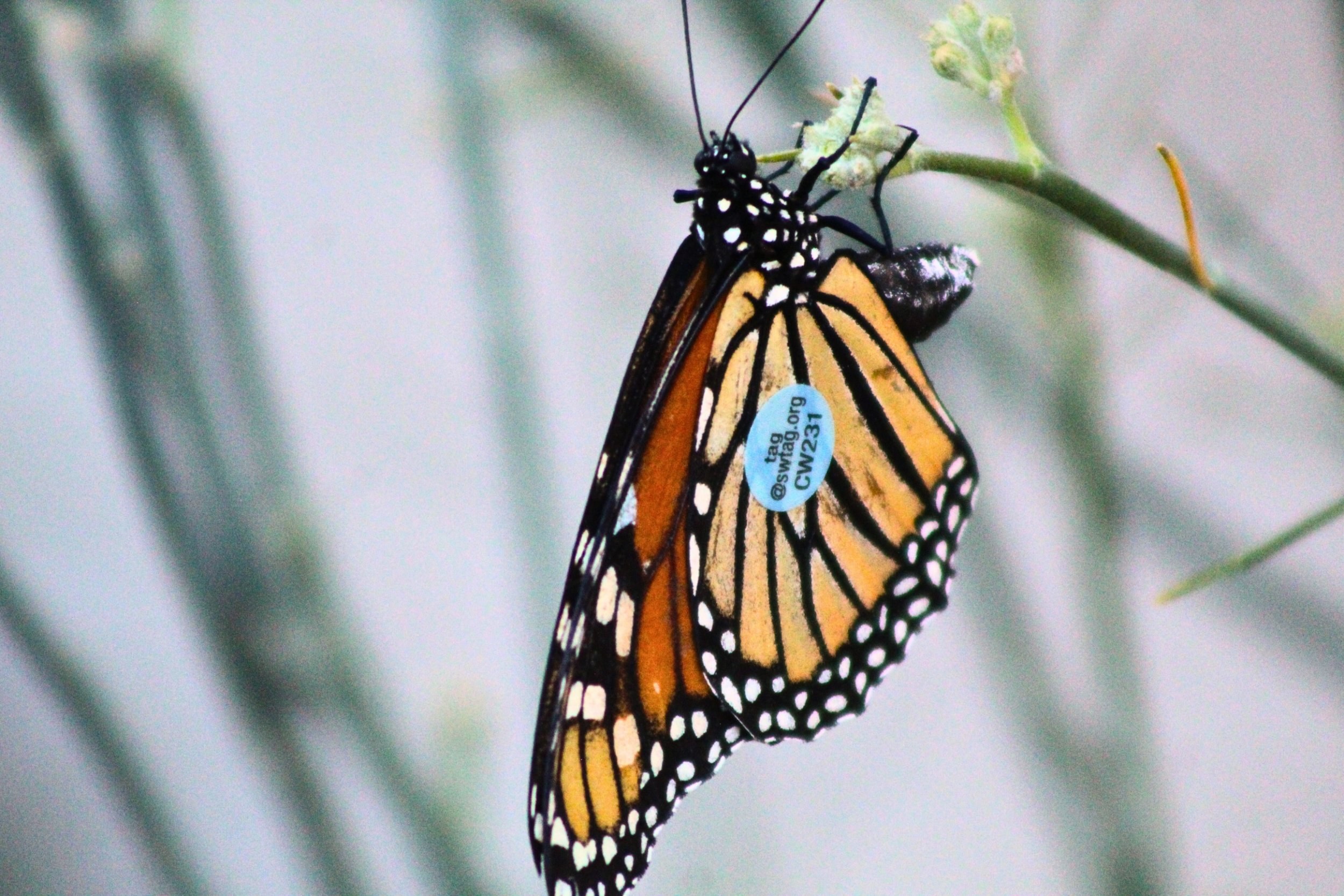
In Phoenix, Anita also saw a monarch visit her yard: “Female flying between rush and Arizona milkweed. Appearing to lay eggs, although I didn’t spot the eggs.”
Derrick also spotted a monarch laying eggs on Asclepias subulata in Tucson.
Milkweed Up?
Milkweed is key to the breeding success of monarch butterflies! Where are you seeing milkweed emerging or stands of Asclepias up and thriving? Let us know and submit your sightings.
Monarch and Milkweed sightings needed
Seeing monarchs? Seeing milkweed up? Your sightings help us present a balanced and accurate report of where monarchs are appearing each week and where milkweed is up and thriving. Report adults, eggs, and larvae to Journey North. Your detailed description of what you see can include, but is not limited to, the monarch’s gender and activity or milkweed species found. If known, include the type of flowers if they are nectaring or milkweed species if laying eggs. Photos are encouraged and welcomed with all your reports.
Gail Morris is the coordinator of the Southwest Monarch Study (www.swmonarchs.org). She is also a Monarch Watch conservation specialist, the vice president of the Central Arizona Butterfly Association, and participates in several western monarch working groups. The “Western Monarch News” is based on your comments provided to Gail Morris. We hope to increase the number of sightings, photos, and comments entered into Journey North. We rely on the volunteers who communicate regularly with Gail and participate in our effort to increase awareness of the population of western monarchs. You can reach her at gail@swmonarchs.org