
The spring and summer seem to be flying by. In the blink of an eye, it’s the middle of July already, so the focus on the leading edge of migration has changed to a focus on breeding activity throughout North America.
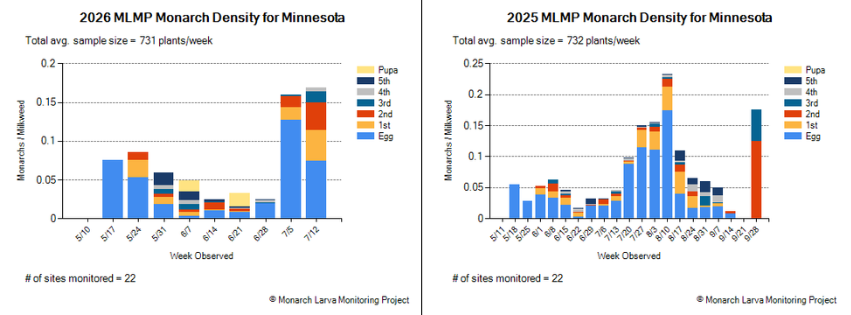
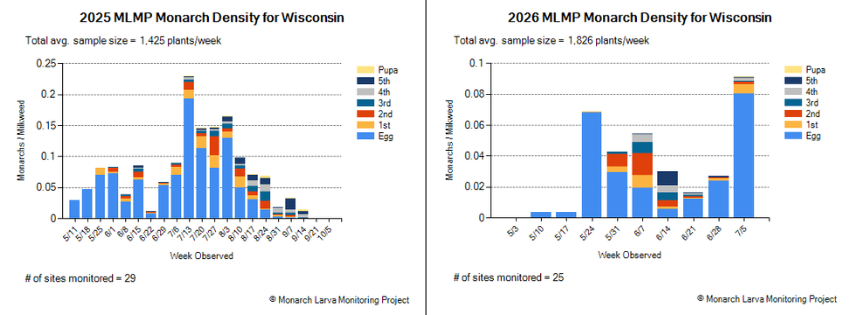
Data from the Monarch Larva Monitoring Project, another community science program from the Monarch Joint Venture in which volunteers monitor milkweed for monarch larvae and eggs each week throughout the breeding season, suggested lower monarch totals in June than at the same time last year. However, the first week of July brought a welcome increase in the number of eggs and larvae per plant.
Last year, the number of monarchs observed per milkweed plant in Minnesota hovered around .05 (one monarch larva or egg per 20 plants) for the weeks of June 1, 8, and 15, before dropping off in the week of June 22, but with a big bump in late July on the horizon.
This year, numbers were lower throughout June, but the week of July 5 brought a big leap to north of .15 monarchs per milkweed.
For Minnesota’s neighbors to the east, Wisconsin MLMP volunteers saw a jump from about .02 monarchs per milkweed to above .08 from the week of June 28 to the week of July 5, brought on by a big increase in egg sightings.
In an update for the Monarch Larva Monitoring Project website, Dr. Karen Oberhauser writes:
“If you’re starting to see more adult monarchs, it’s not just wishful thinking.
"The first 2026 monarch generation began as eggs in the southern U.S., the offspring of monarchs that had overwintered in Mexico. These first-generation monarchs continued the journey northward that their parents had begun, arriving in their northern breeding grounds in late April and May.
"Unlike their parents, who had spent the winter in Mexico, these monarchs began laying eggs when they were about four days old. As they moved northward, they laid eggs on milkweed plants across a broad geographic range. By late June, the first 2026 generation had mostly died off, and we’re beginning to see adults from the second 2026 generation (the first northern generation) emerging.
"The emergence of this new generation is usually indicated by two things: upticks in observations of adult monarchs in good condition and in the density of eggs on milkweed plants as reported by Monarch Larva Monitoring Project volunteers.”
You can view data from your state here.
What are Journey North volunteers reporting?
In the past week, sightings have been spread across the continent, from monarchs still being spotted in Florida up through the northern United States and Canada, where native flowers are in summer bloom.
“Blazing stars are just beginning to bloom,” Fred wrote from Minneapolis, Minnesota, on July 12.
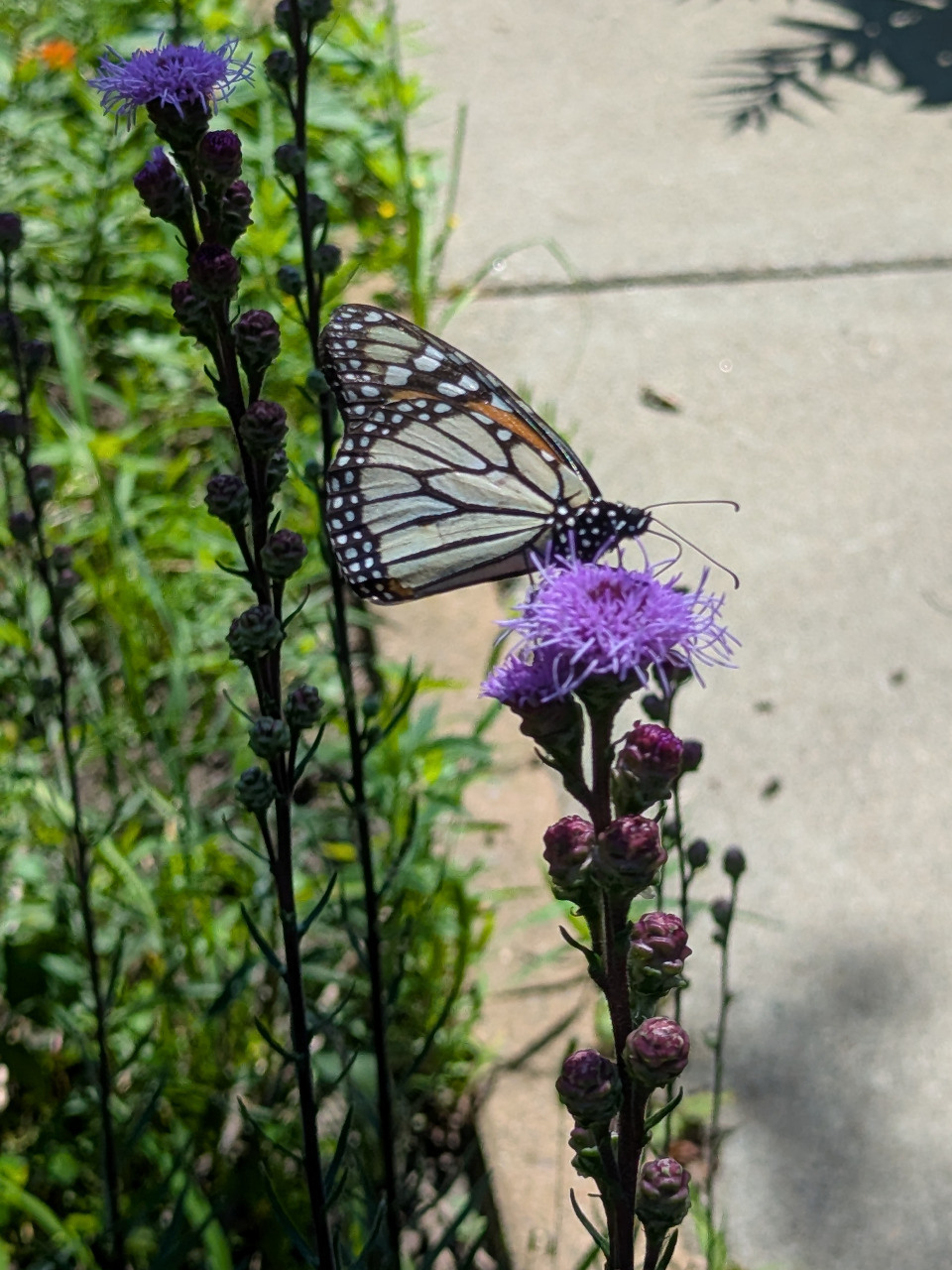
Blazing star is certainly a monarch and pollinator favorite. Monarch Joint Venture Midwest Habitat Program Manager Jake Koenig ranks it among his favorite flowers to support monarch butterflies in the fall.
“Monarchs patrolling, nectaring, chasing in a public pollinator garden with a wide variety of nectar plants,” wrote Mary in Minneapolis on the same day.
At the Monarch Joint Venture’s Prairie Oaks property in Belle Plaine, Minnesota, our gardens are coming into shape, which should benefit pollinators throughout the remainder of the summer. Hopefully, wherever you’re located, your gardens are ready for what will hopefully be a productive remainder of July for monarch reproduction.
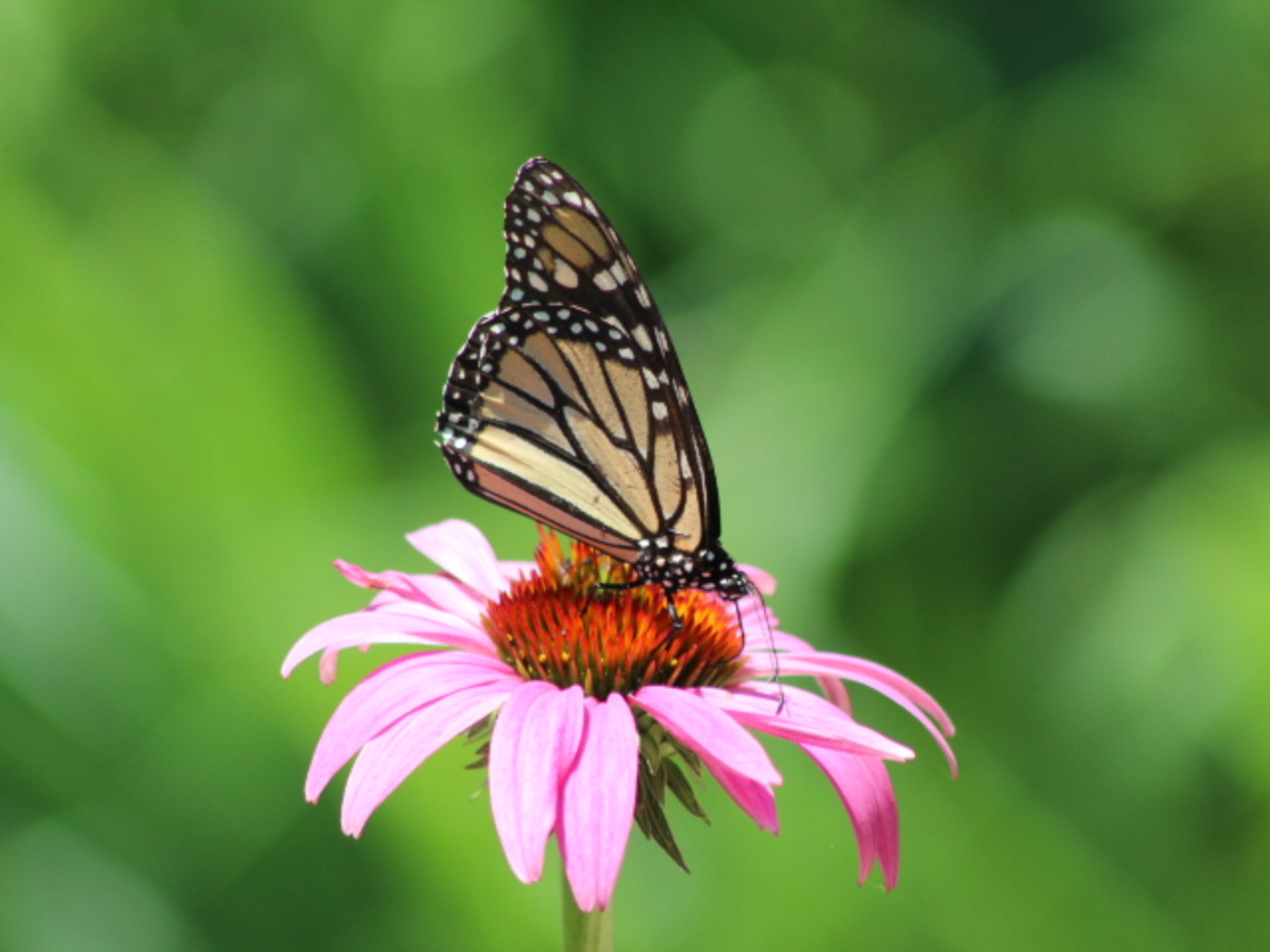
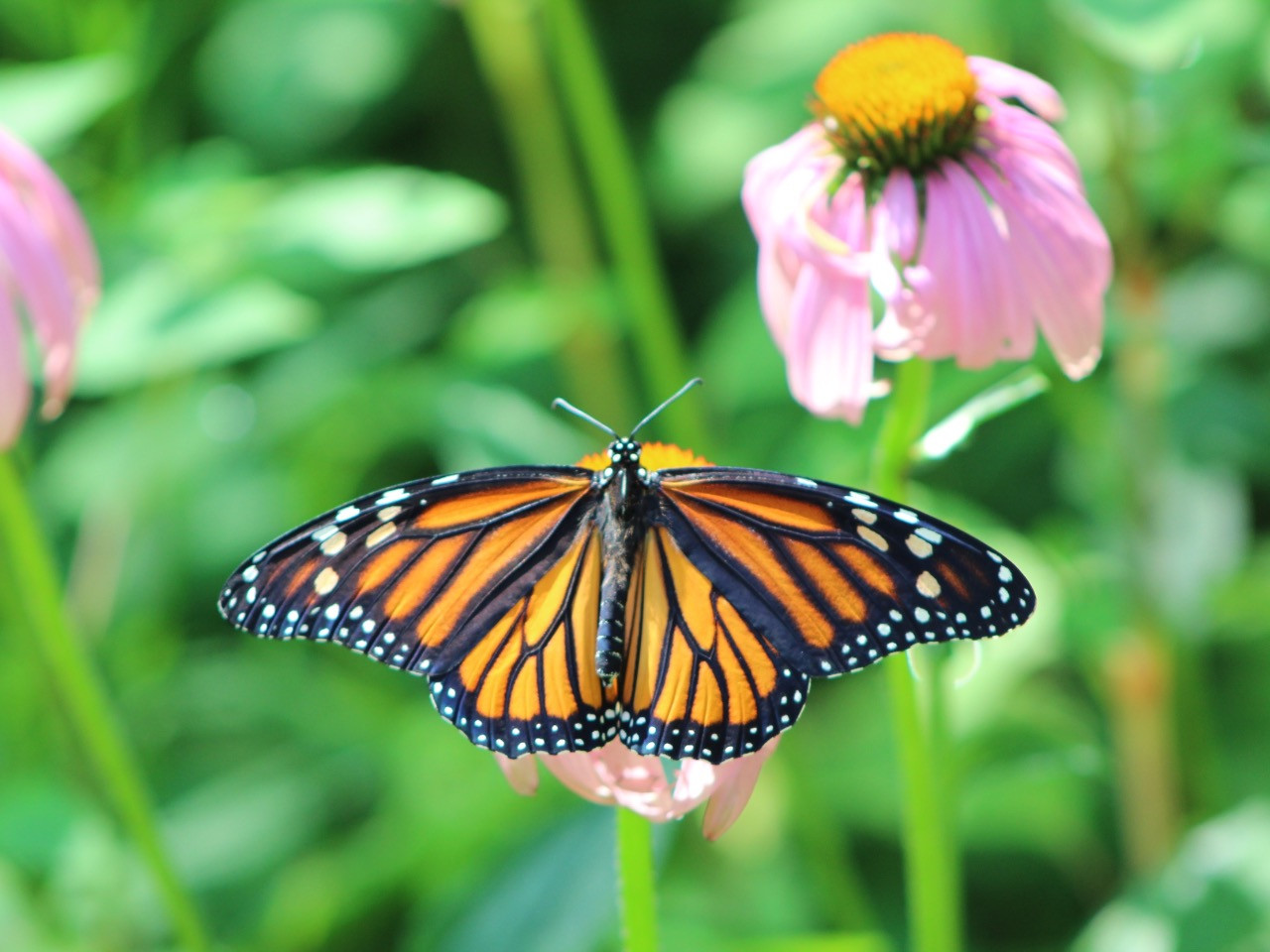
In Chatham-Kent, Ontario, Linda shared a photo of a monarch on a coneflower on July 12 on a hot summer day, as did Chris in New Hartford, Connecticut the day before.
Over the weekend, we received egg reports as far north as Saskatoon, Saskatchewan (latitude 52.09), and Monday, July 13 brought us a report from Oakton, Virginia (latitude 38.88). “Monarch was in our yard all day. I have found two eggs so far,” Eileen wrote.
Just a few days earlier, we also received an egg report from Destin, Florida. Florida does have a year-round population of monarchs, so it’s not too surprising to see reports continuing from the Sunshine State.
What about out West?
In the western U.S., sightings are a little more sparse, which is not unexpected. However, we still have some sightings continuing on our maps.
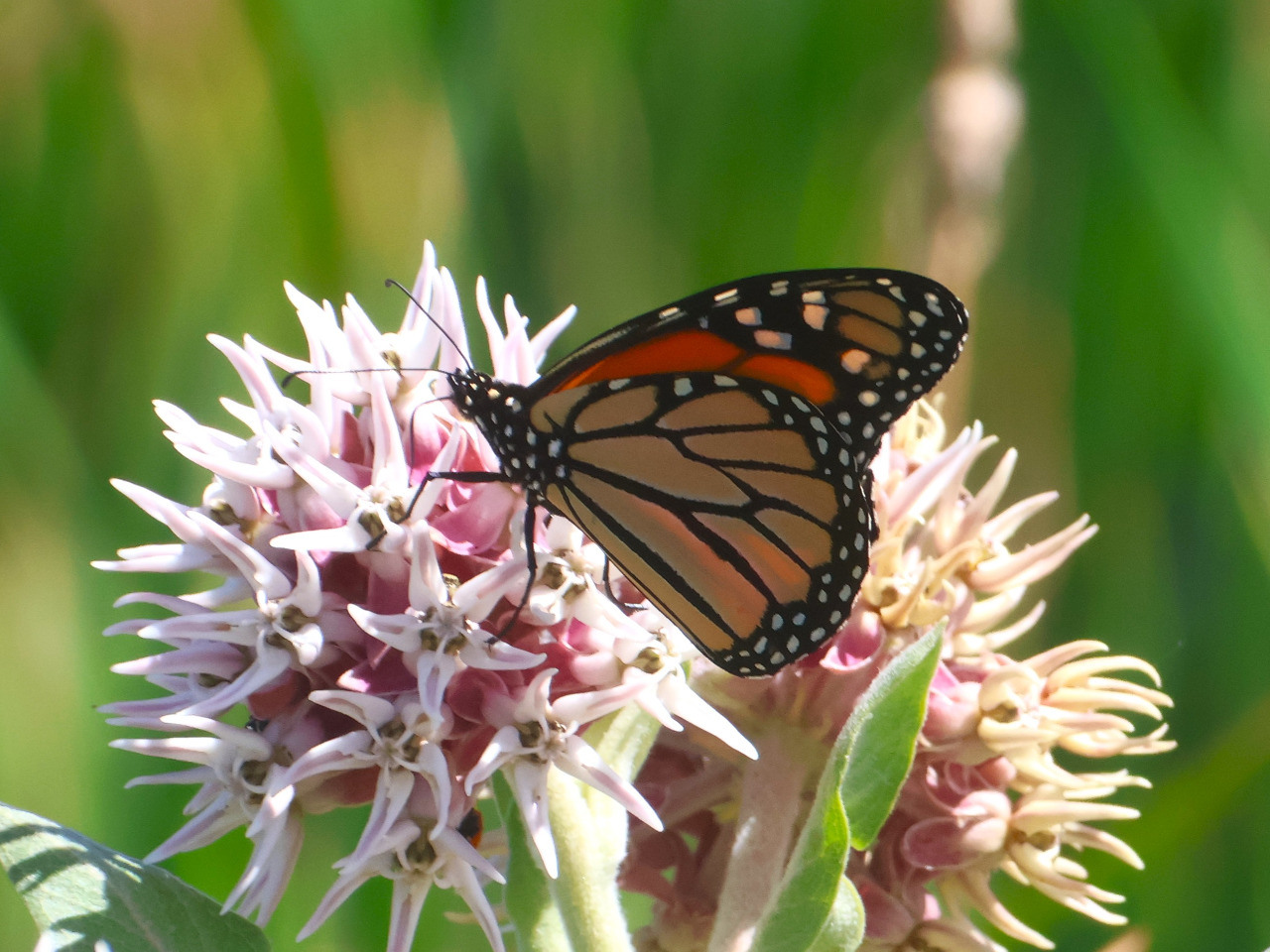
In Aurora, Colorado, Steven reported two adult monarchs, with a photo of one nectaring on showy milkweed on July 9.
Mary Pat in Broomfield, Colorado reported an egg on swamp milkweed on July 12.
We still don’t have a photo-confirmed sighting from north of the Washington-British Columbia border, but there have been a few reports. There haven’t been any reports of monarch eggs or larvae from Journey North users in Washington, British Columbia, or Oregon this year. If you’re in this area and you see signs of monarch breeding, let us know!
Mike reported an adult just north of the Oregon-California border in Winston, Oregon, on July 8.
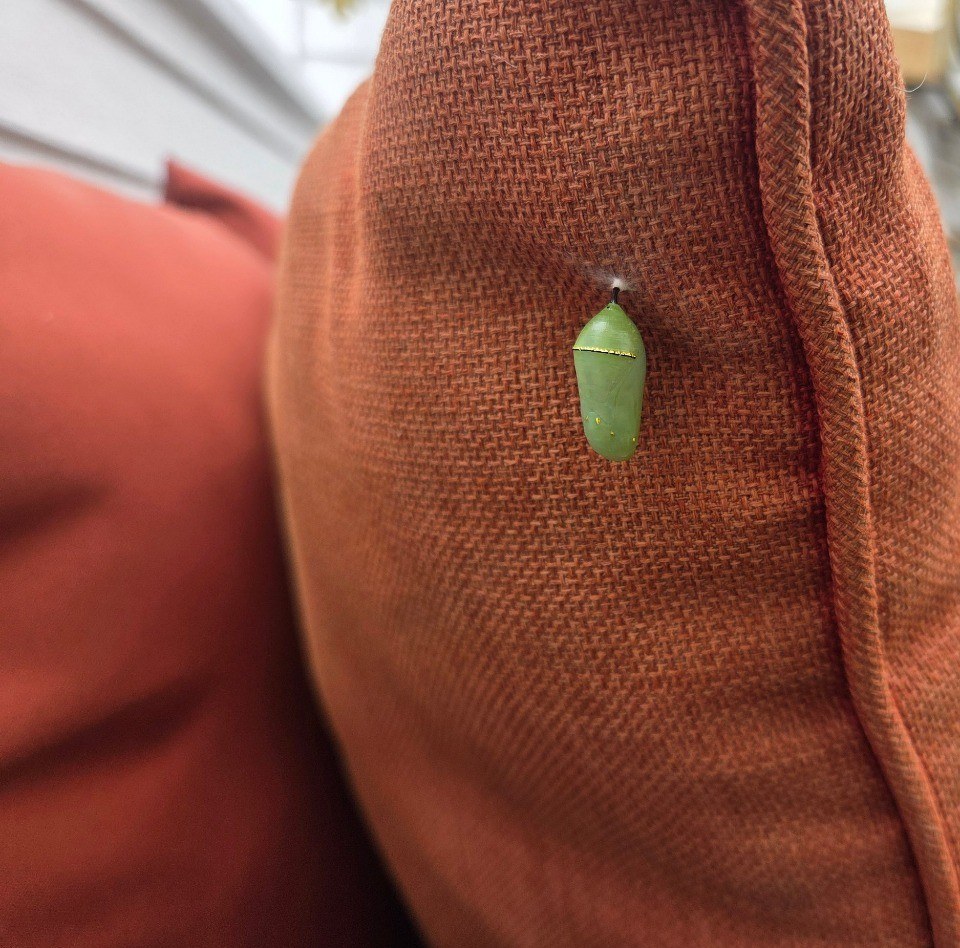
Sightings are typically a little bit more common in California than they are in the rest of the West. Among the reports was an interesting photo from Angela in Newport Beach, California, of a chrysalis hanging from what appears to be an outdoor pillow.
We’re always looking to increase the number of people we hear from in the western U.S. With less sightings out there, your reports can make an even larger impact informing us about the distribution of monarchs throughout the season!
Join the journey: learn more about Journey North on July 15
If you want to learn more about Journey North and other community science programs at the Monarch Joint Venture, join us virtually at 1 p.m. CT on July 15!
This free opportunity will introduce you to Journey North, highlighting how shared observations help track monarch migration and seasonal change across North America.
You’ll explore how to participate in Journey North and related Monarch Joint Venture community science programs, including the Monarch Larva Monitoring Project and Integrated Monarch Monitoring Program.
Whether you’re submitting your first sighting or looking to deepen your involvement, this course shows you how to contribute meaningful data and be part of the monarch conservation story.
Click here to sign up and join us on July 15!
Monarch Blitz begins July 31
Mark your calendars: the International Monarch Monitoring Blitz is back for its 10th anniversary!
From July 31 to Aug. 9, join the celebration and help search for monarch butterflies and milkweed plants in your area. This is your chance to get outside and make a real difference for one of North America’s most recognizable species. For 10 days each summer, everyone is encouraged to step outside, search for monarchs (eggs, caterpillars, chrysalises, or butterflies) and milkweed plants, and share their observations on one of several data platforms, including Journey North.
Whether you’re a longtime monarch enthusiast who has participated for years or you’re just learning about the Monarch Blitz, you can help gather valuable data for monarch conservation, all while enjoying time outdoors.
If you participate once or daily throughout the 10 days, every observation matters and helps scientists better understand how to conserve monarch butterflies. Together, let’s make the 10th anniversary unforgettable. See you outside from July 31 to Aug. 9!