If you live in the eastern U.S. or Canada, the Ruby-throated Hummingbird is the smallest bird you're likely to see. These tiny, speedy birds can sometimes be difficult to get a good look at, but when you can, do you know how to tell if you're looking at a male or a female? How about an adult compared to a juvenile?
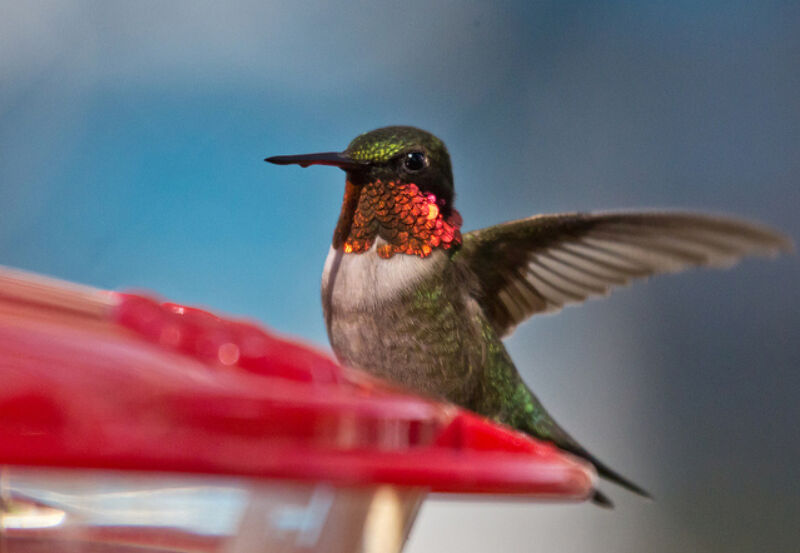
Adult male: Look for the gorget. Males have an unmistakable red throat patch, called a gorget. If you see a gorget in full color, you know you're looking at an adult male. This top photo was taken in bright lighting, but this isn't always the case.
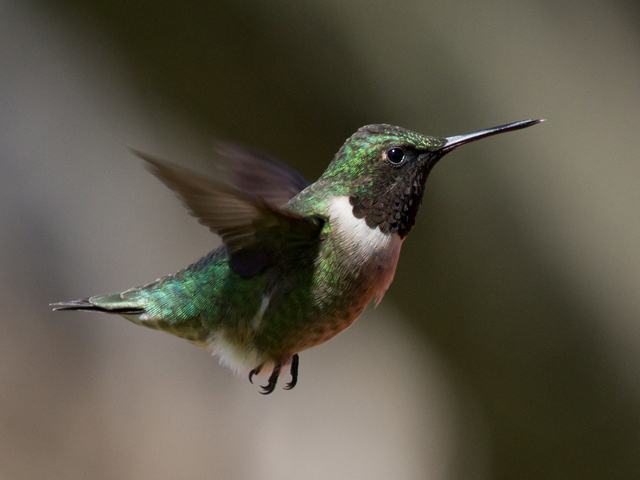
Take a look at the bottom photo of an adult male. You can see the gorget, but it appears dark at this angle. If you see it head-on or in better lighting, it will display its bright red beauty.
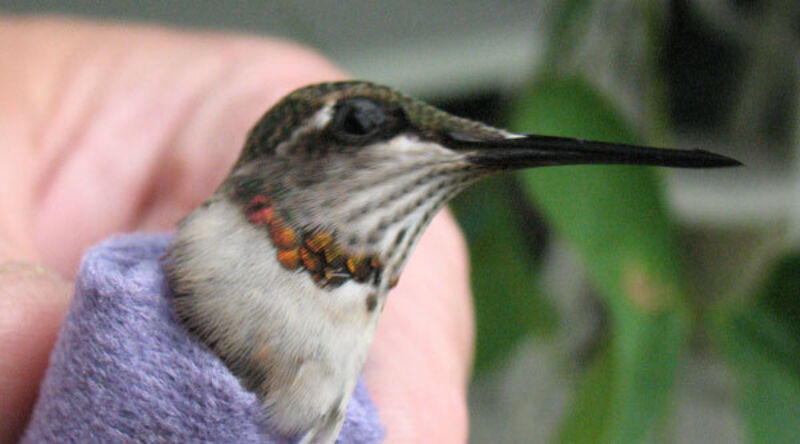
Juvenile male: In late summer, young males may begin to show a few red throat feathers as this gorget starts to develop. It won't fully develop until they're away for their first winter. Some juvenile males will show a "5 o'clock shadow" of heavier streaking on their throat before that as well.
Adult female vs. juvenile: We've covered the easy ones, now this is where it gets a little more difficult. In the photo below, we know that the front hummingbird is a juvenile male based on the "5 o'clock shadow" of black dotting on the underside of the chin.
However, it's difficult to say whether the other two are adult females or juveniles.
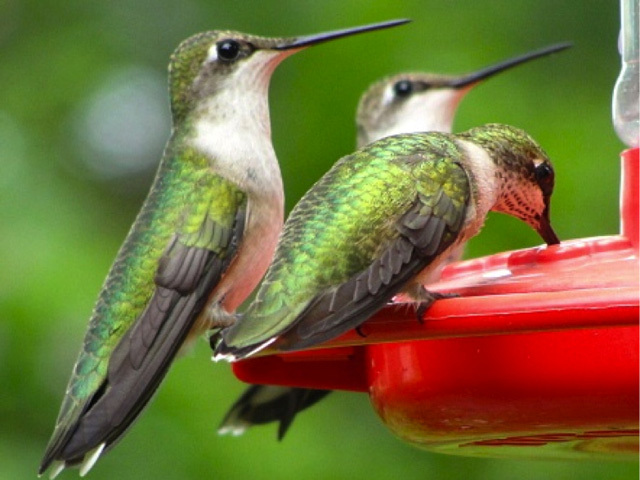
We know that the one in the forefront is a juvenile male based on the shadow of feathers on the underside of the chin, but the others could be female adults or juveniles. An adult's bill is longer, as this feature takes longer to grow, but it's extremely tough to tell bill length while observing a hummingbird in front of you. Even with a high-resolution photo, it's a difficult determination.