


March 2
The season slowly closes for Sierra Chincua Sanctuary, where monarchs seem to be cascading down into the deep, low forest canyon to then fly around the mountain hillsides to head north. Many still remain, enjoying the rich patches of nectar everywhere in their forest before departing. The final spot they can still be seen now is 19.6730 -100.2973.
Towards El Rosario Sanctuary, a spectacular departure north can be observed as monarchs cascade down in important numbers. The colony, however, still keeps a considerable population, now very possibly less than half of its original massive concentration, having moved slightly northwards only some meters, to 19.5974 -100.100.2629.
Low mortality and low mating activity can be observed in both colonies. Warm weather, clear, blue, bright sky with gentle wind waves seem to favor the massive departure, which has been taking place for nearly three weeks now.
The season, indeed, points to its ending chapter very soon now.
Feb. 23
The massive departure of our exceptional Monarch butterflies keeps on day by day.
Spectacular moments occur at each colony for our local and international visitors, especially at El Rosario Sanctuary, where the traditional massive concentration awakens immense awe and devotion to one of the most extraordinary natural phenomena that humankind could witness.
Large, wonderful green nectar sources and strong winds during the entire weekend, will be taken advantage of by the amazing creatures to let themselves go northwards.
“The density in population this season has been an extraordinary rebound in population, only below seasons 2018, 2019, and 2020 when we had unprecedented numbers for many years,” local guides from El Rosario Sanctuary confirm to visitors, reassuring tourists’ impressions.
Feelings of amazement mix with concern and melancholy at this anticipated departure, showing us that climate change is bringing a real challenge to migratory species.
Estela Romero
Journey North
Angangueo, Michoacán, México.
March 2
La temporada prácticamente termina para el Santuario Sierra Chincua donde las Monarcas parecen haberse internado hacia la parte baja del cañón en el monte para rodear las laderas de la montaña y enfilarse hacia el norte. Muchas aún permanecen disfrutando the las ricas áreas de néctar por doquier. El último sitio de avistamiento parece estar a: 19.6730 -100.2973.
Rumbo al Santuario El Rosario, se observa una espectacular salida masiva hacia el norte que simula una fantástica lluvia de criaturas pero la colonia se mantiene aún con una población considerable, aunque muy posiblemente menos de la mitad de su concentración masiva original, habiéndose movido ligeramente hacia el norte tan solo unos metros, a 19.5974 -100.2629.
Muy baja mortandad y baja actividad de apareamiento se observan en ambas colonias. Clima cálido con cielos azules claros y suaves olas de viento parecen estar a favor de la salida masiva que ha estado ocurriendo por ya casi 3 semanas al día de hoy.
La temporada se acerca, sin duda, al capítulo final ya muy pronto.
Feb. 23
La salida masiva de nuestras excepcionales mariposas monarcas se mantiene día con día.
Ocurren momentos espectaculares día con día para nuestros visitantes nacionales y extranjeros, no se diga en el Santuario el Rosario donde la tradicional concentración masiva de población despierta un inmenso asombro y devoción ante una de los más extraordinarios fenómenos naturales que la especie humana pudiéramos atestiguar.
Largas y maravillosas extensiones verdes de néctar y viento intenso durante el fin de semana habrán de aprovecharse por las increíbles criaturas para dejarse ir hacia el norte.
“La densidad de población esta temporada ha sido una extraordinaria recuperación en población, solo por debajo de las temporadas 2018, 2019 y 2020 cuando tuvimos números sin precedentes desde hacía años,” comentan los guías de El Rosario confirmando la impresión de asombro de los visitantes.
El asombro pero también la preocupación se mezclan con la malancolía de ésta anticipada partida que nos deja ver como el cambio climático trae un verdadero reto a las especies migratorias animales en general.
Estela Romero
Journey North
Angangueo, Michoacán, México
Estela Romero is an environmental educator with Monarchs Across Georgia. Reporting from Angangueo, Michoacán, Estela Romero's work is made possible by funding from Monarchs Across Georgia and the Monarch Butterfly Fund.
Monarchs reaching Texas will encounter drought conditions
By Jacob Swanson, Journey North program coordinator
Once they reach the United States, monarchs will likely encounter significant drought conditions, unless things change in the near future.
The latest map from the U.S. Drought Monitor, released on Feb. 26, shows "extreme drought" in southern Texas, with the rest of the state in "severe" or "moderate" drought, or characterized as "abnormally dry."
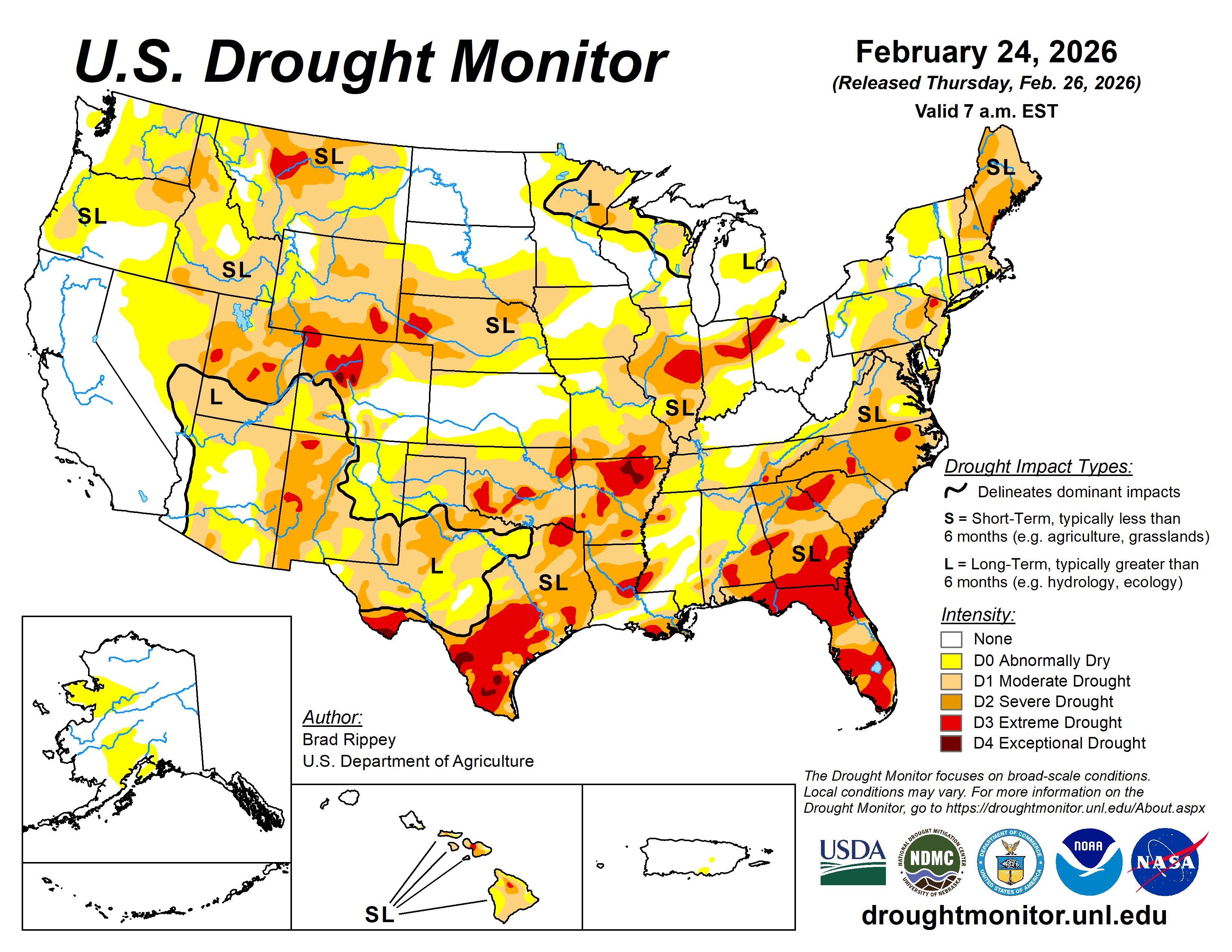
The Southeast, also gripped by drought, will likely receive some of the heaviest precipitation over the next five days, the Drought Monitor reported, but the Southwest, from California to the High Plains, looks set to receive dry, record-setting heat.
Throughout the winter, we've received consistent monarch reports from Texas and Florida, as well as a few from other states like Louisiana, Mississippi, Alabama, and Georgia, so there are some monarchs surviving the dry conditions. In short order, they'll be joined by millions of monarchs making their way north from Mexico.
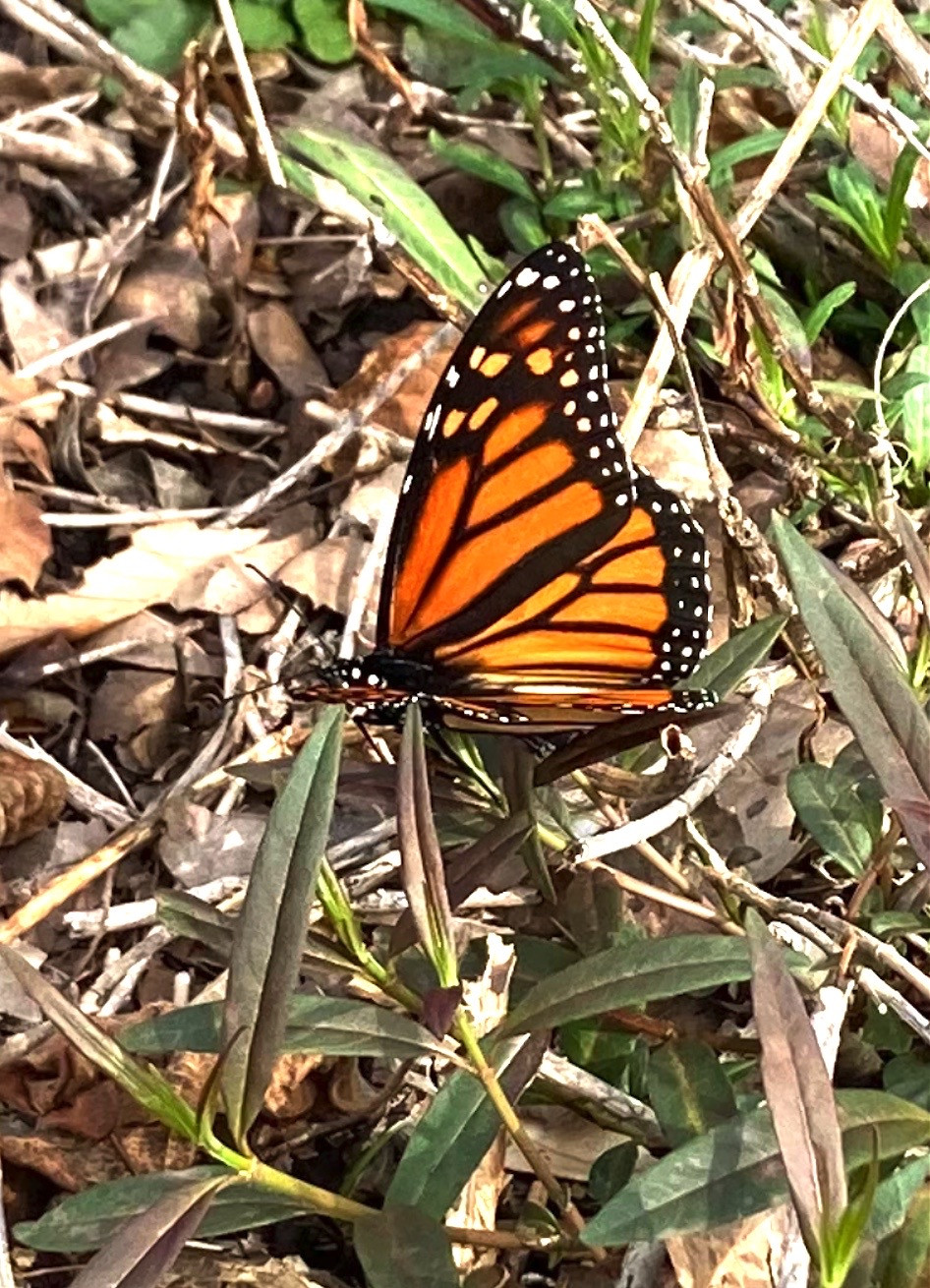

Thank you to everyone who reported their observations throughout the winter. When you see your first monarch this spring, don't forget to report it to Journey North!
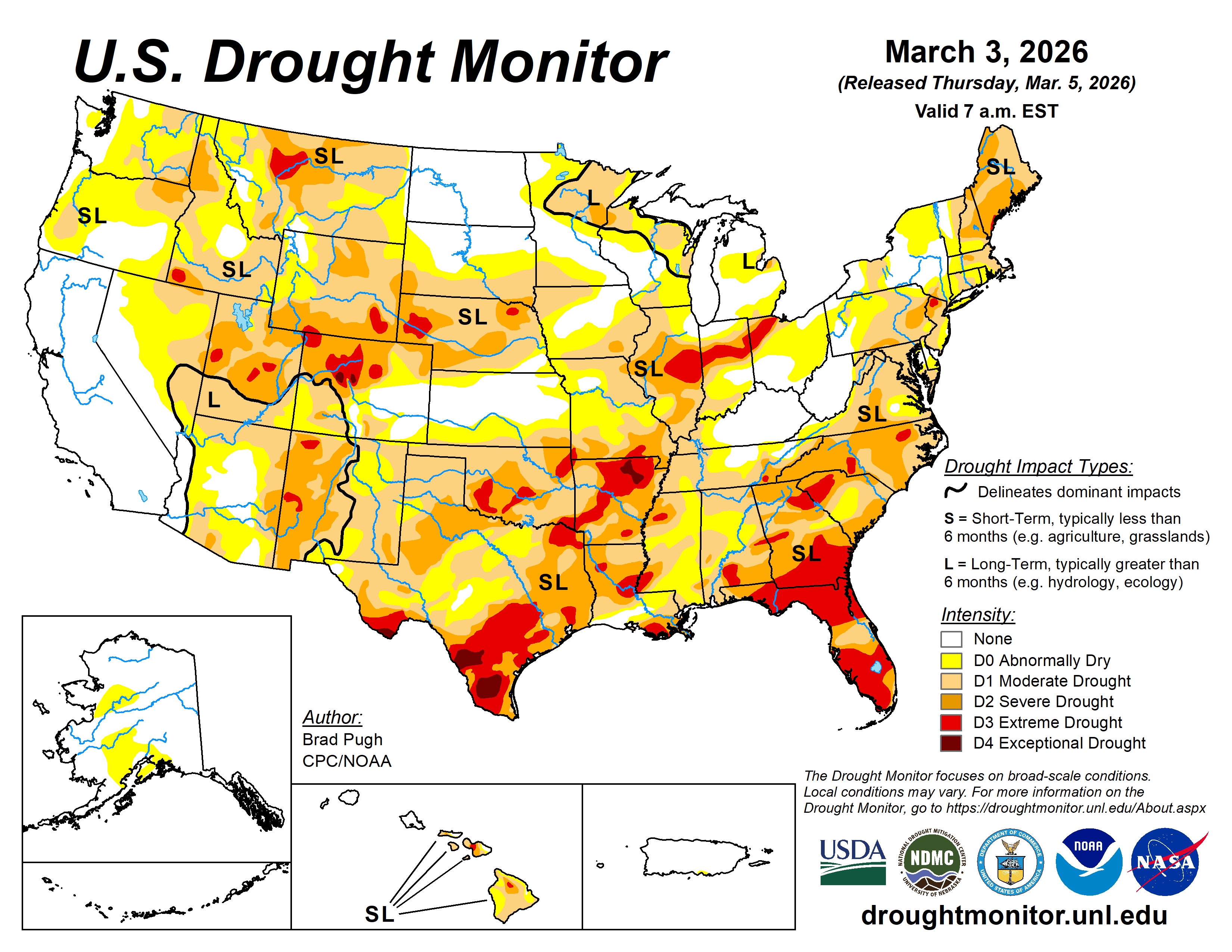
March 5 update: As of the latest Drought Monitor, things haven't improved in Texas, with areas of "exceptional drought" in southern Texas increasing slightly over the past week.
Western monarch news: March 5
Click here for the latest western monarch news from Southwest Monarch Study coordinator Gail Morris.